Invitation to participate in the Central European Summer School of Imagination
Date: June 29 – July 2 Location: Kaprálův Mlýn, a unique site in the Moravian Karst
A summer school where food will tell stories, the voice will resonate through the landscape, and mushrooms and herbs will reveal the roots of identity.
We invite all those interested in taking part in a four-day program of the Central European Summer School of Imagination, and who wish to enter a shared space of learning, exchange, and experimentation. We welcome those who share an interest in transformative learning and open dialogue, and who are ready to engage with methods that connect intellect, emotions, the body, and local experience.
The summer school will offer an opportunity to reflect on how we can foster understanding in a divided society, how to open sensitive topics safely and creatively, and how to collectively develop approaches that help us navigate a changing world. We will share experiences, inspiration, and concrete methodologies.
About the Summer School
At a time when the world seems fragmented by uncertainty, bubbles, and competing voices, there is a growing need to pause, listen, and rediscover ways of being and thinking together. The summer school is an invitation into a space that makes such encounters possible. It creates a field for collectively exploring local sources of support available in Central Europe—resources that expand our capacity to engage sensitively and creatively with issues of polarization, societal crises, shifting relationships, and the possibilities of dialogue across differences.
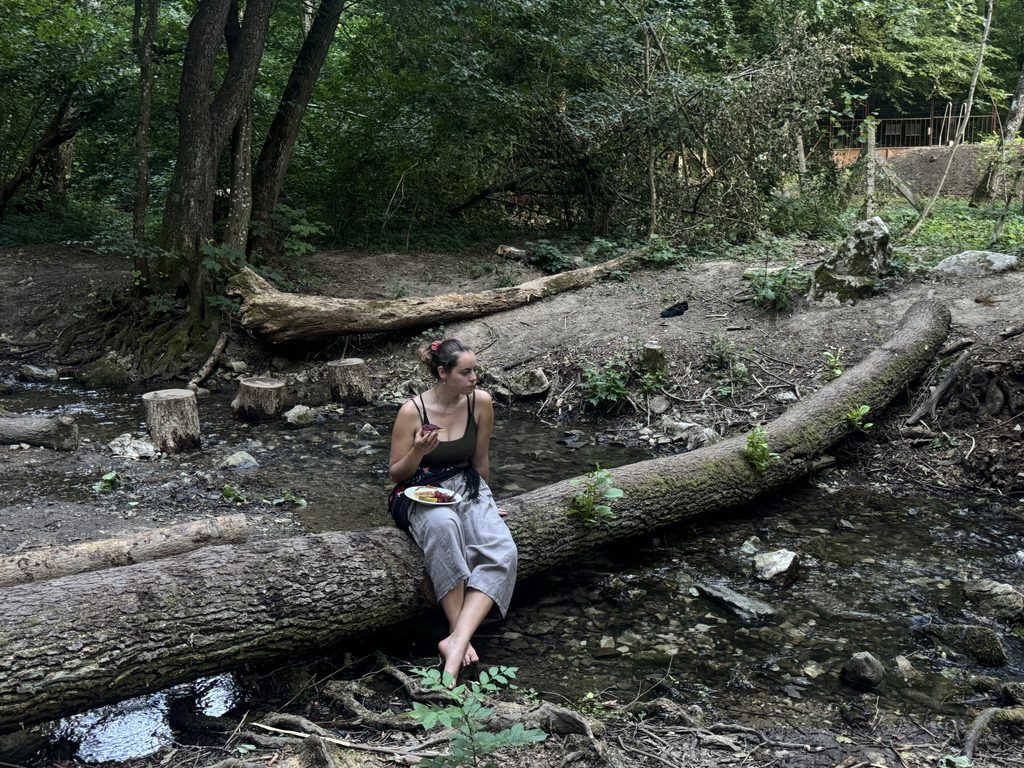
The program combines dialogue, cooking, foraging for mushrooms and herbs, and working with place, voice, and breath.
It connects sensory work, dialogue, and a range of experiences that open space for encounters across both shared and conflicting narratives: food as a carrier of memory and Central European identity—the taste of soup, the smell of bread; voice as a bridge between body and soul, where breath physiology and subtle vocal practices build resonance and mutual understanding; mushroom foraging as a metaphor for moving through the dark forests of identity, where we may stumble upon the roots of pride or inferiority. These motifs intertwine into a single stream directed toward openness and inner integrity, enabling the safe exploration of polarization, grounding imagination in local reality, and transforming crises into growth.
For several days, Kaprálův Mlýn will become a shared space for curiosity and experience, supporting the ability to build relationships where they may seem disrupted.
Organizational Information:
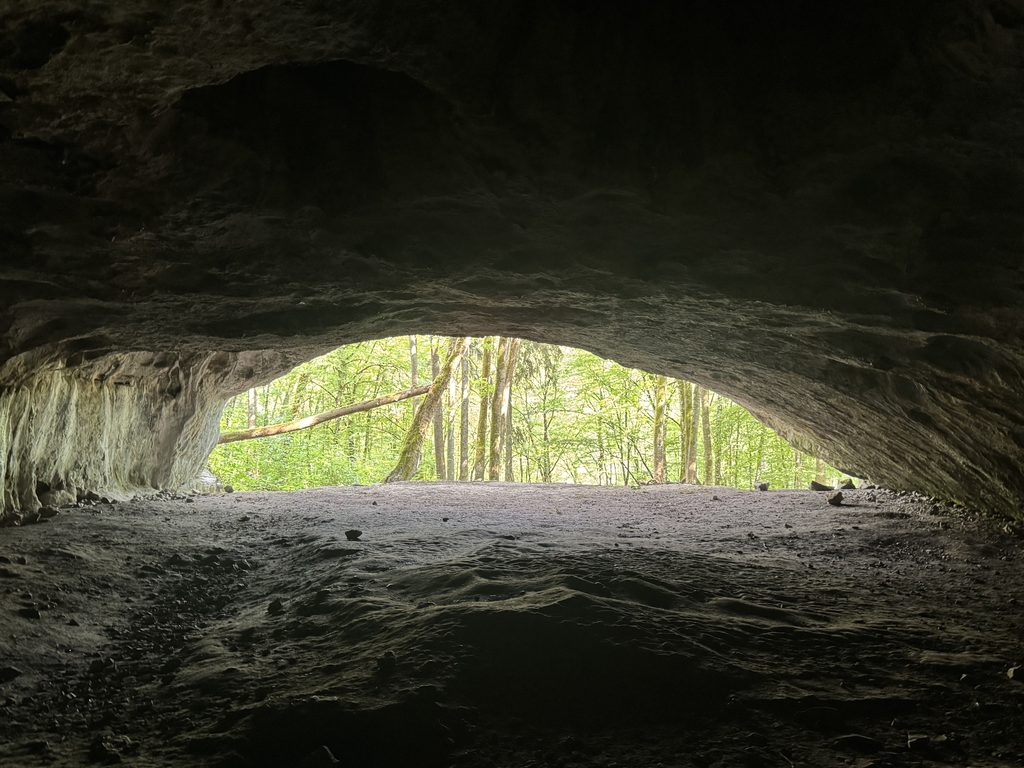
Location: Kaprálův Mlýn (https://www.kapraluvmlyn.cz/) is an eco-center located in the Říčka Valley, a nature reserve in the southern part of the Drahany Highlands within the Moravian Karst Protected Landscape Area. This historic scout base offers extensive, comfortable facilities surrounded by nature—steppe meadows of Lysá hora and karst caves such as the prehistoric Pekárna Cave.
Capacity is limited to 35 participants from the Czech Republic, Slovakia, Poland, and Hungary.
The program will be conducted in English.
Facilitators: Barbora Ciprová, Tereza Čajková, Barbora Kleinhamplová, Ivana Mer, Piotr Sikora, Diana Szantó, Kateřina Vídenová, and others.
Participation in the summer school is fully funded (including accommodation, meals, and travel). A condition of participation is the ability to attend the full program.
Application deadline: May 30, 2026
How to apply?
Please fill in a short application by May 30: https://forms.gle/1grpmNC2WeezFPn5A. In your response, tell us what interests and motivates you about the topic of the Summer School. We will inform you about your participation by May 30.
Credits: visuals and graphics by Marek Meduna
@VisegradFund
The project is co-financed by the Governments of the Czechia, Hungary, Poland and Slovakia through Visegrad Grants from International Visegrad Fund . The mission of the fund is to advance ideas for sustainable regional cooperation in Central Europe.
What Doesn’t Fit Into a Recipe: Memory, Gestures, and Stories Hidden in Food
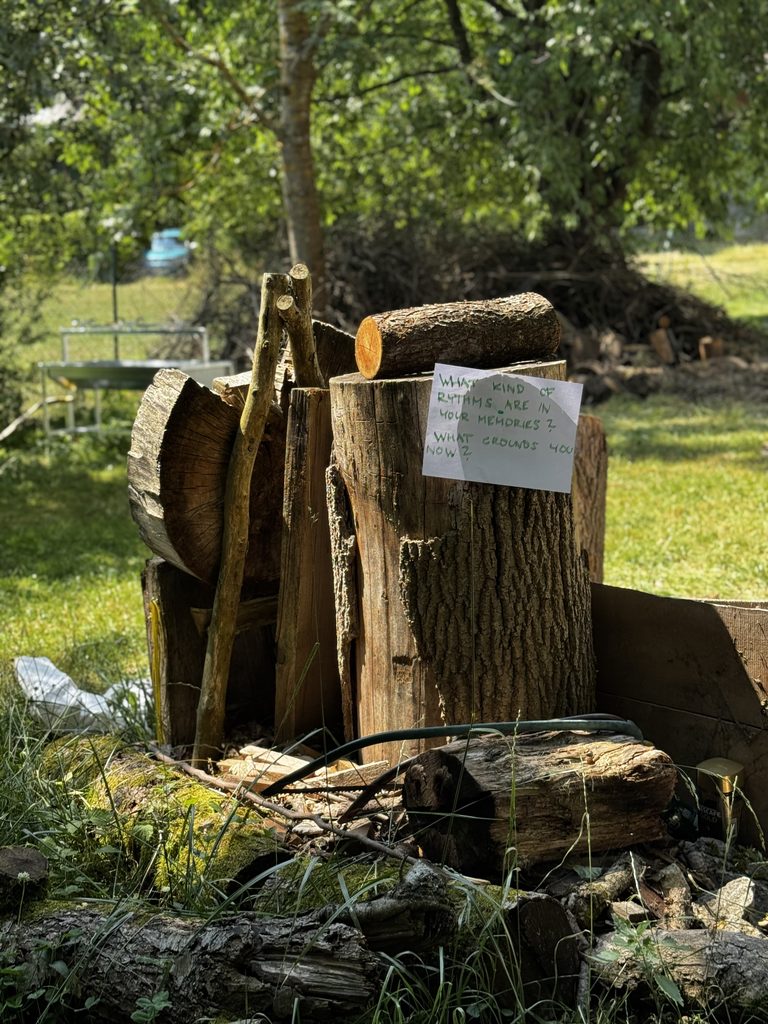
What does Central European identity mean to you? Is it the taste of homemade soup, the smell of freshly baked bread, a family recipe, or a memory of the landscape? Or is it something harder to name, yet still carried within us?
The Central European School of Imagination workshop invites you to the shared table. It opens a space for collective reflection on what connects us in our region, shapes us, and where we drift apart.
We are interested in what remains shared even as society becomes increasingly divided. How can sharing experiences, stories, and symbols create space for greater closeness, understanding, and imagining the future?
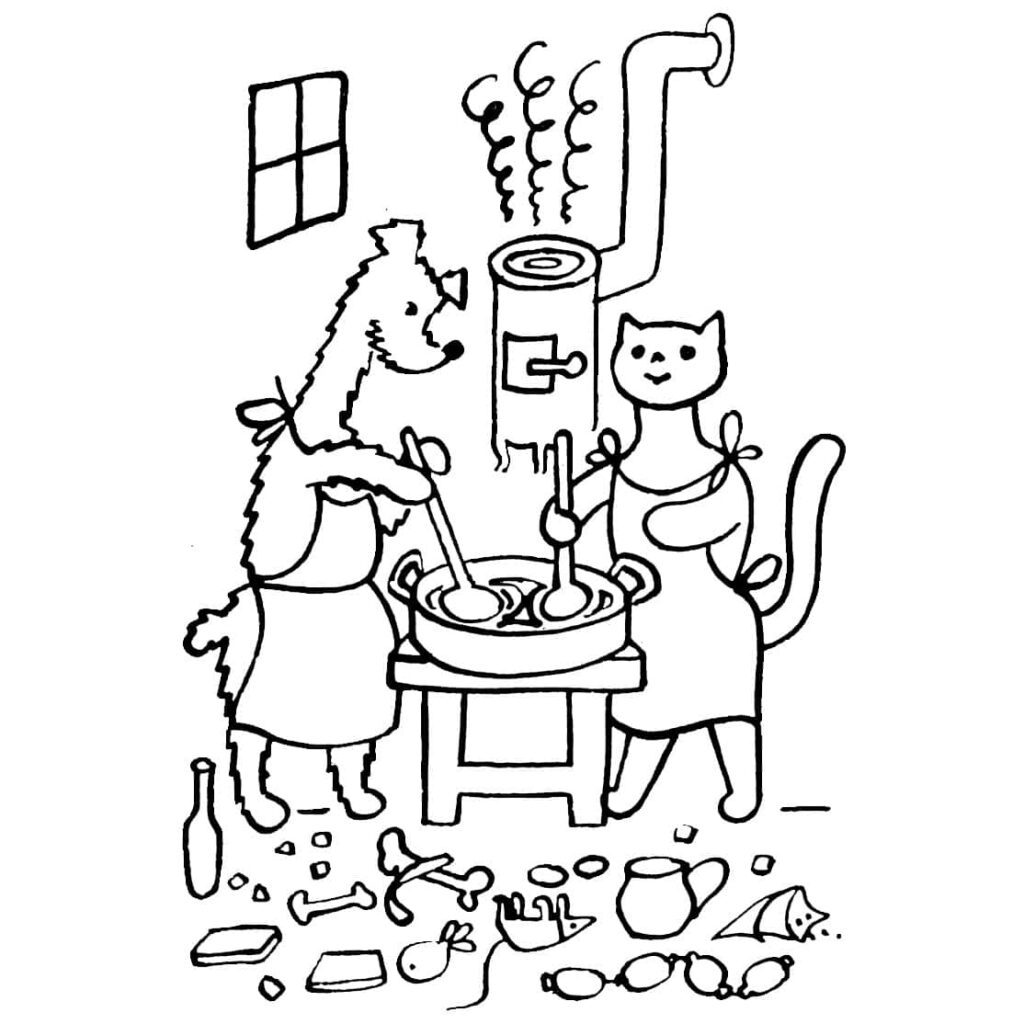
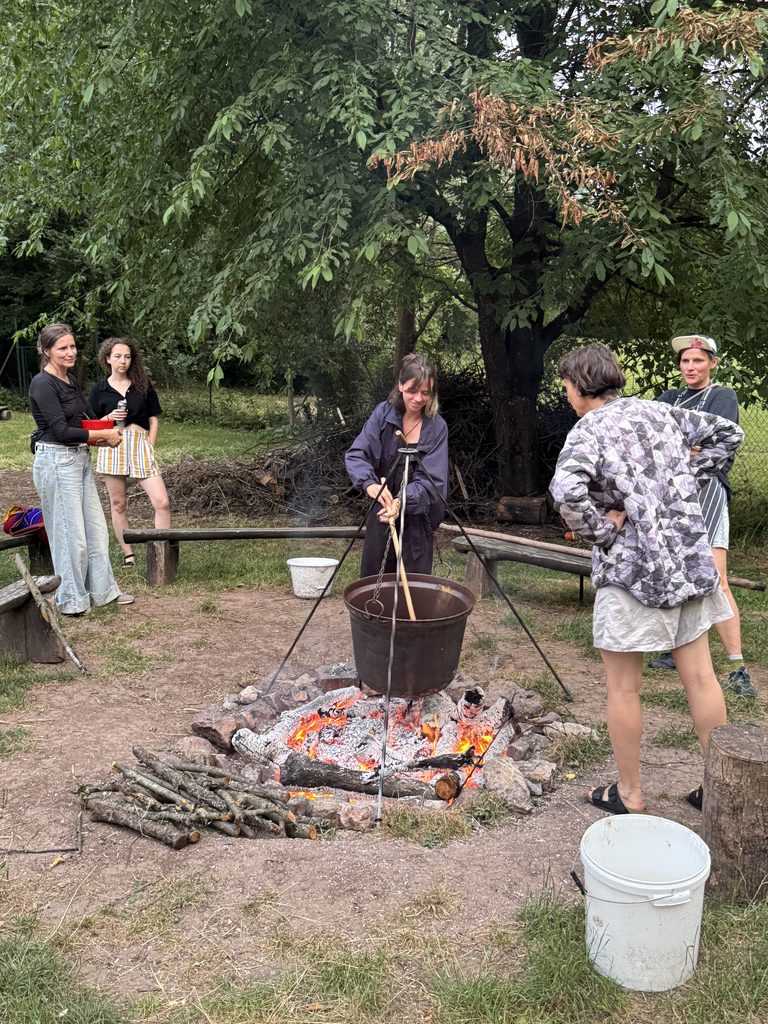
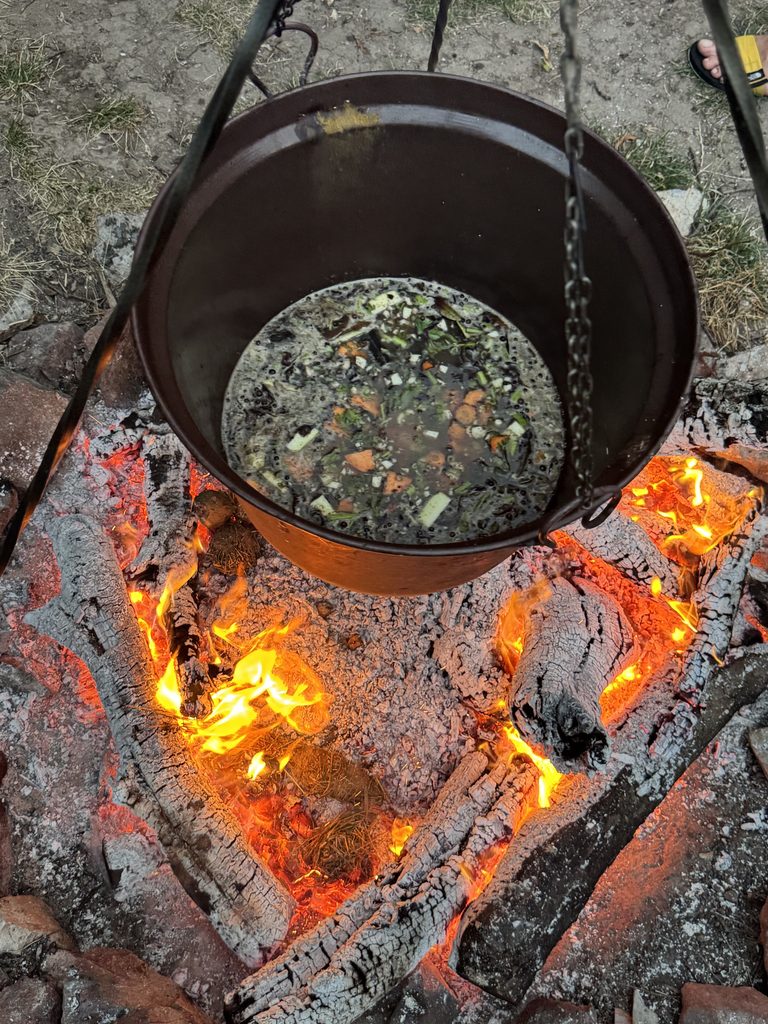
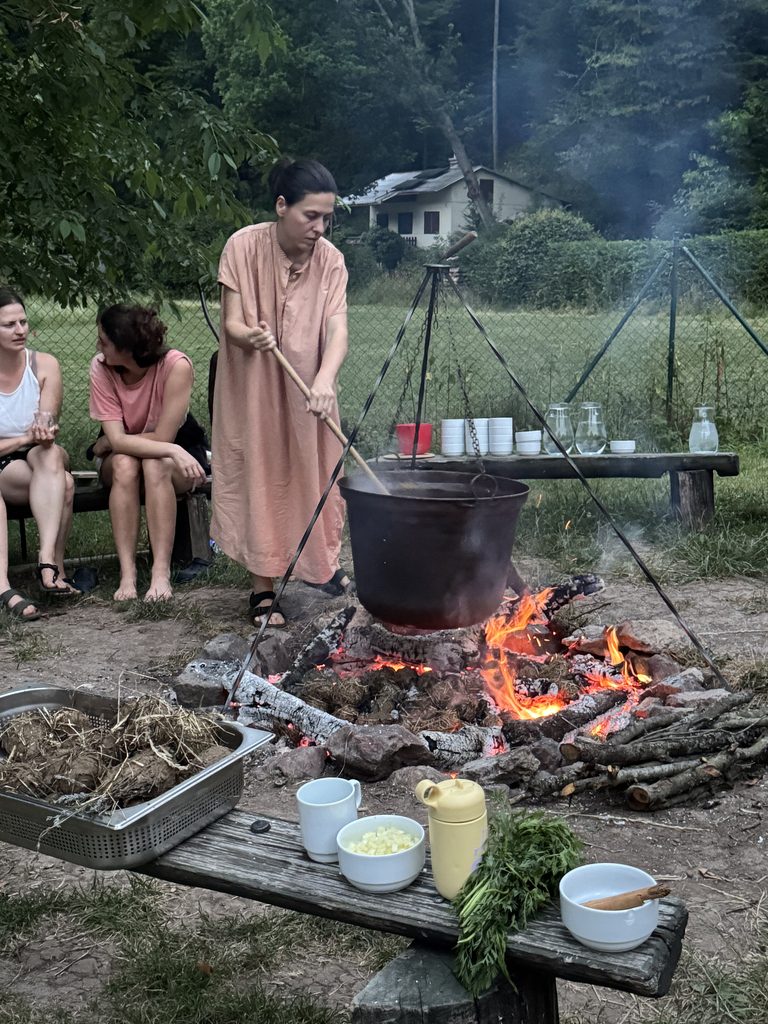
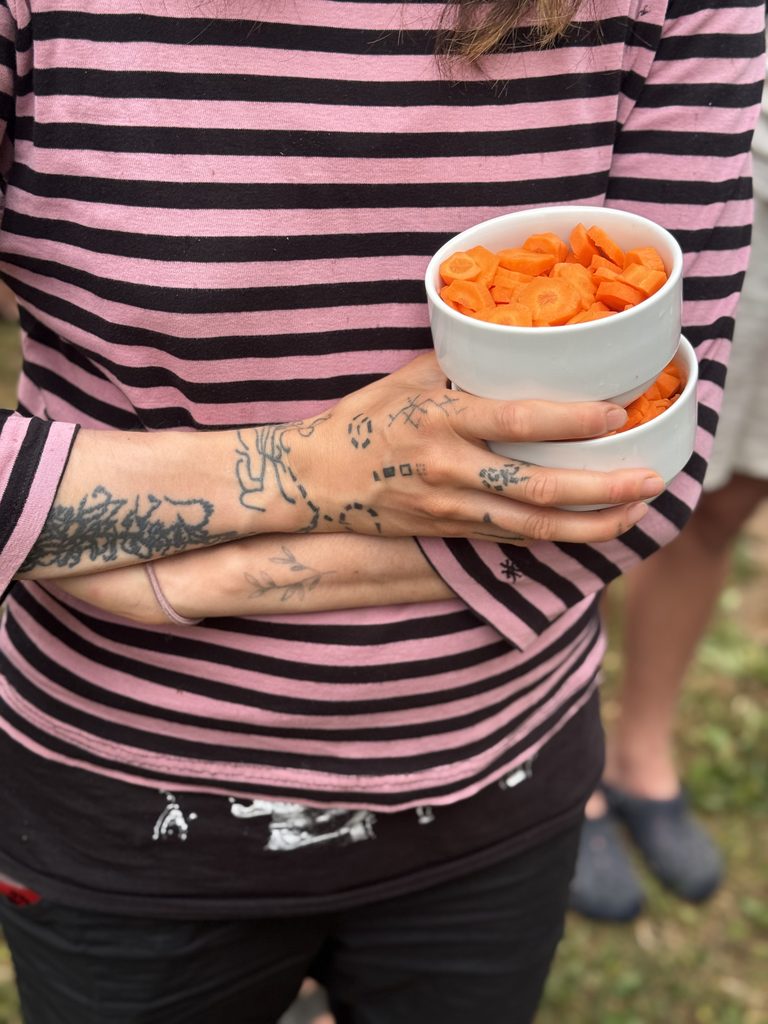
We will begin with food as a carrier of memory, relationships, and everyday life. With recipes that hold more than just a procedure — family stories, regional traditions, and daily routines. With gestures, scents, and small rituals passed down without needing explanation.
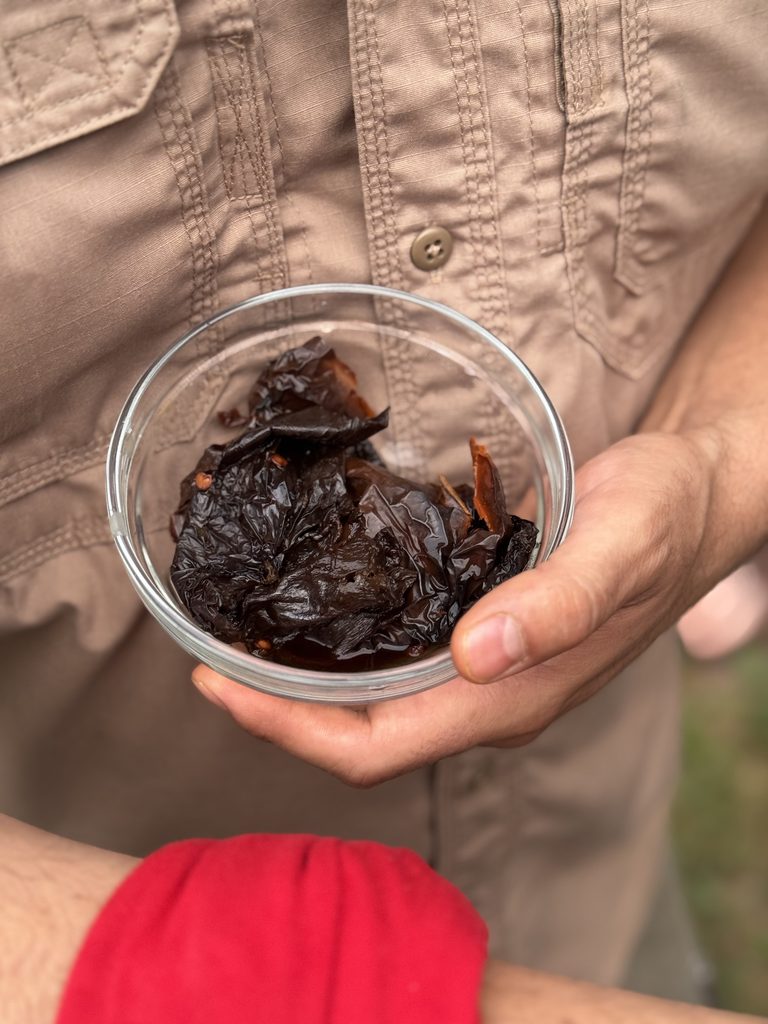
What we will cook together, we will keep under wraps for now. But perhaps this will give you a hint…
——————————————
It may seem modest — like dough.
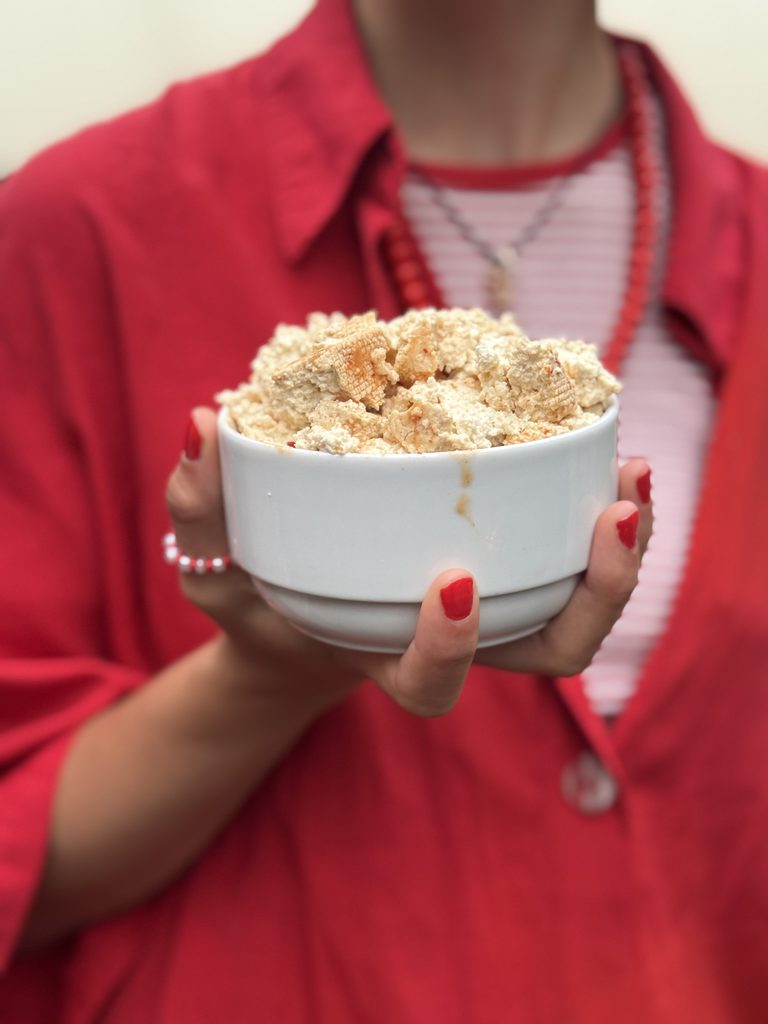
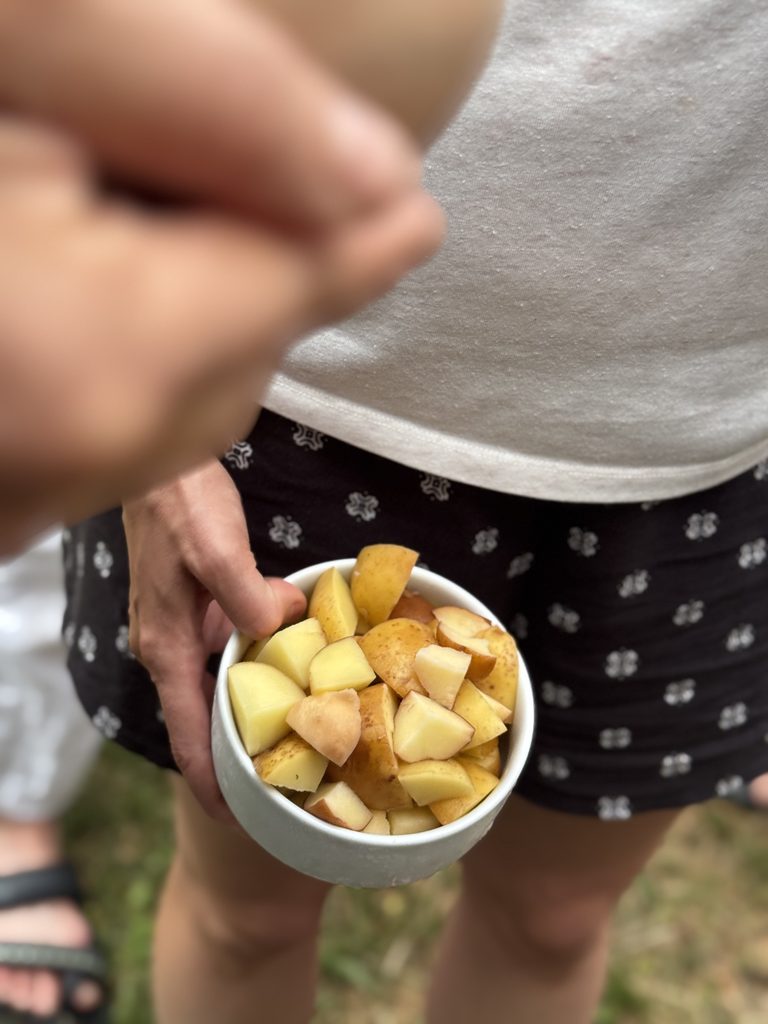
Yet inside, a landscape opens up: potatoes, curd cheese, cabbage, mushrooms, meat, and sweet fruit.
Each bite carries a different story.
They do not demand attention; quietly, but confidently, they invite you.
To sit at the table, to slow down, to converse as it flows between plates and memories.
They are food of the hands and of memory.
They are shaped without grand words.
They are passed on more through movement than through recipe — in how the dough is sealed, how the edge is pressed, how one knows when enough is enough.
In their folds, everyday life meets celebration, poverty meets ingenuity, home meets what is constantly changing.
Perhaps that is precisely why they represent more than just Polish cuisine.
They are an image of Central Europe: layered, shared, changeable — and yet intimately familiar.
All it takes is one bite.
And for a moment, to become part of something that has long been here — and keeps being put together again.
——————————————
We will share, talk, and look for images, symbols, and associations we carry in relation to our environment and roots — sometimes consciously, sometimes only intuitively.
The workshop is open to everyone, regardless of experience or profession.
Accept the invitation to taste, and to be part of the shared table for a while.
@VisegradFund
Practical information Date: 3rd June 2026 from 14 - 20h Venue: Vila P651, Pevnostní 65/8, Praha 6 Bring: one traditional recipe or a memory connected to it that means something to you
Central European Summer School of Imagination — Kaprálův Mlýn
Diary of four days, woven with the voices of the landscape
Day 1 — Starting with a map that has no borders
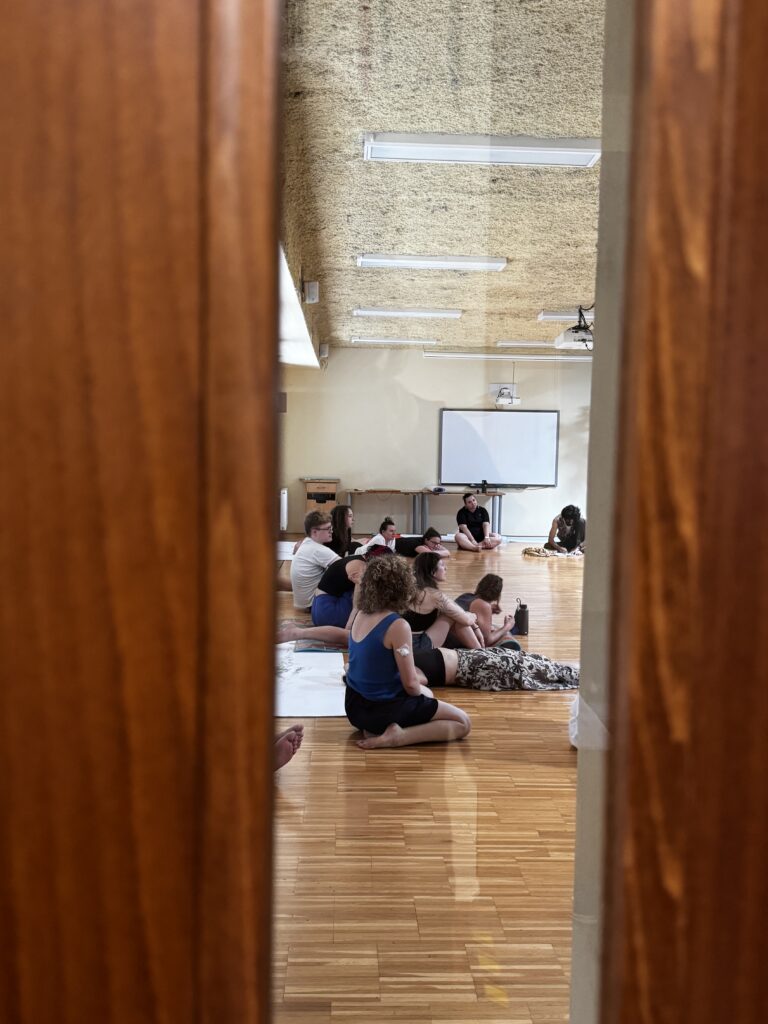
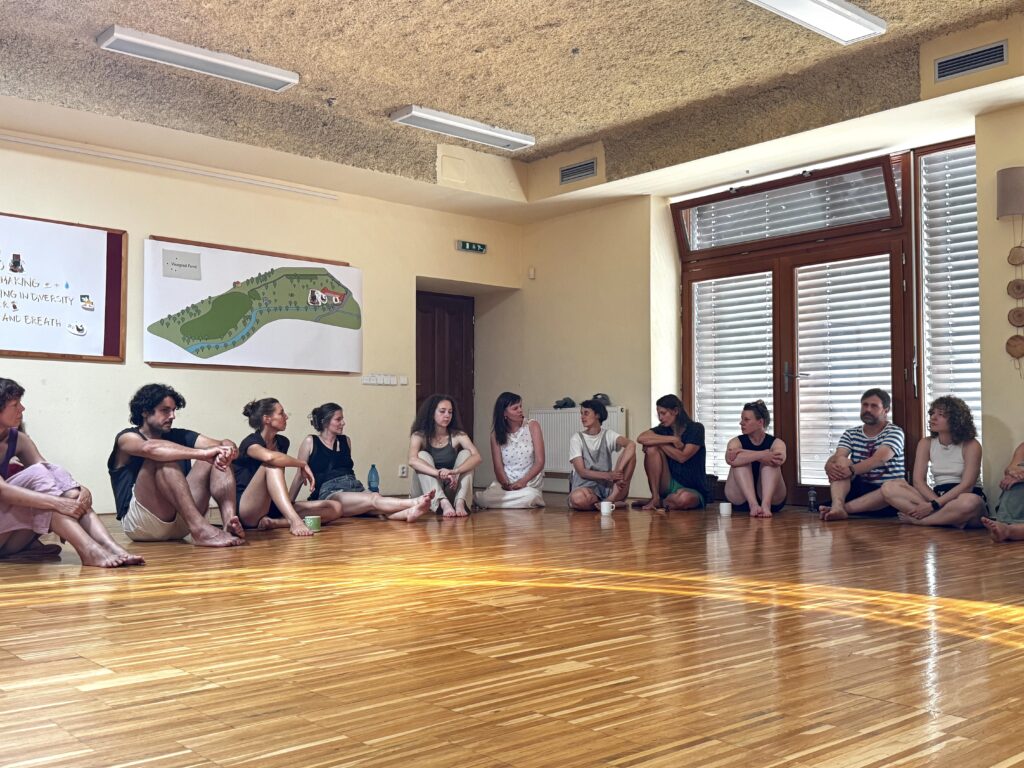
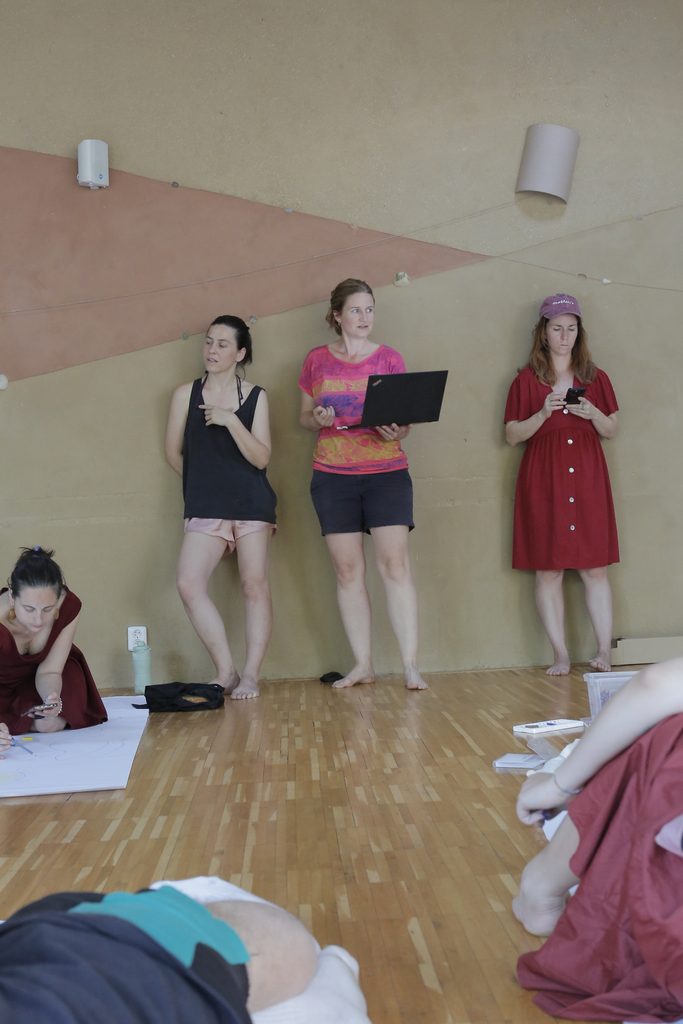
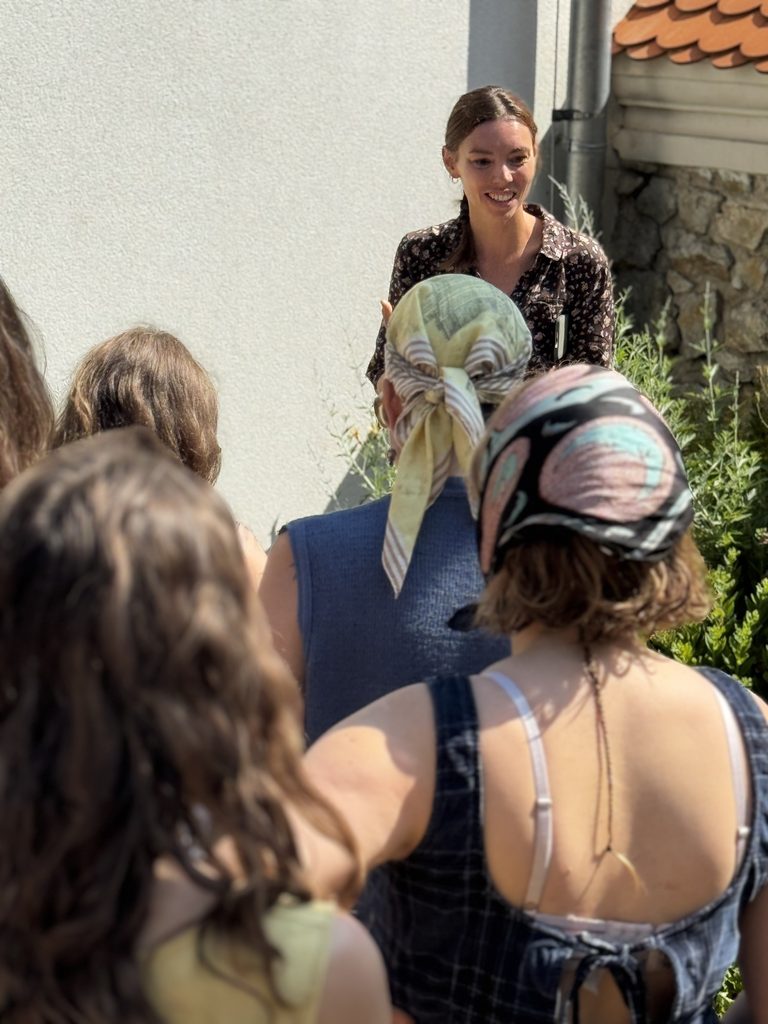
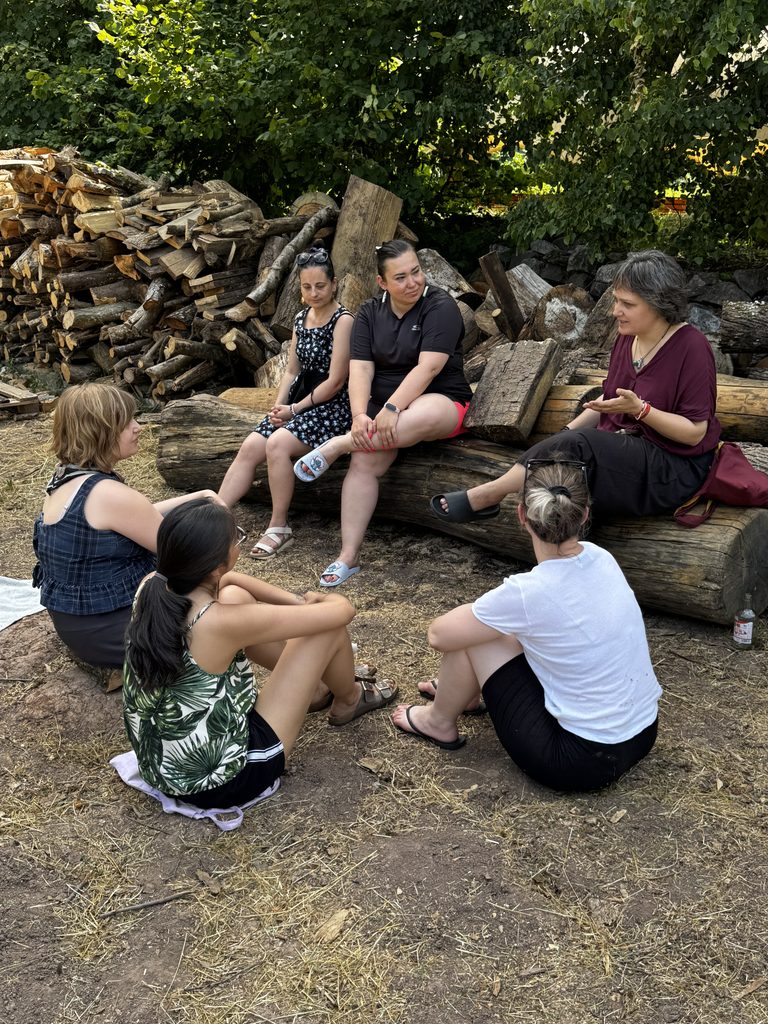
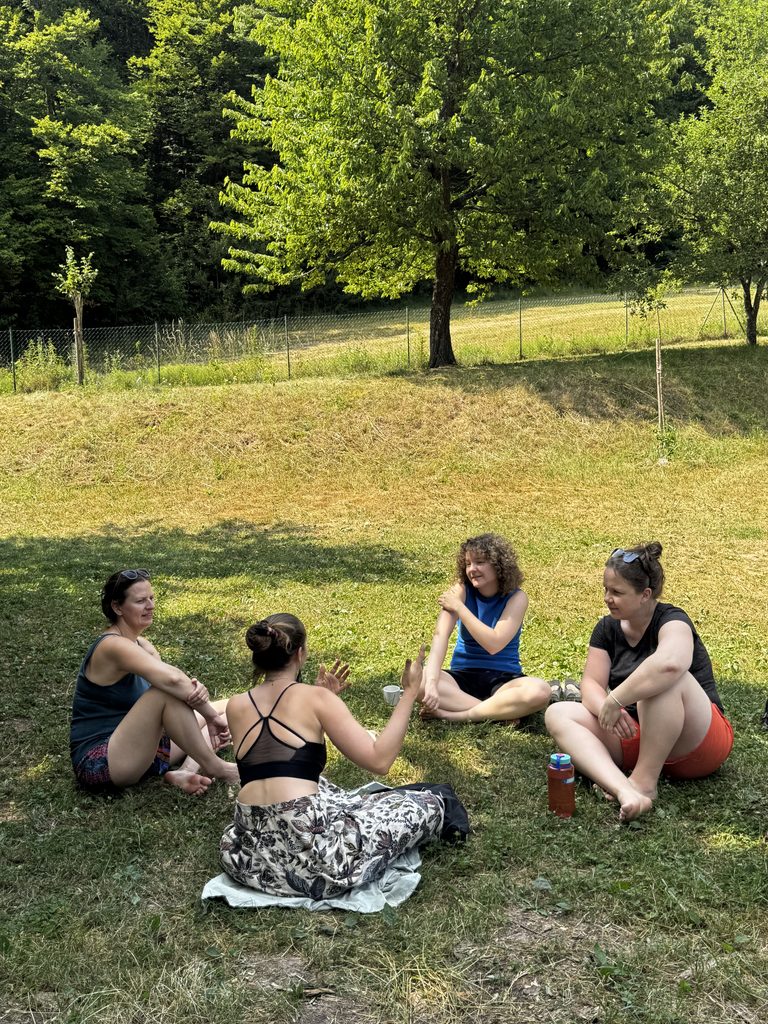
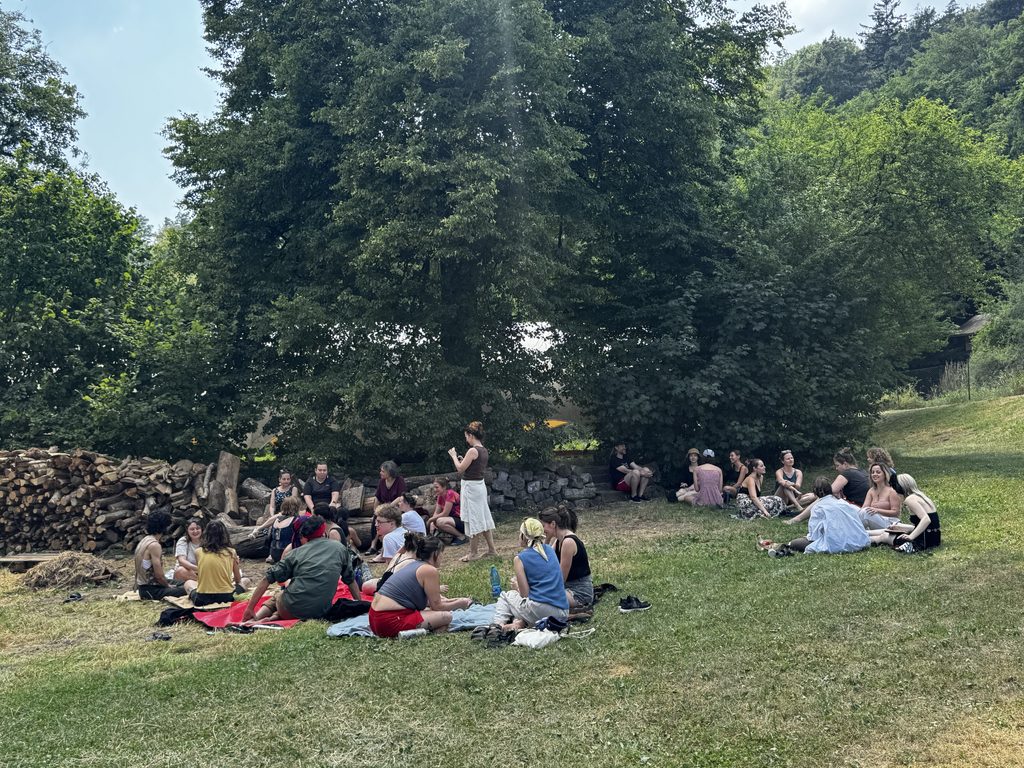
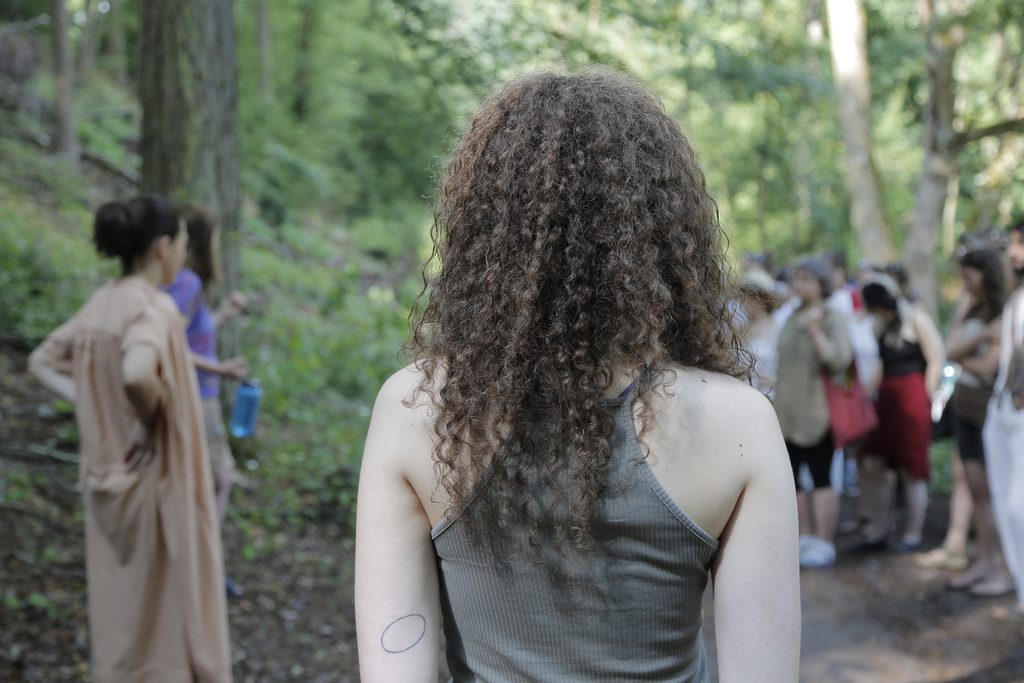
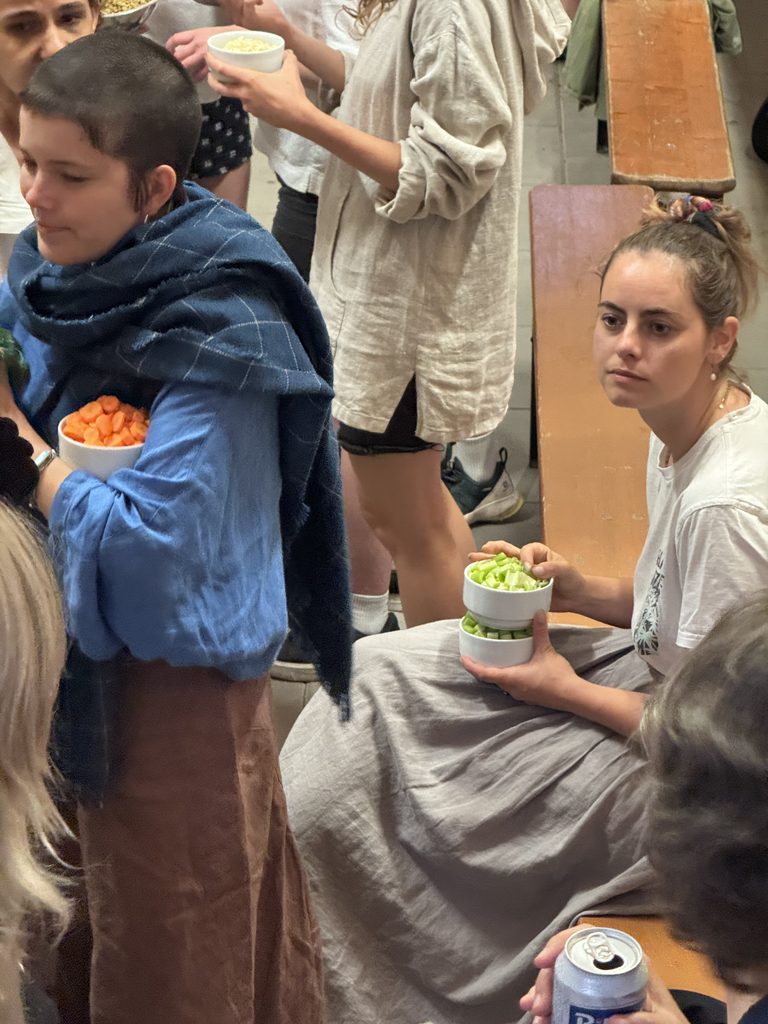
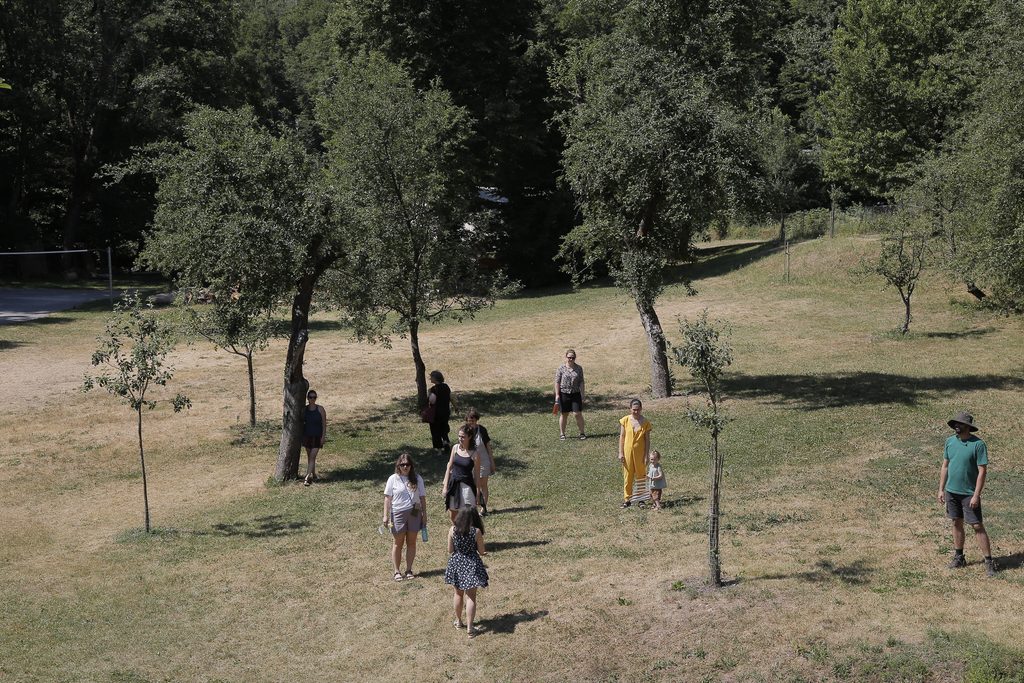
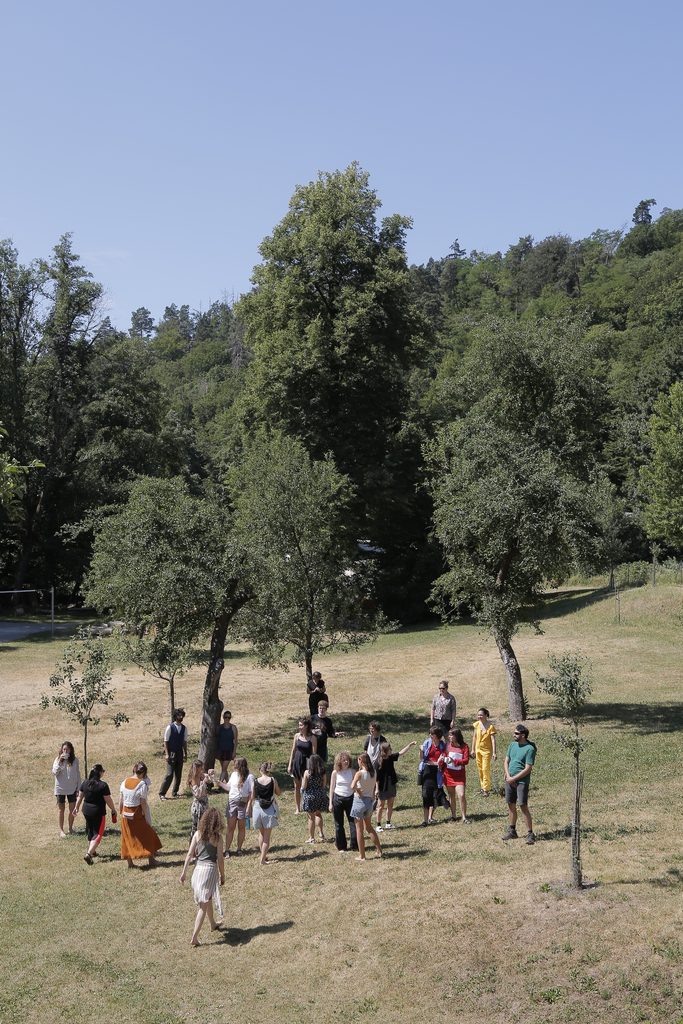
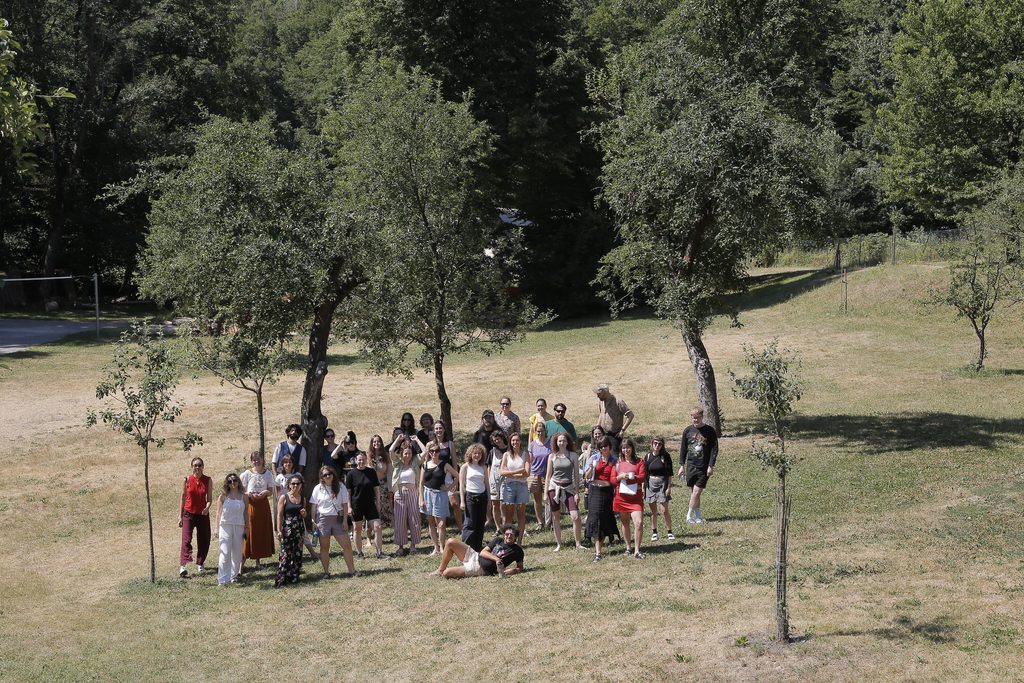
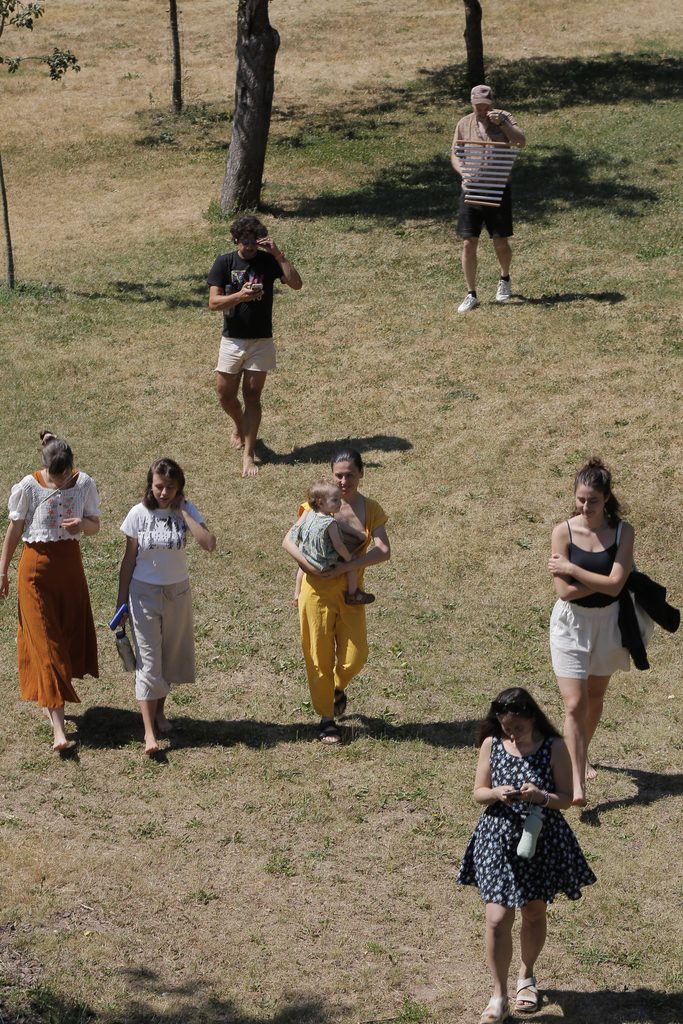
We start with a map that has no borders. Thirty participants from different corners of the V4 countries arrived today at Kaprálův Mlýn after a long journey. Each brought something different – their own story, experiences, questions, and reasons for being here. The first shared circle was for introductions. Not just who we are and where we come from, but also what brought us here. The space was filled with Czech, Slovak, Polish, and Hungarian. The different languages hadn’t yet met in arguments, but in simple human curiosity.
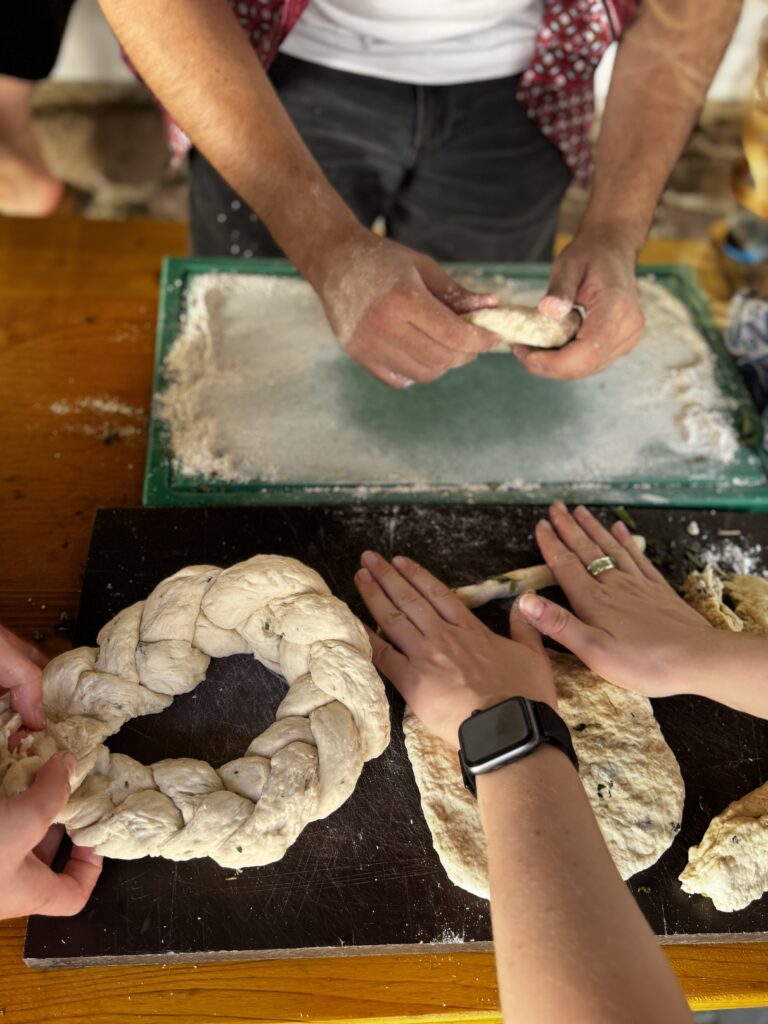
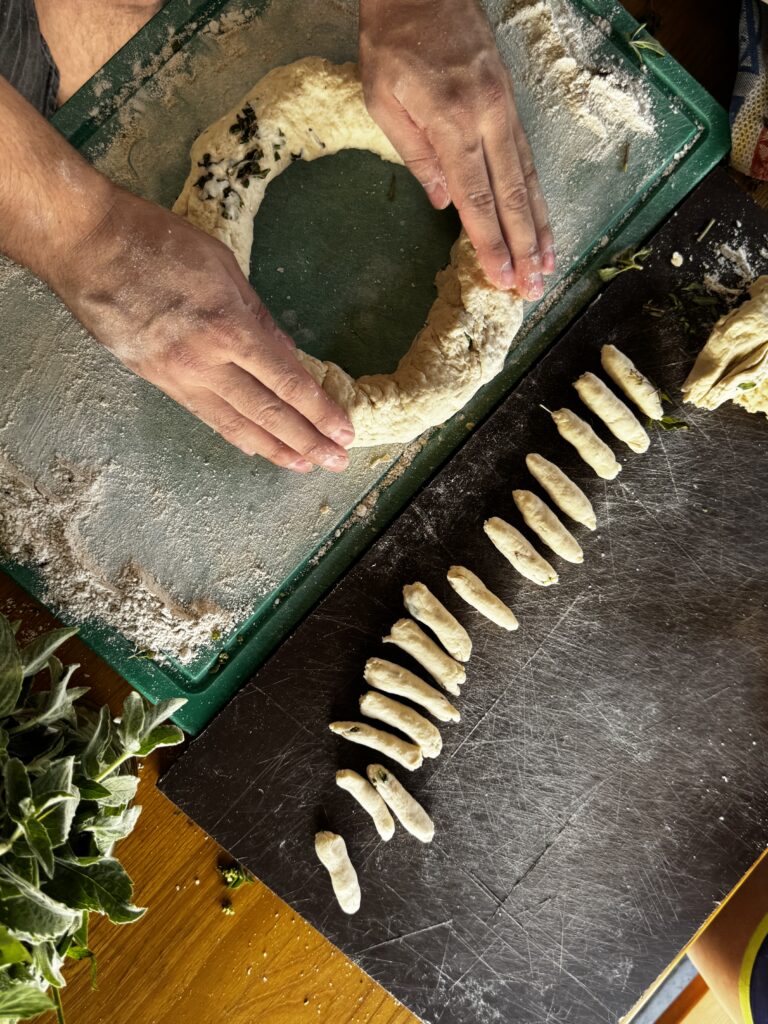
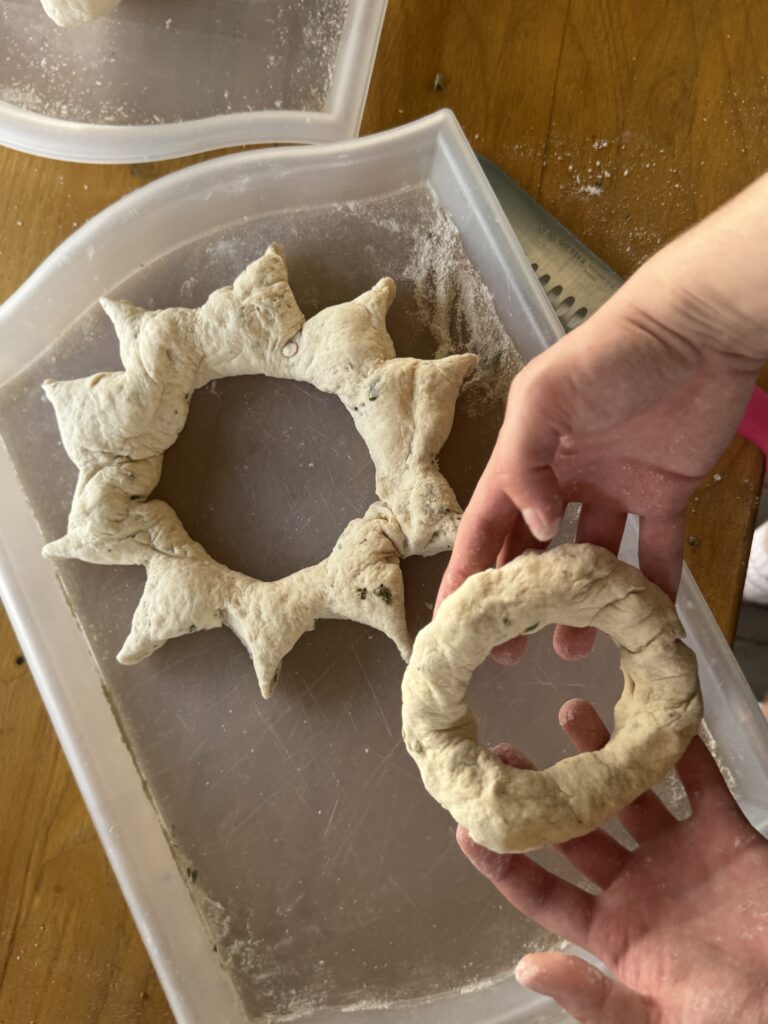
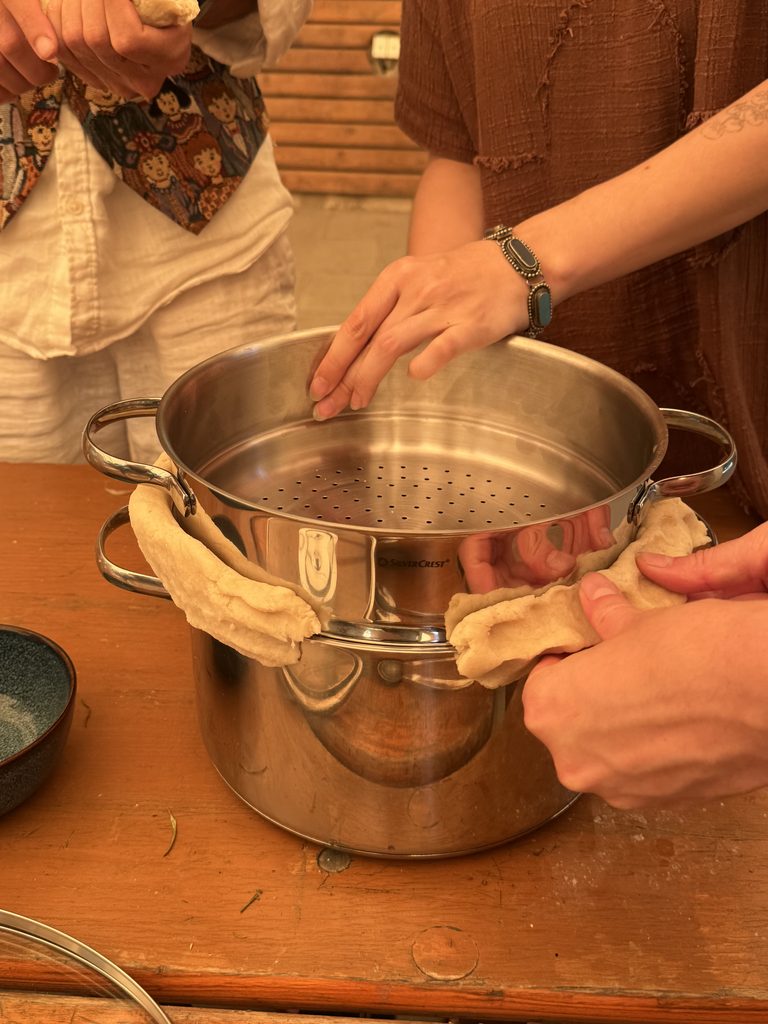
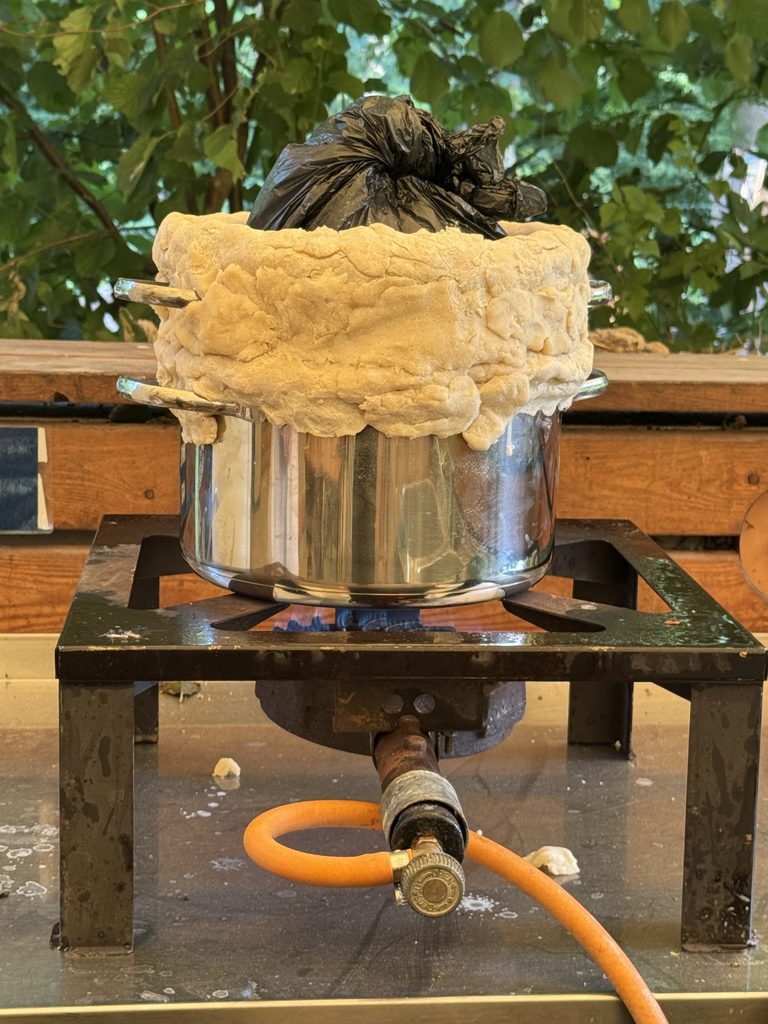
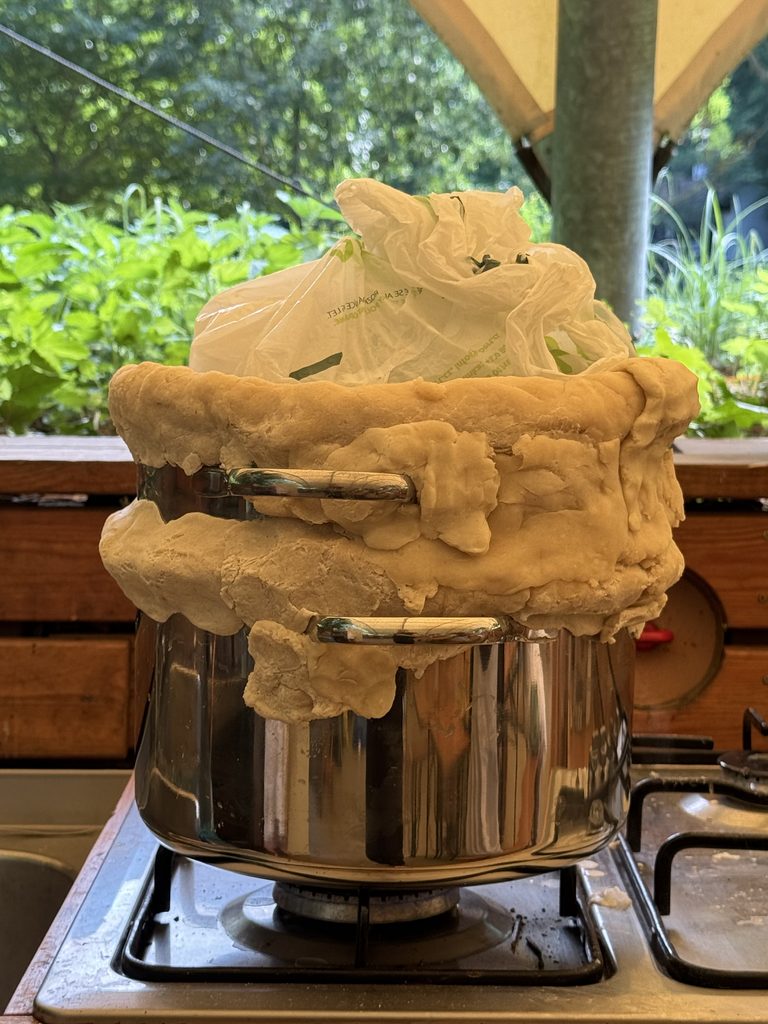
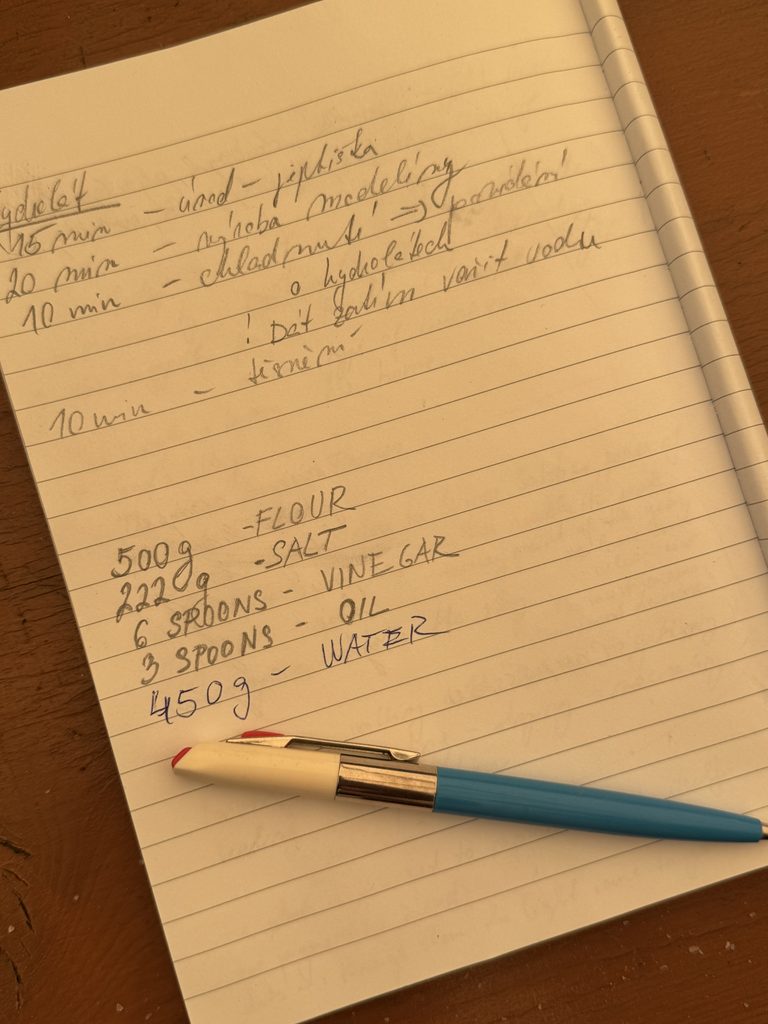
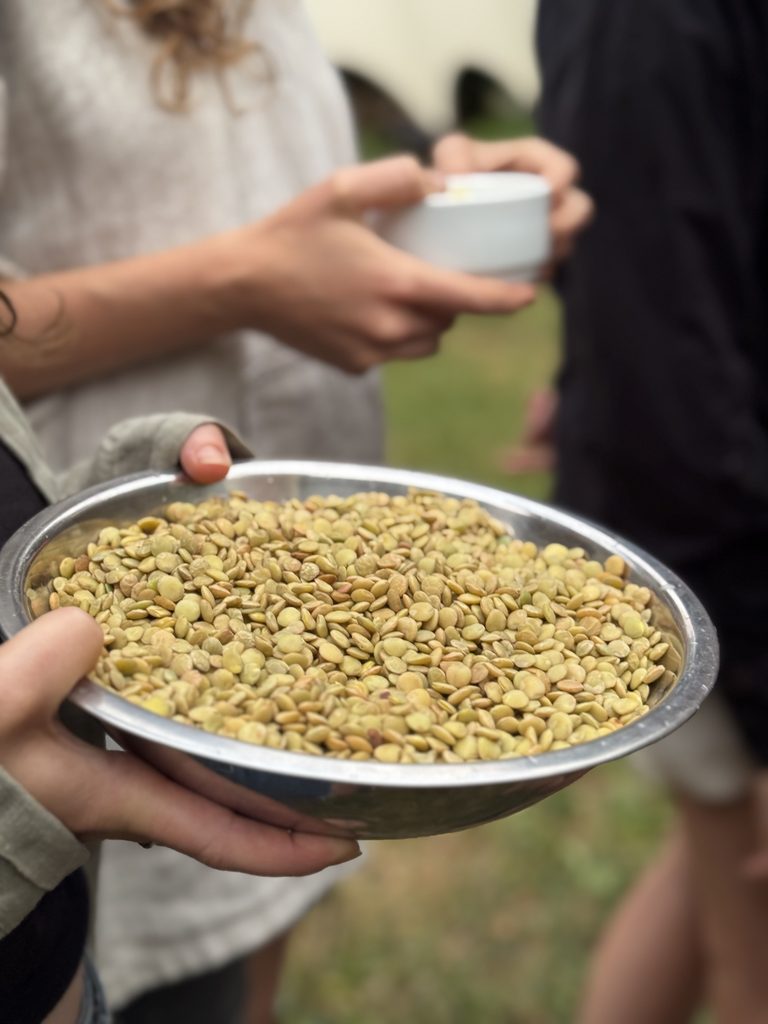
Then we made bread together.
With Kateřina Vídenová, cooking isn’t just an everyday need, but a way to slow down time. The bread created today by many hands will tomorrow sit in the middle of the shared table. Perhaps rituals were never just about tradition. They are a way to remember where we are. And with whom.
Work that happens without rush. Fruit comes at the moment there's too much of it. When summer is short but intense. And everything ripens at once. It's not just about processing raw ingredients. It's a way to hold on to a moment that's slowly passing. The taste. But also the time that carried it.
Why do we start with bread?
We could have started with a debate about polarization. We didn’t.
We knew that a society split into opinion camps doesn’t first need more arguments, but the experience of a shared rhythm. An activity that has no winners or losers. When baking bread together, no one has to defend their identity. Yet something is created that they couldn’t make alone.
Maybe that’s exactly how dialogue begins – not by agreeing on opinions, but through a shared experience.
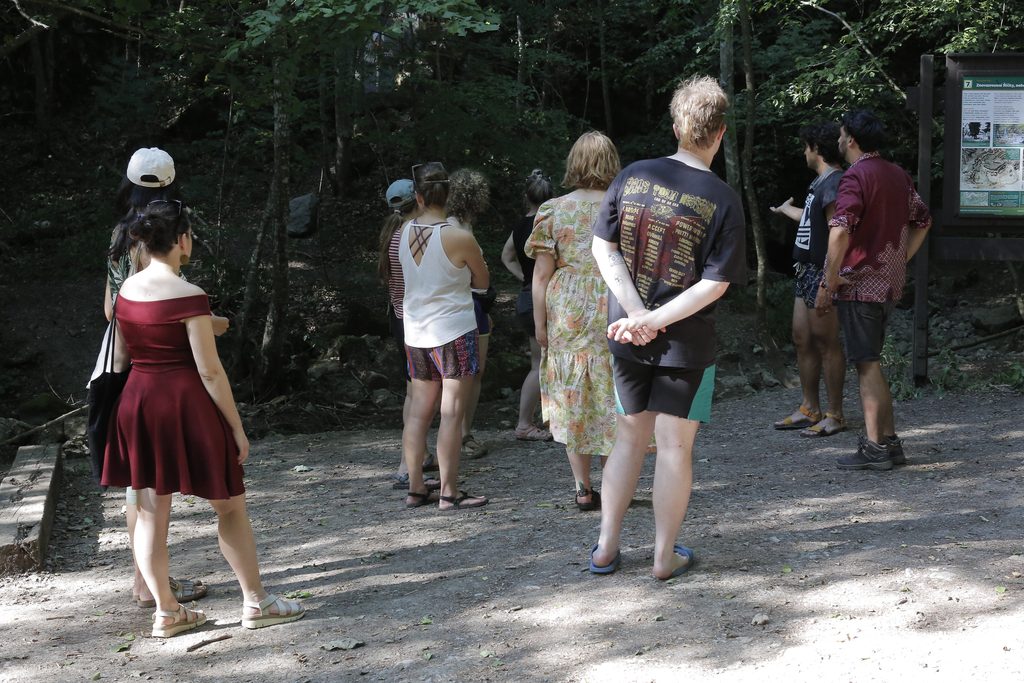
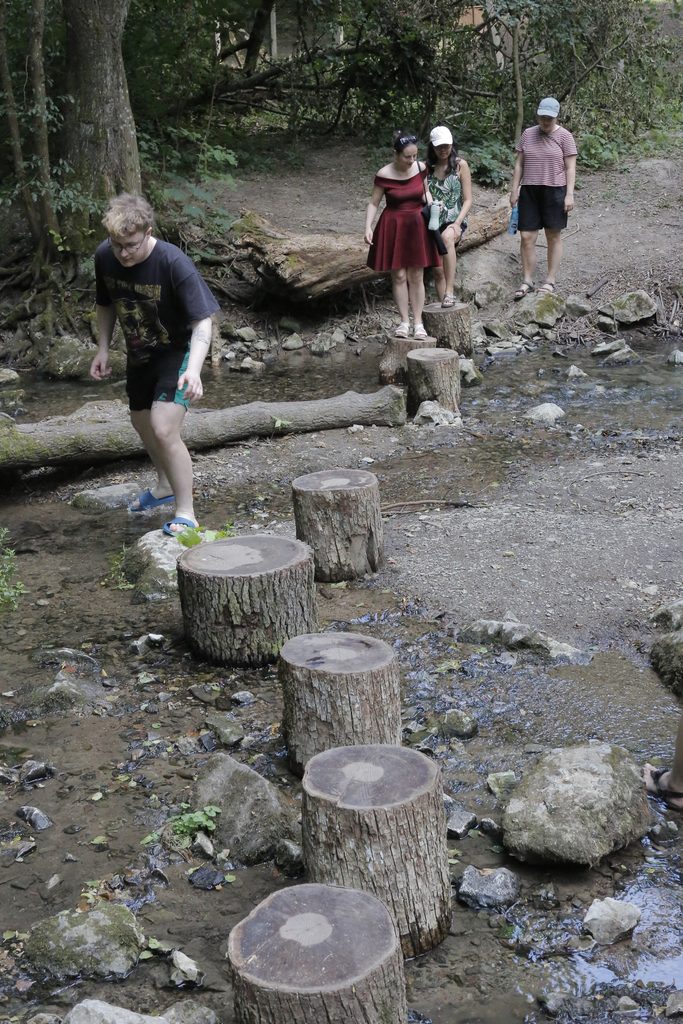
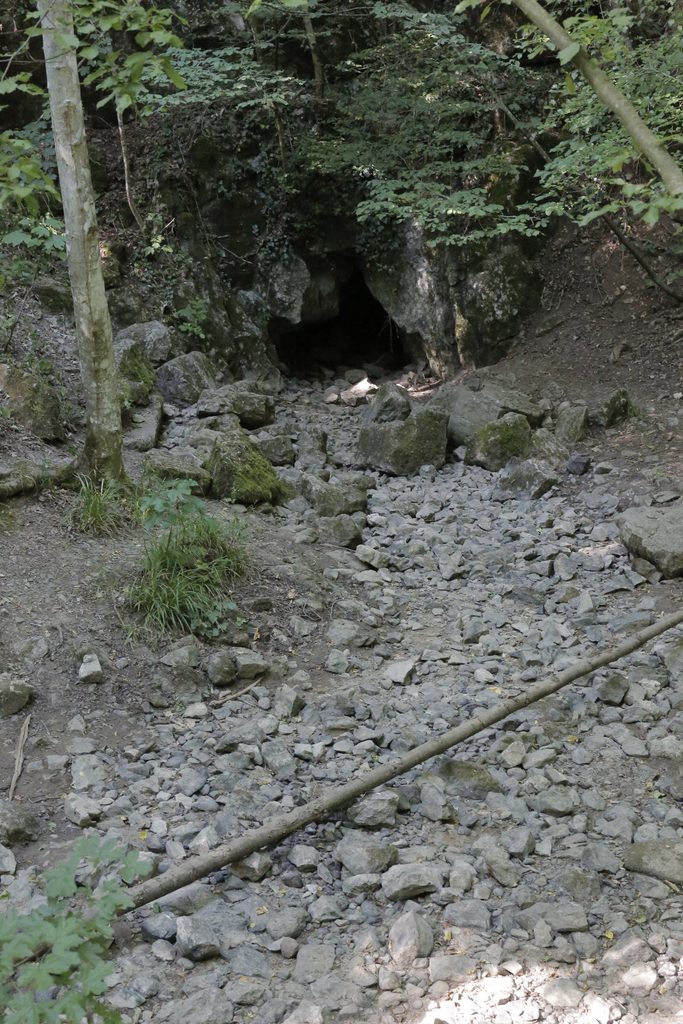
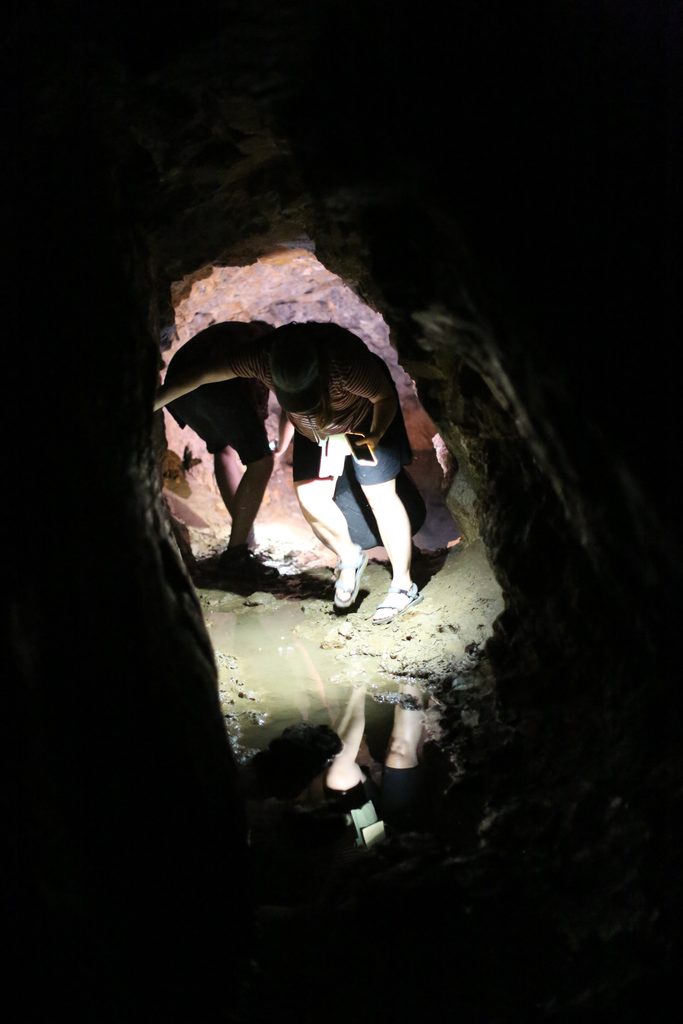
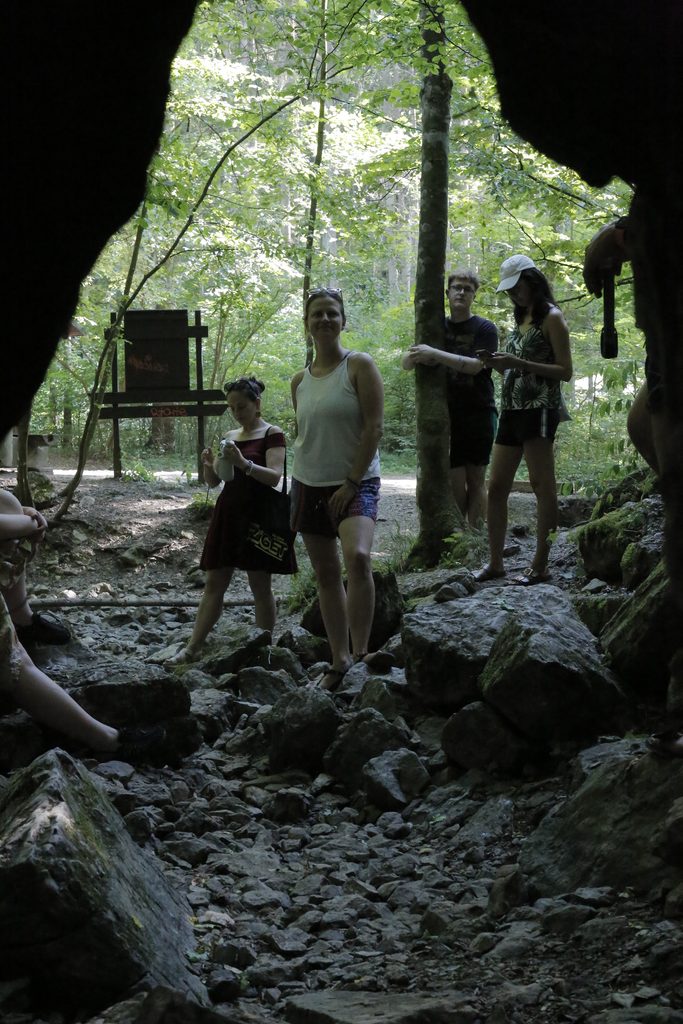
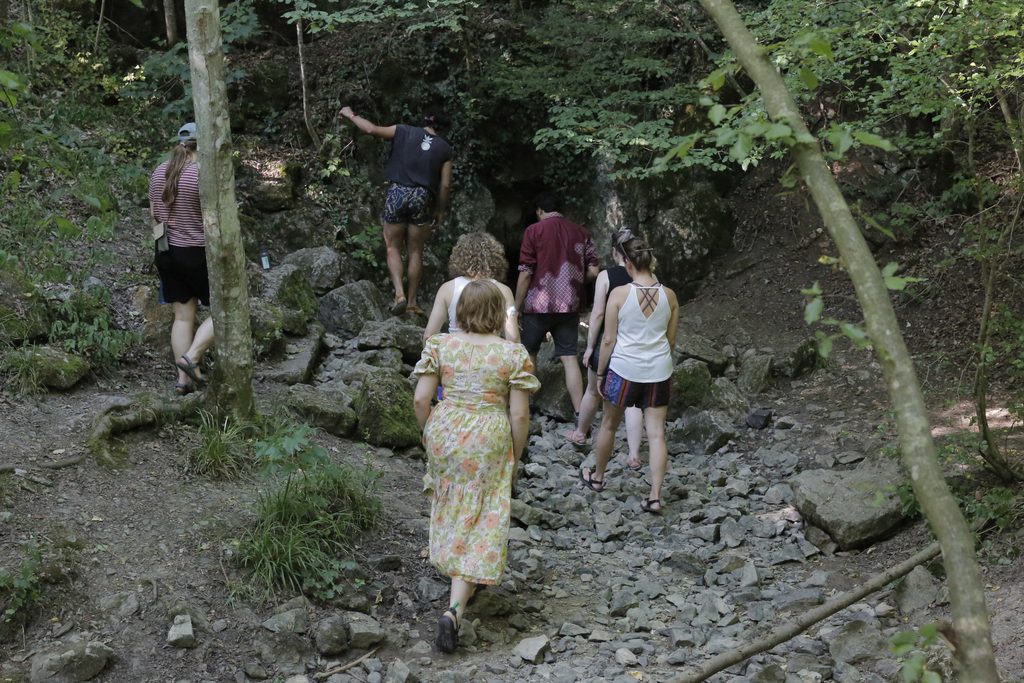
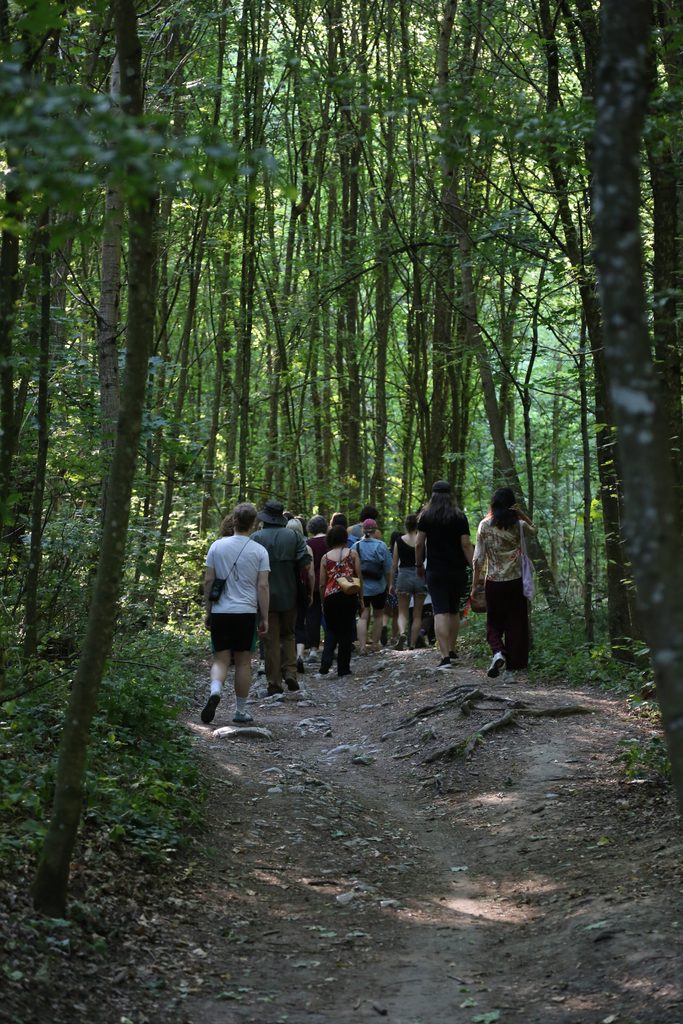
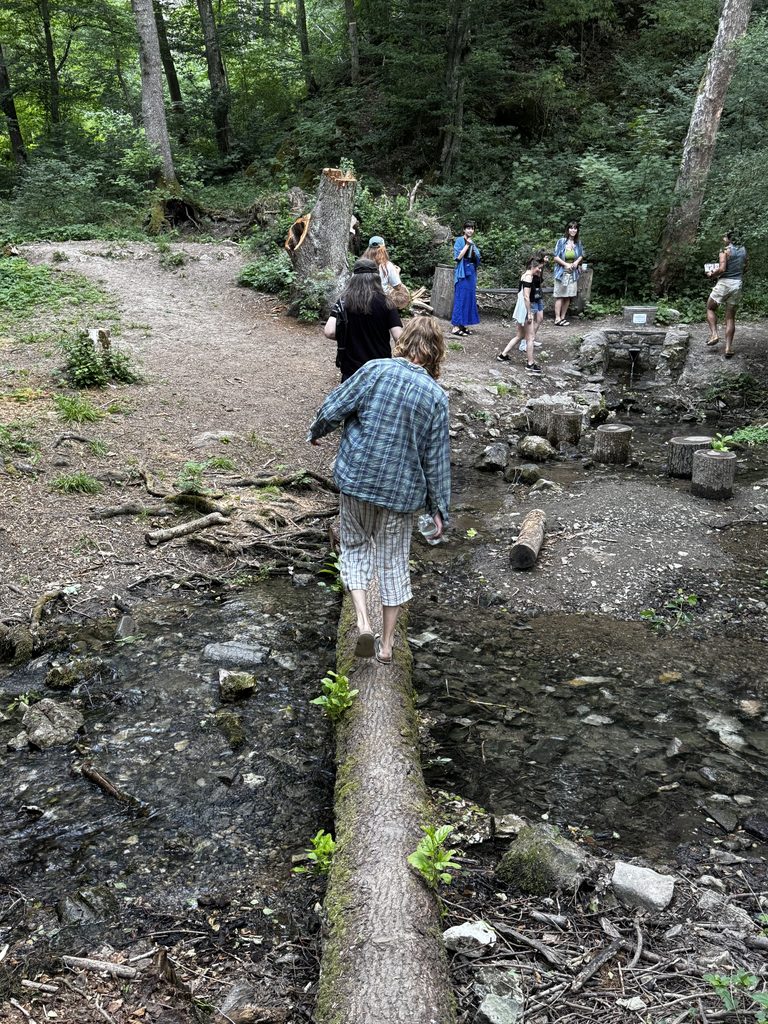
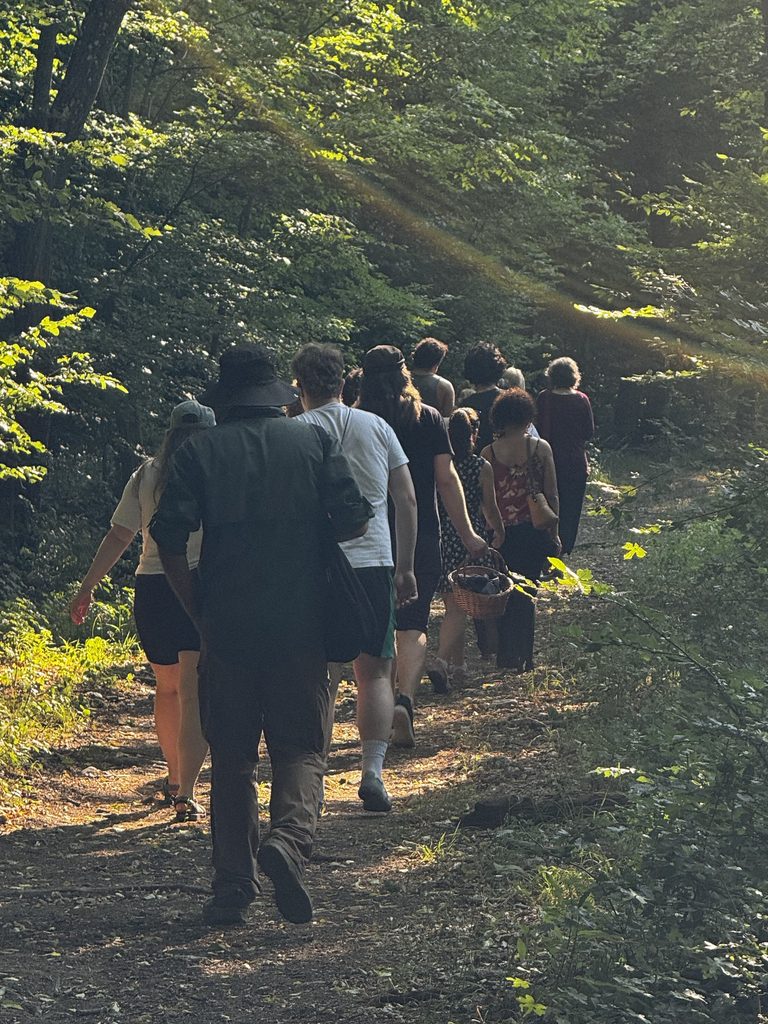
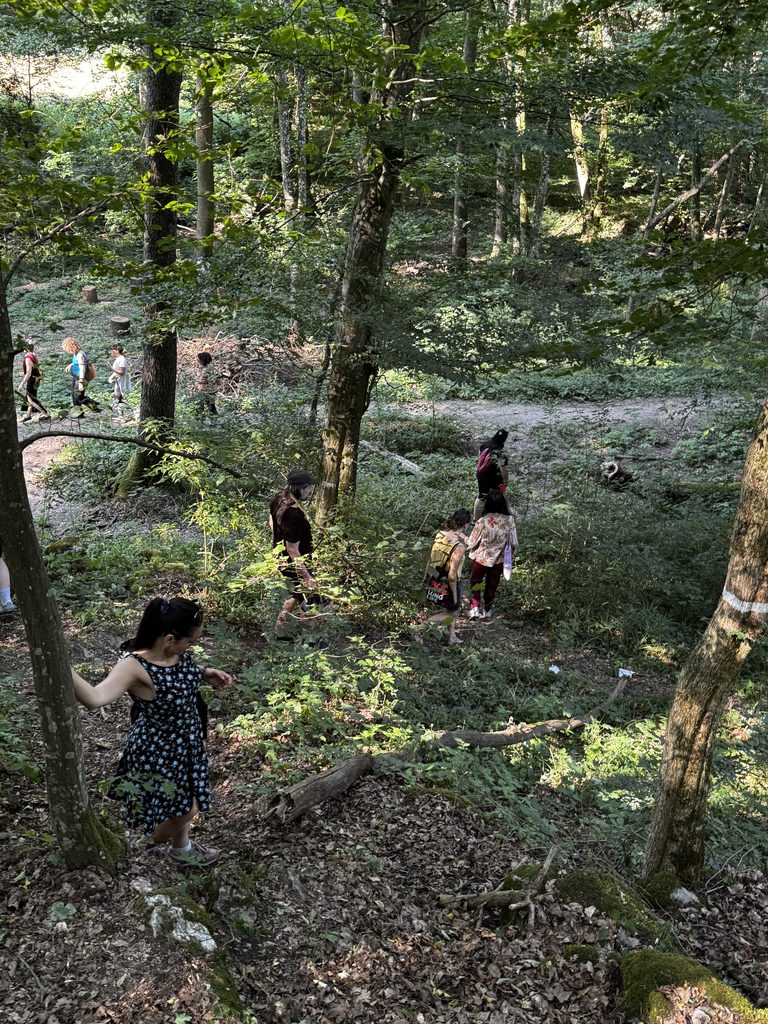
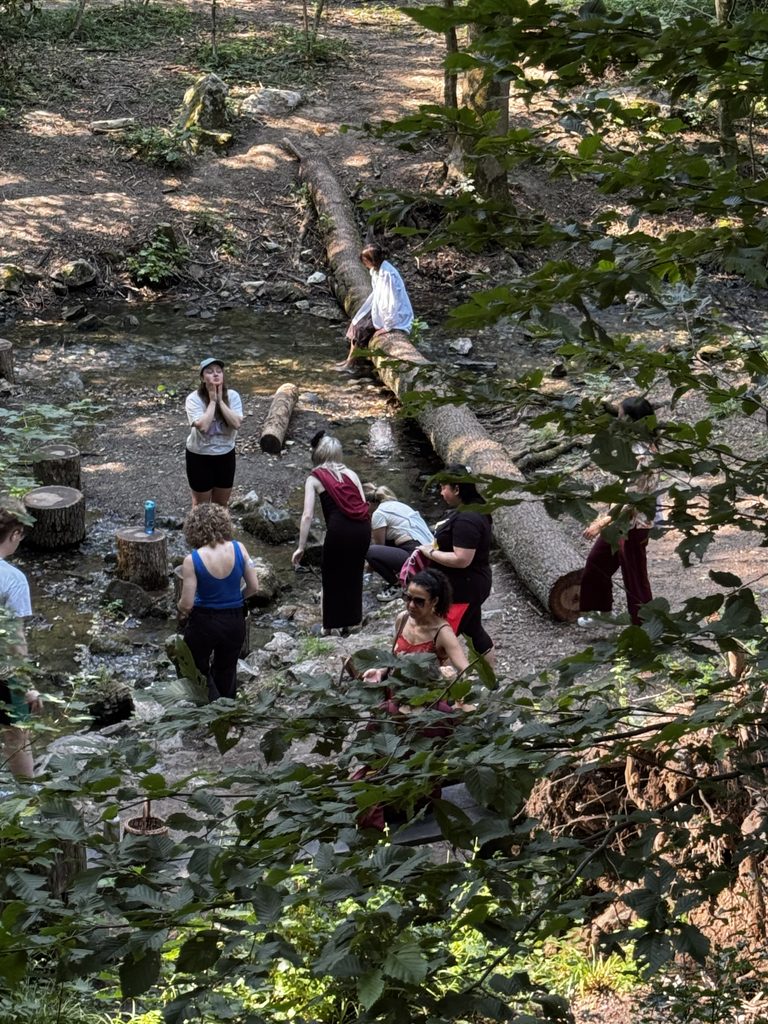
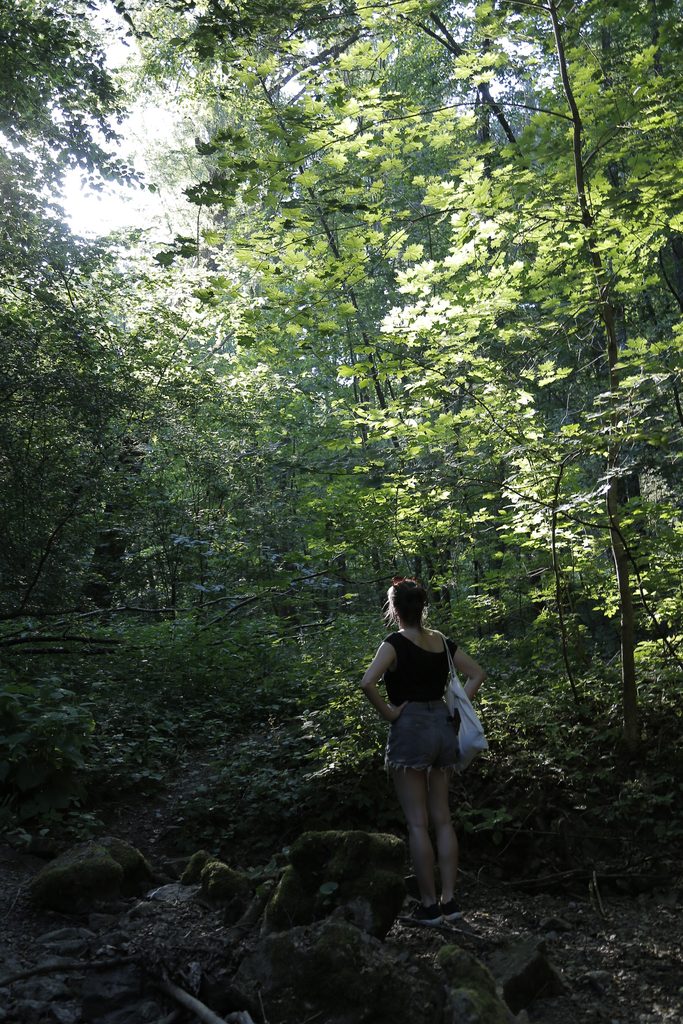
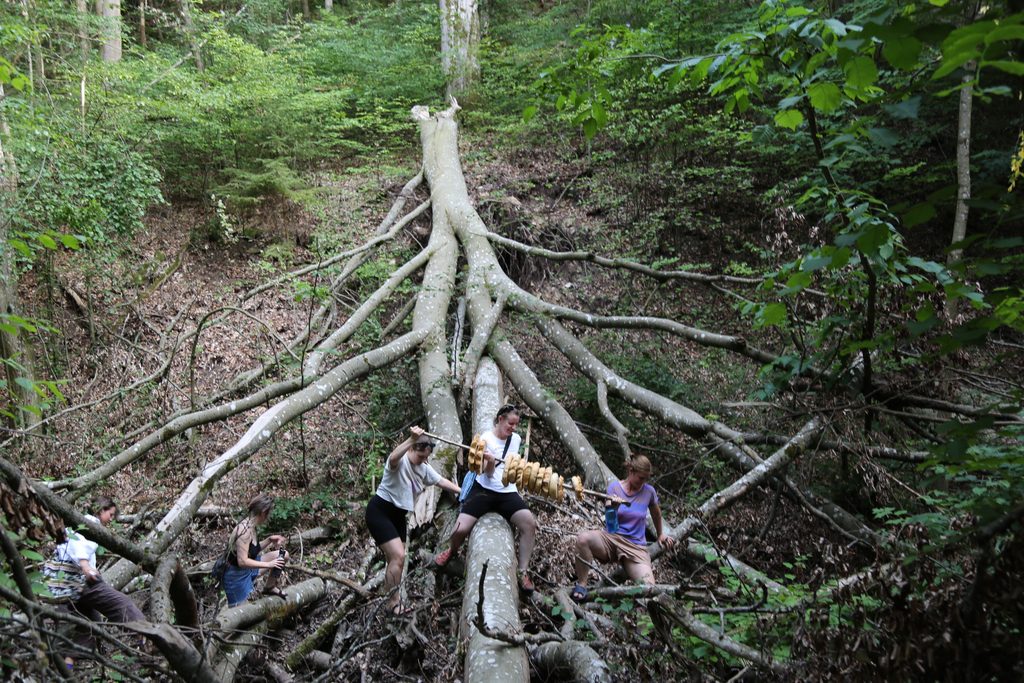
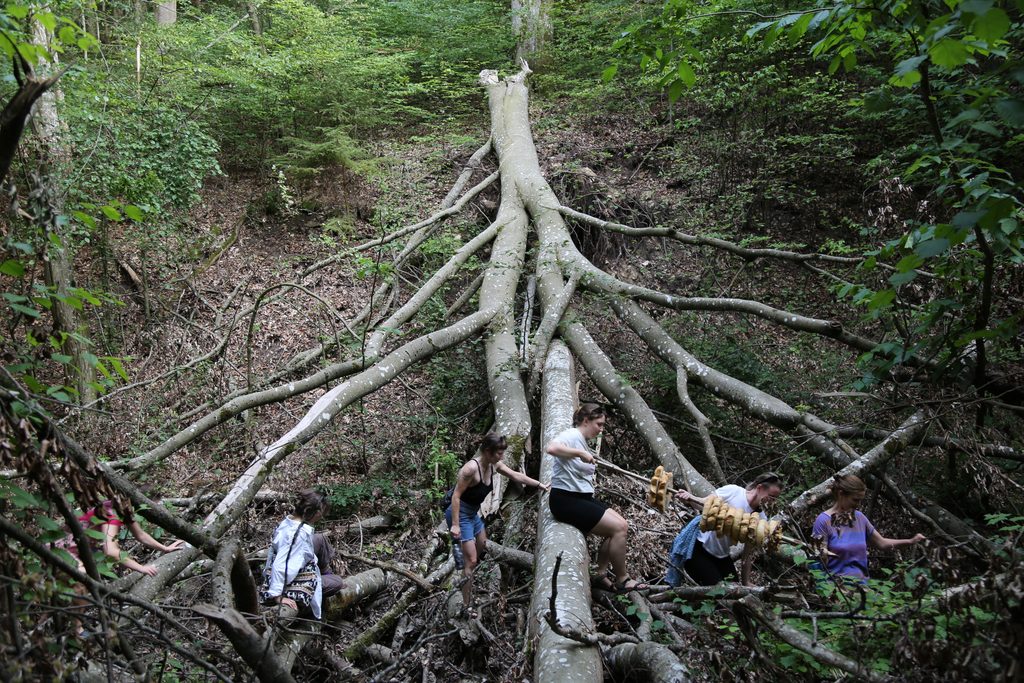
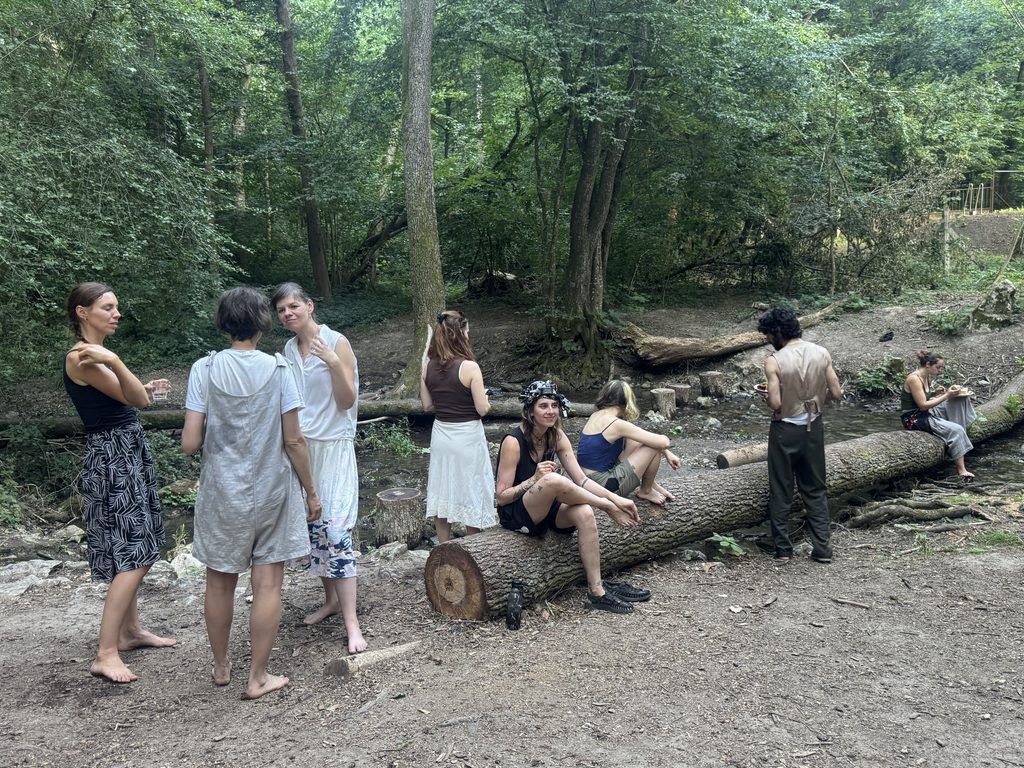
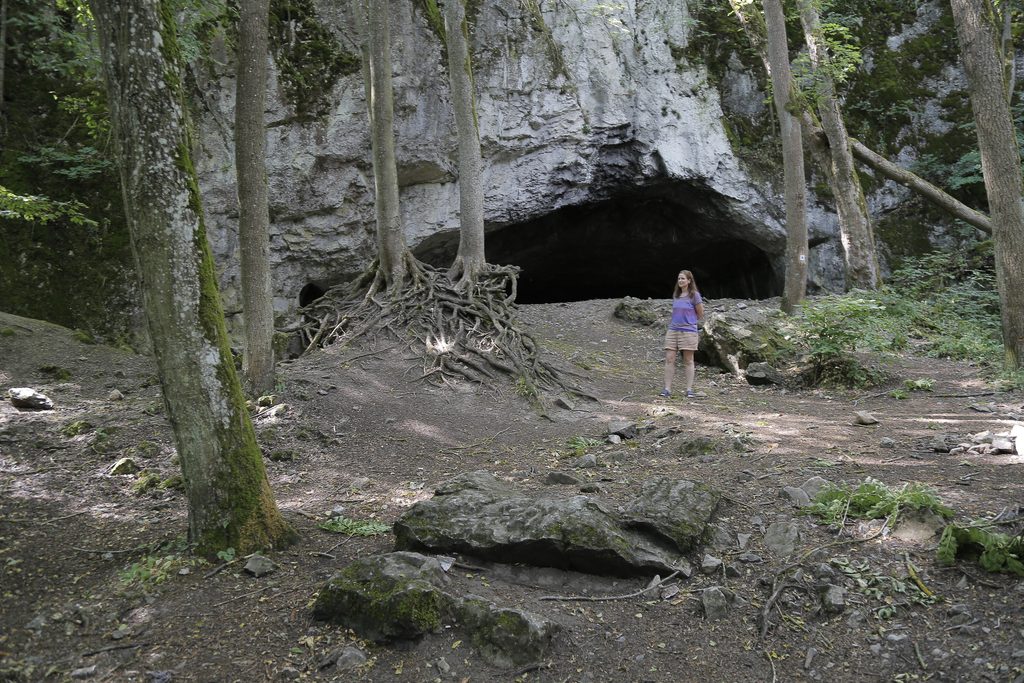
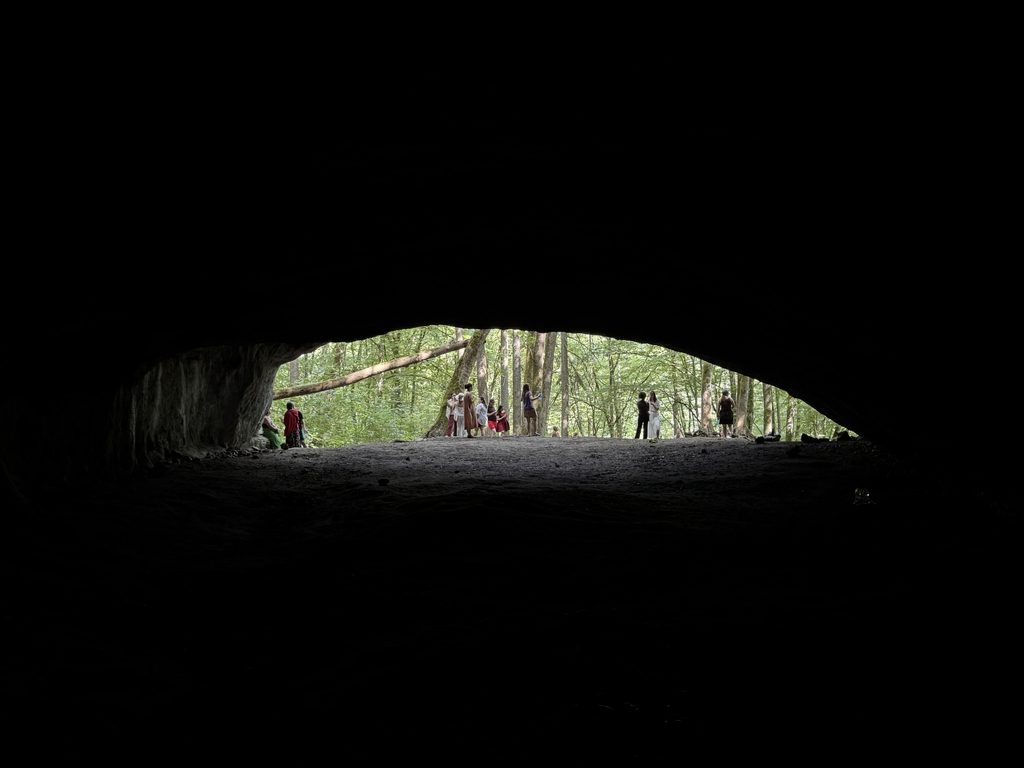
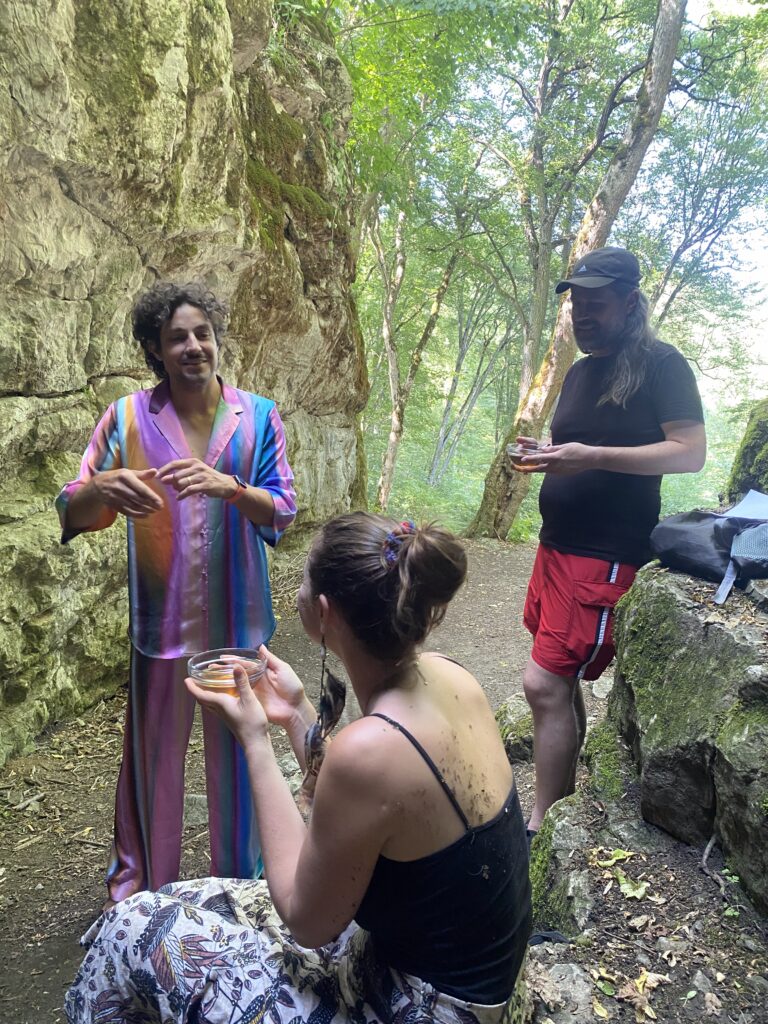
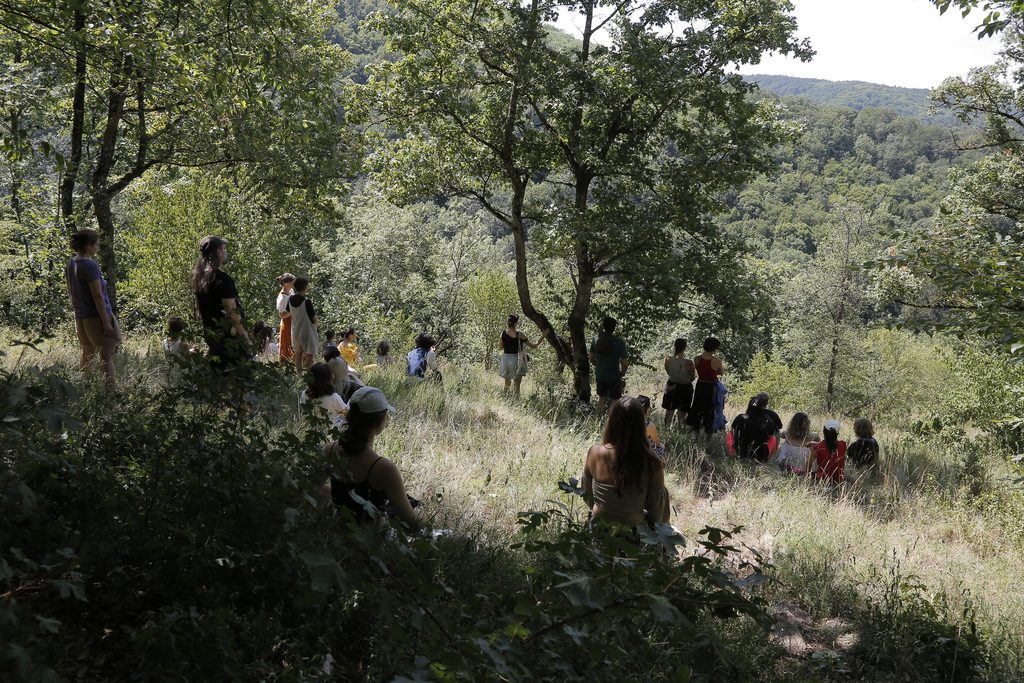
In the afternoon, Piotr Sykora and I headed out to the area around the Mill. The stream led us all the way to a cave. Some went inside, others stayed outside and listened to what couldn’t be seen. Both experiences were true. Neither was complete.
The forest didn’t force us to decide which was more correct. It just let them exist side by side.
The forest doesn’t start suddenly.
It more like slowly comes closer.
It thickens.
It quiets down.
Steps change before thoughts do.
Speech breaks into shorter sentences.
The forest doesn’t tell stories.
It just holds everything next to each other.
It doesn’t judge.
It humanizes.
Just stay for a moment.
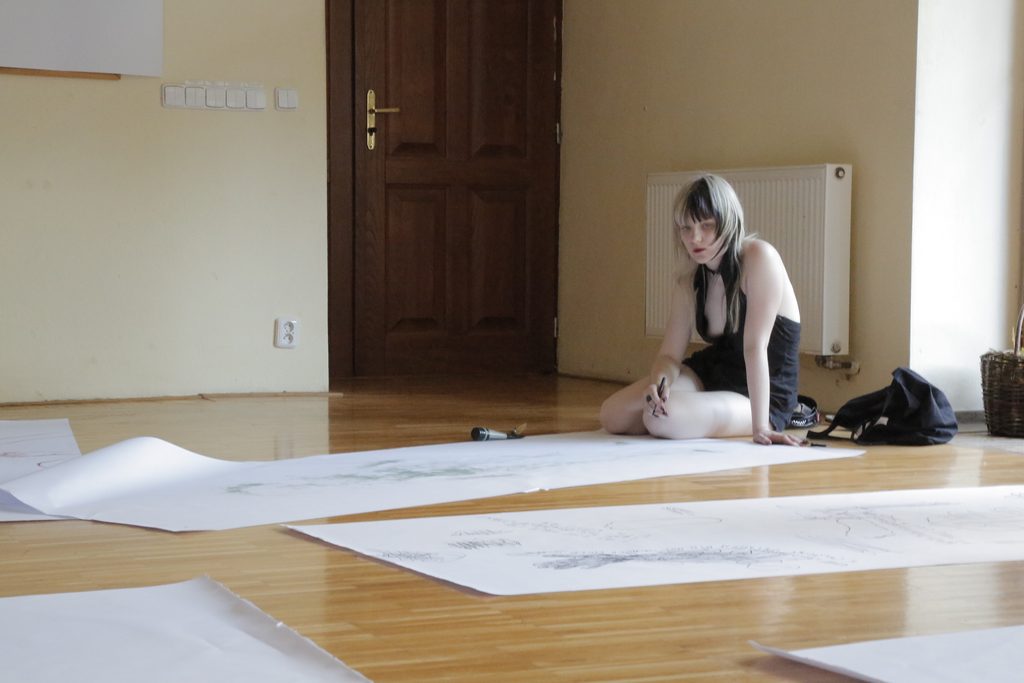
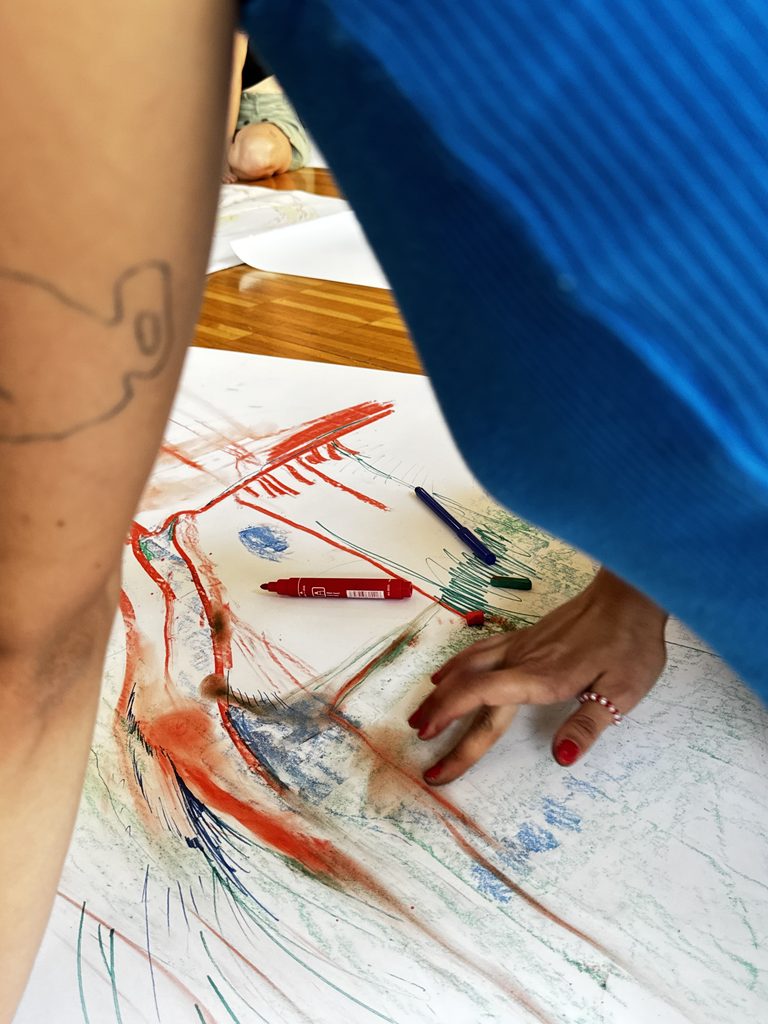
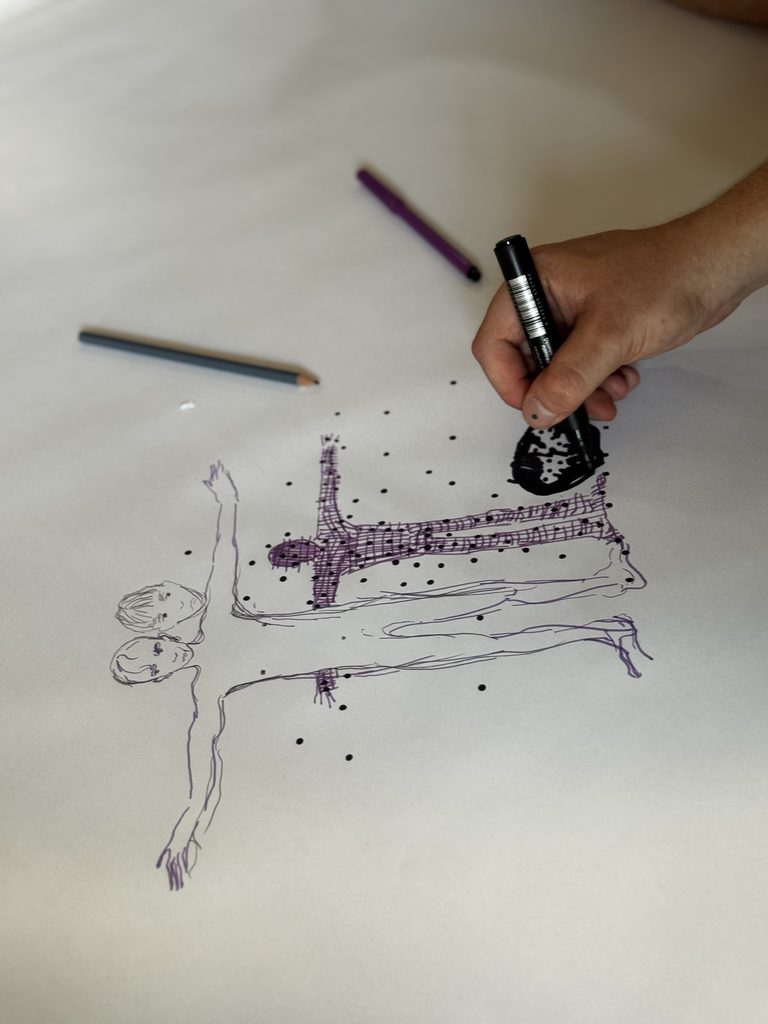
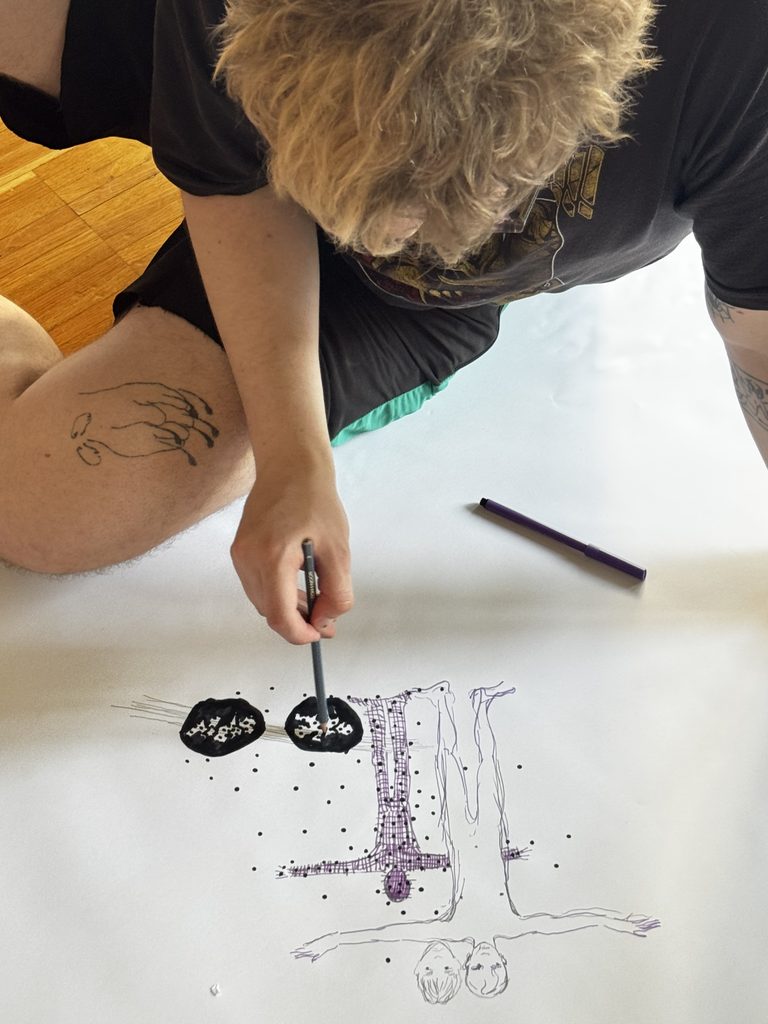
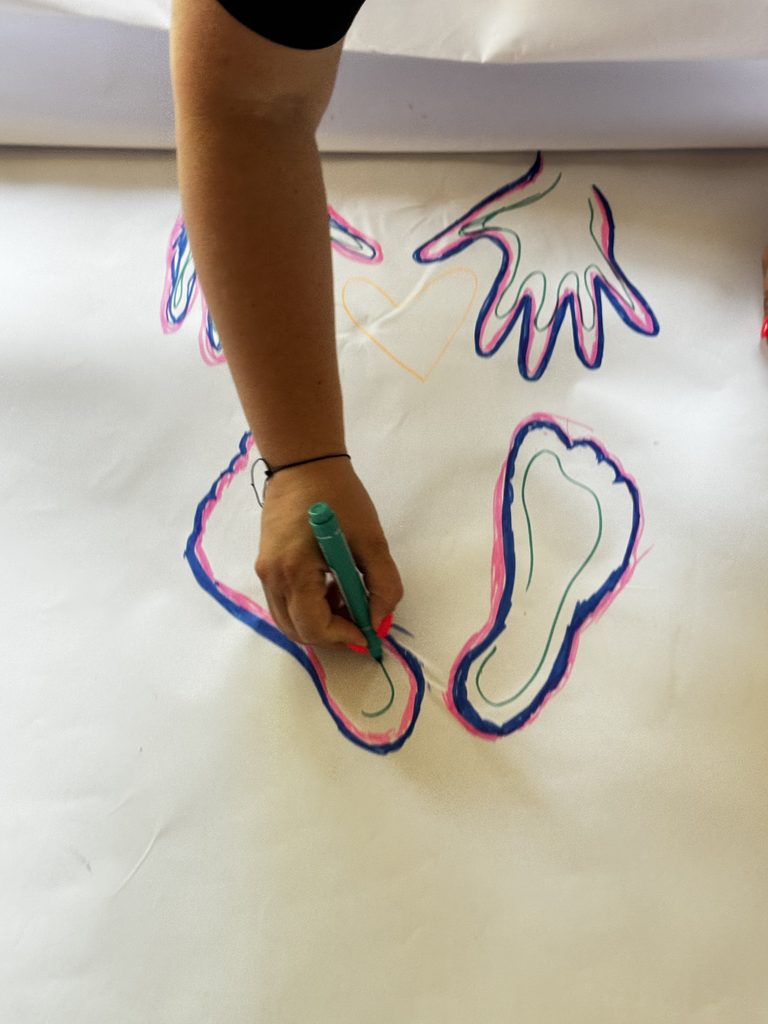
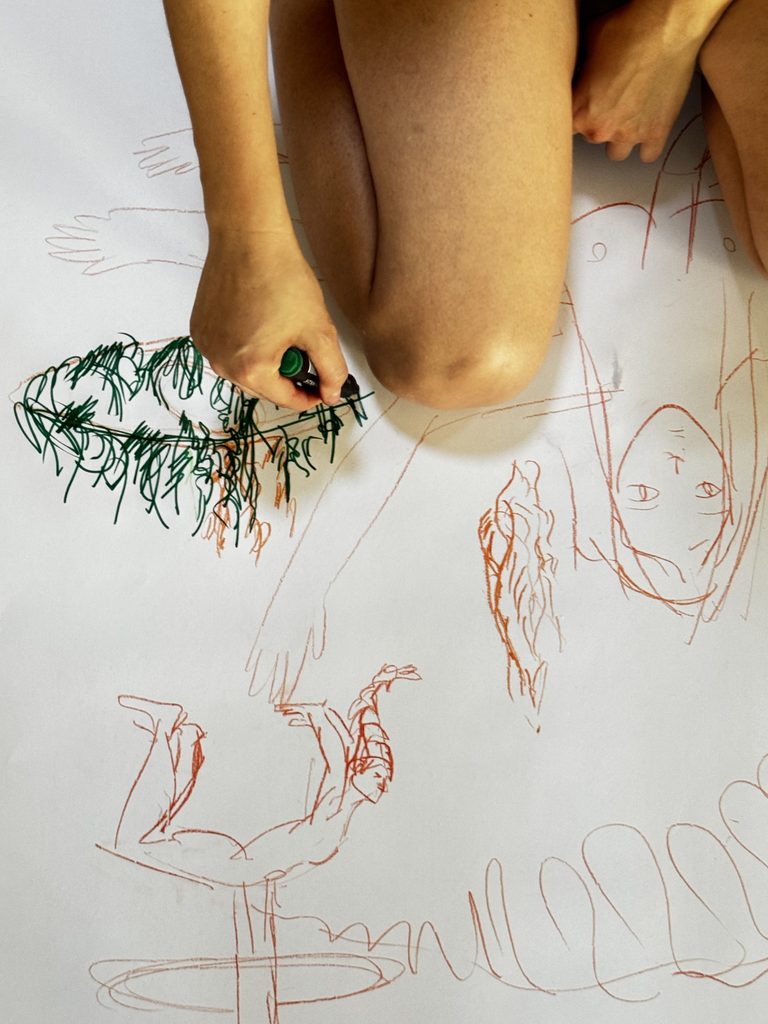
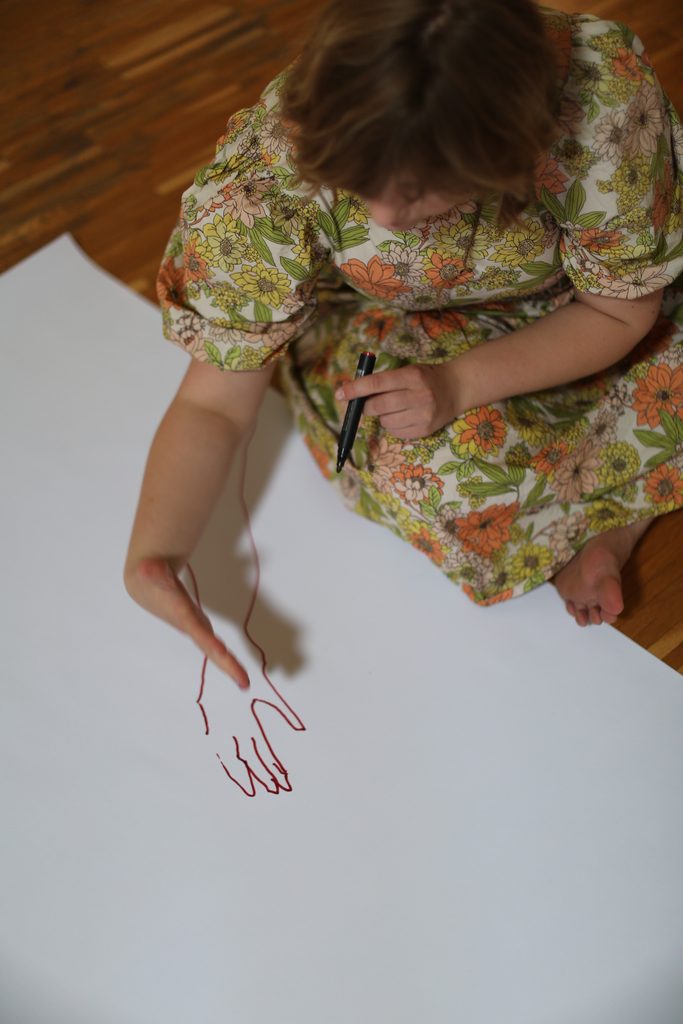
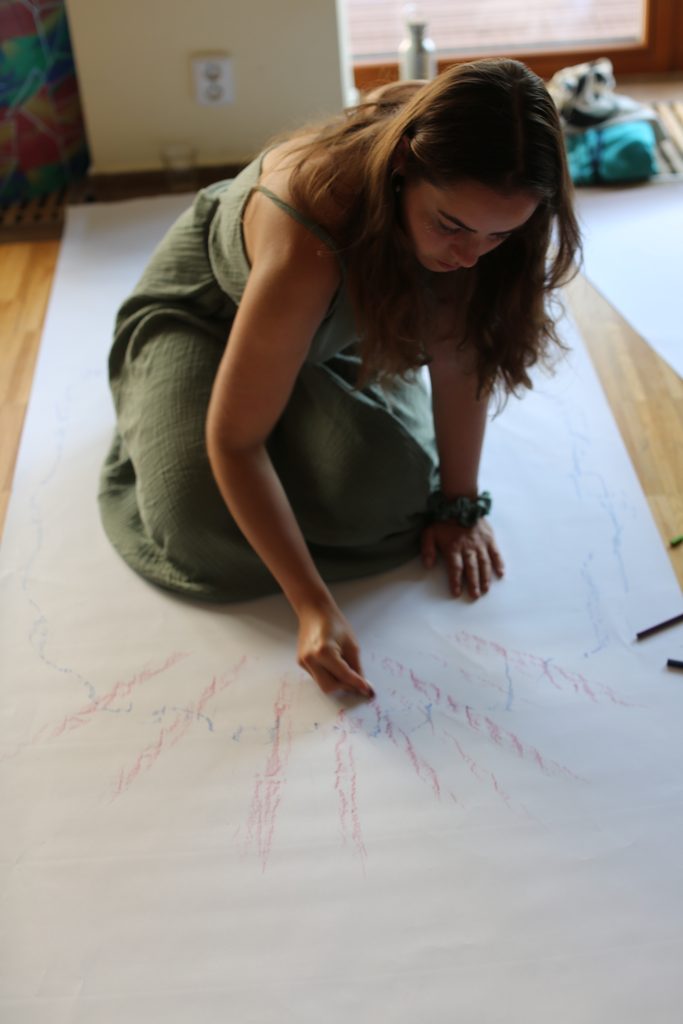
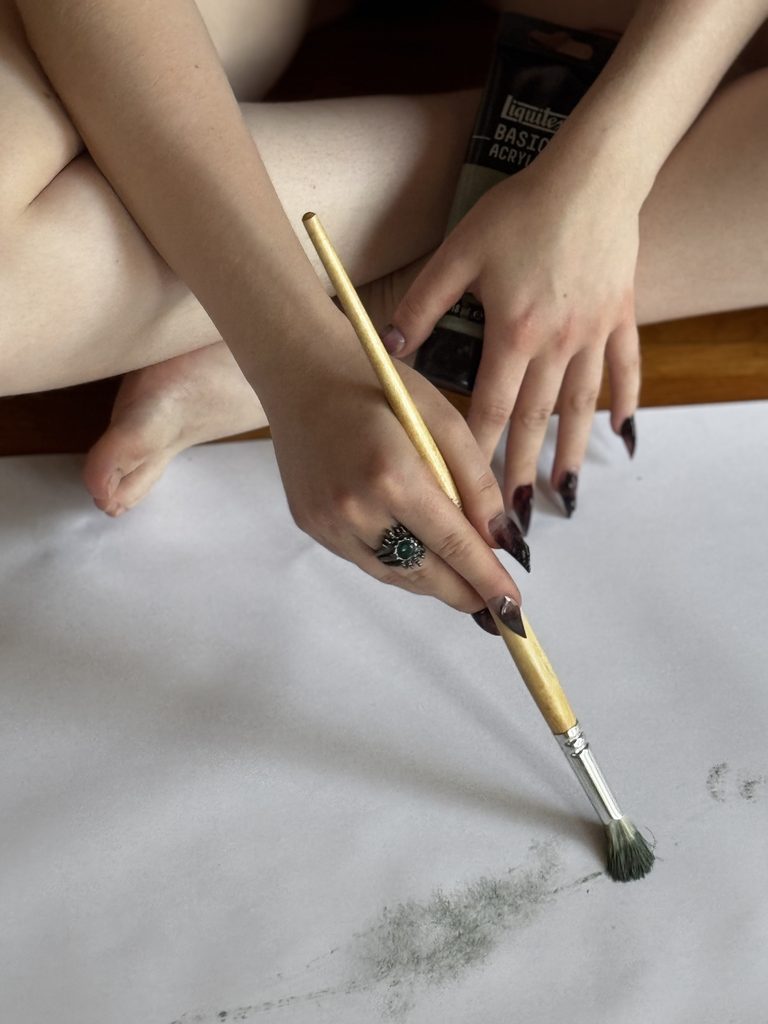
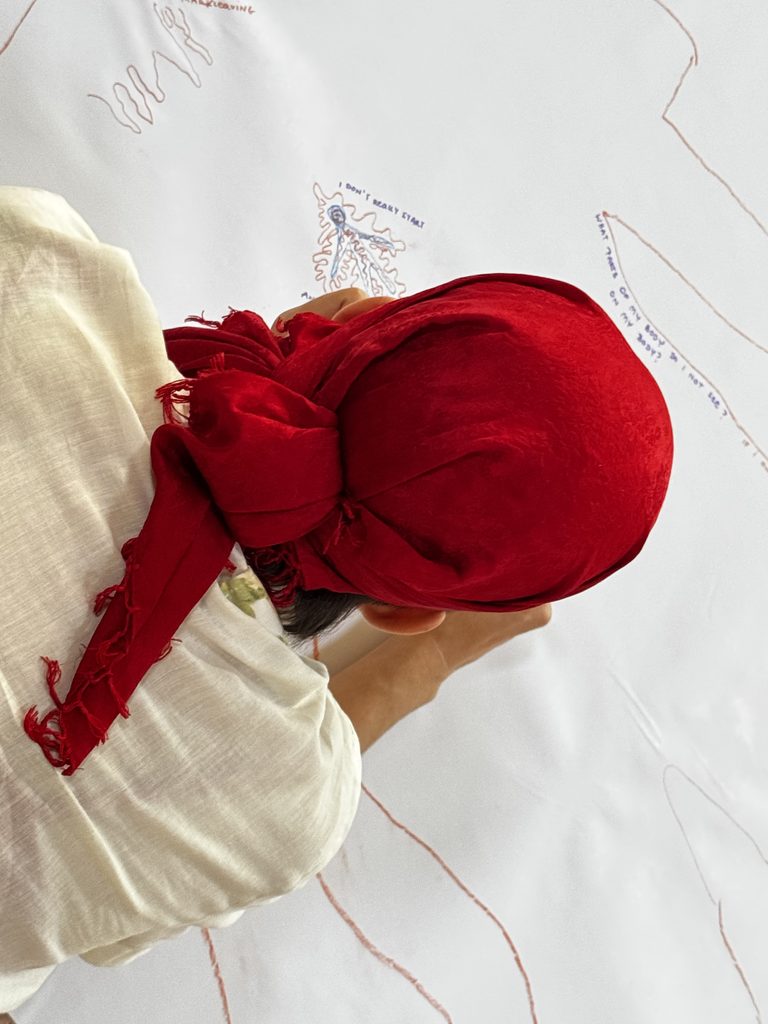
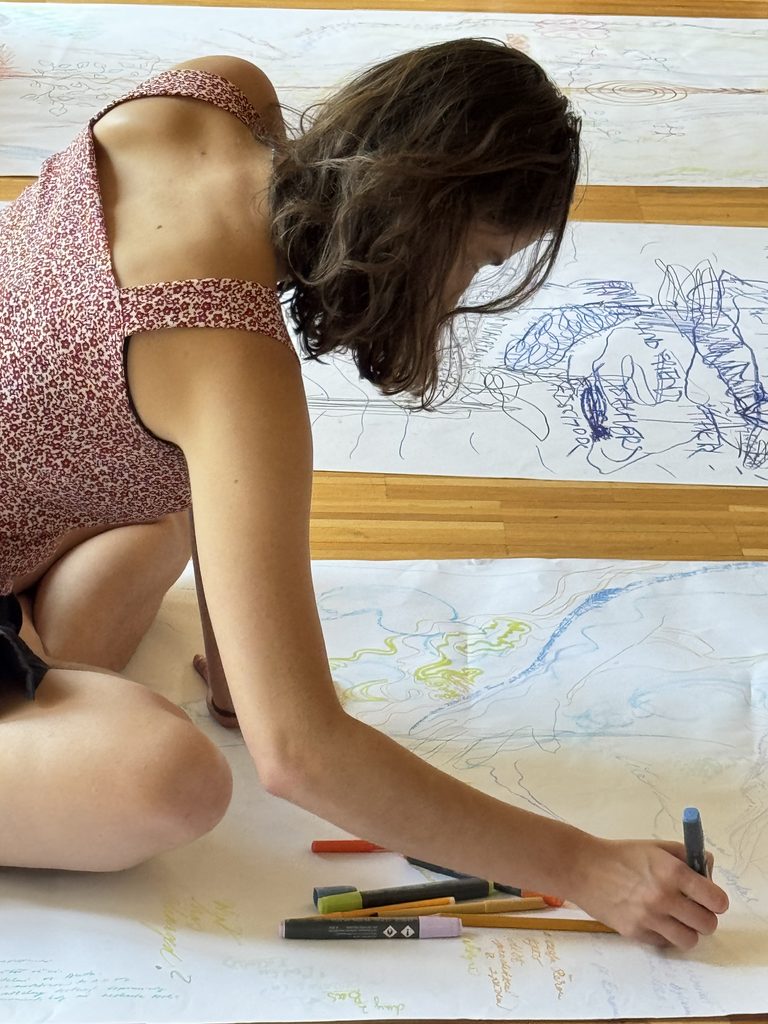
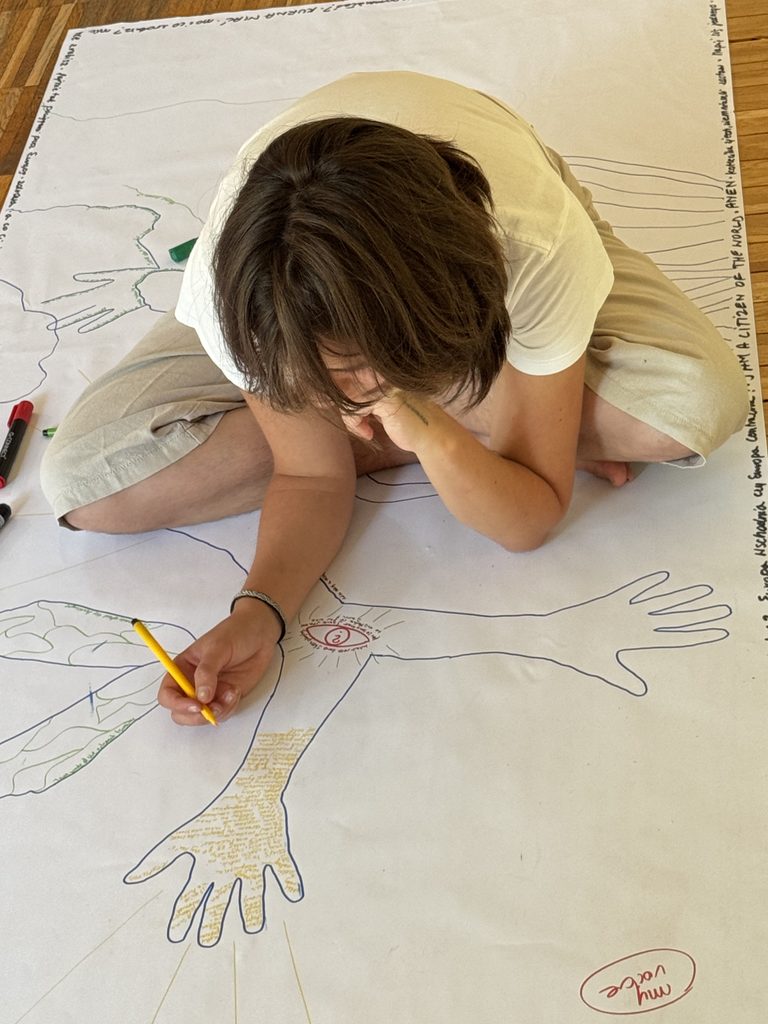
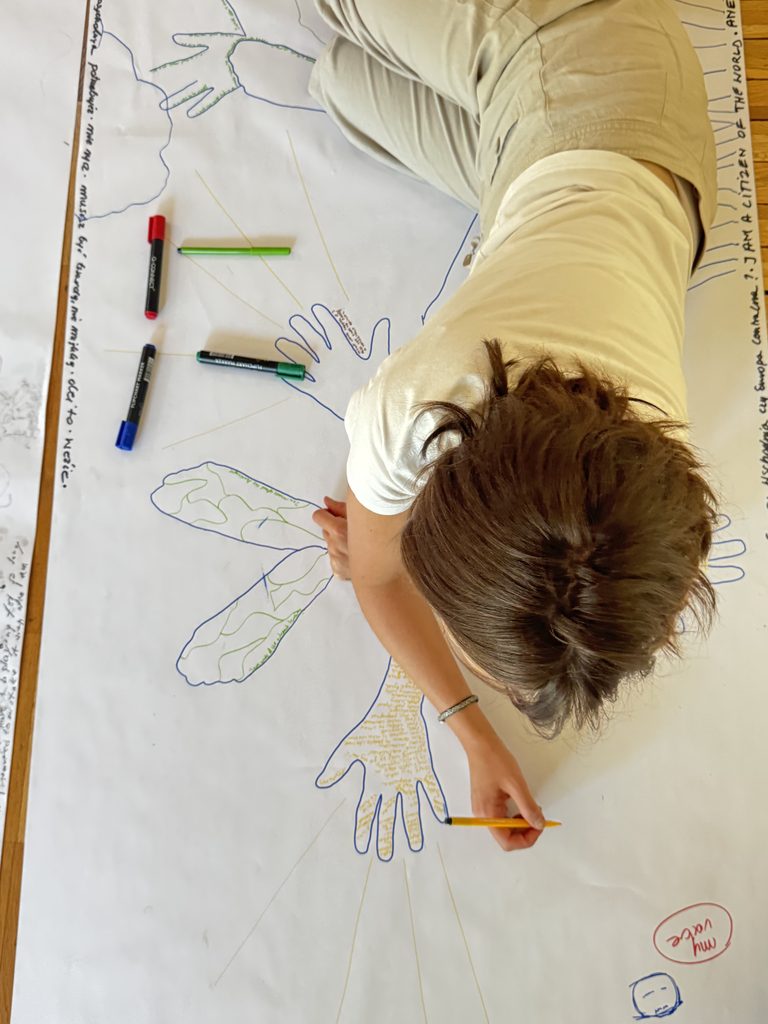
Totally inaccurate map of myself no. 1
In the evening we turned inward.
We weren't making a map of the landscape.
We were making a map of ourselves.
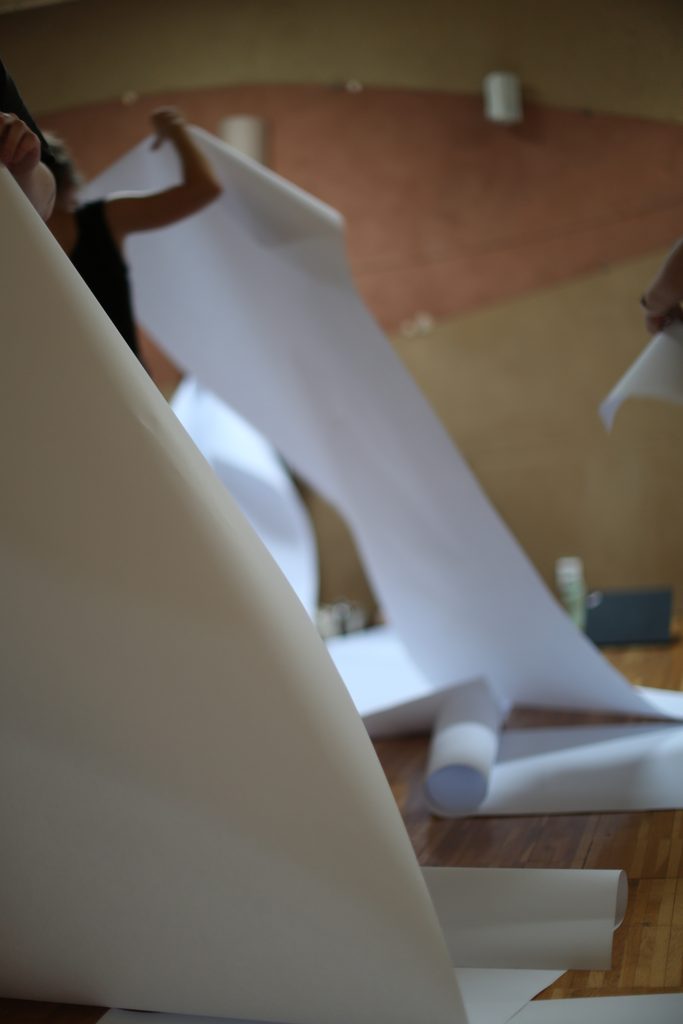
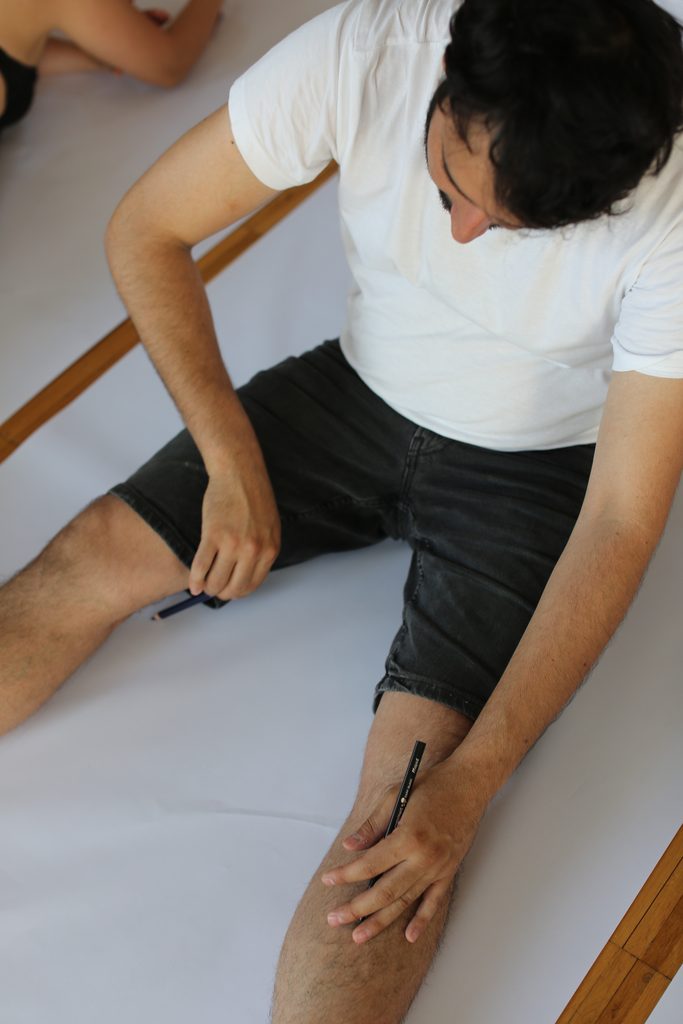
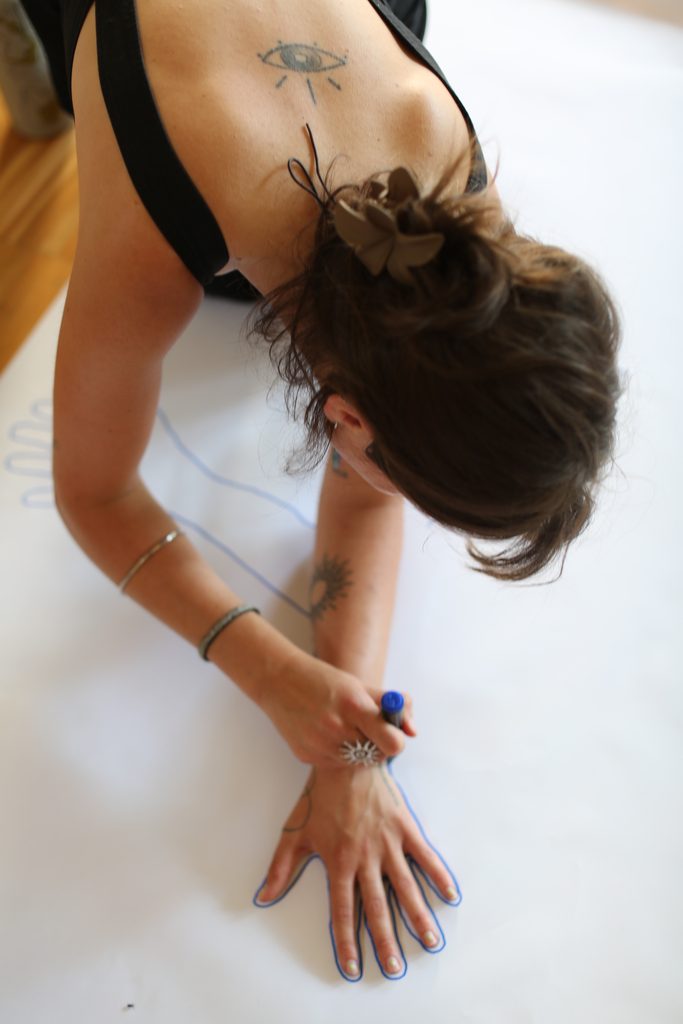
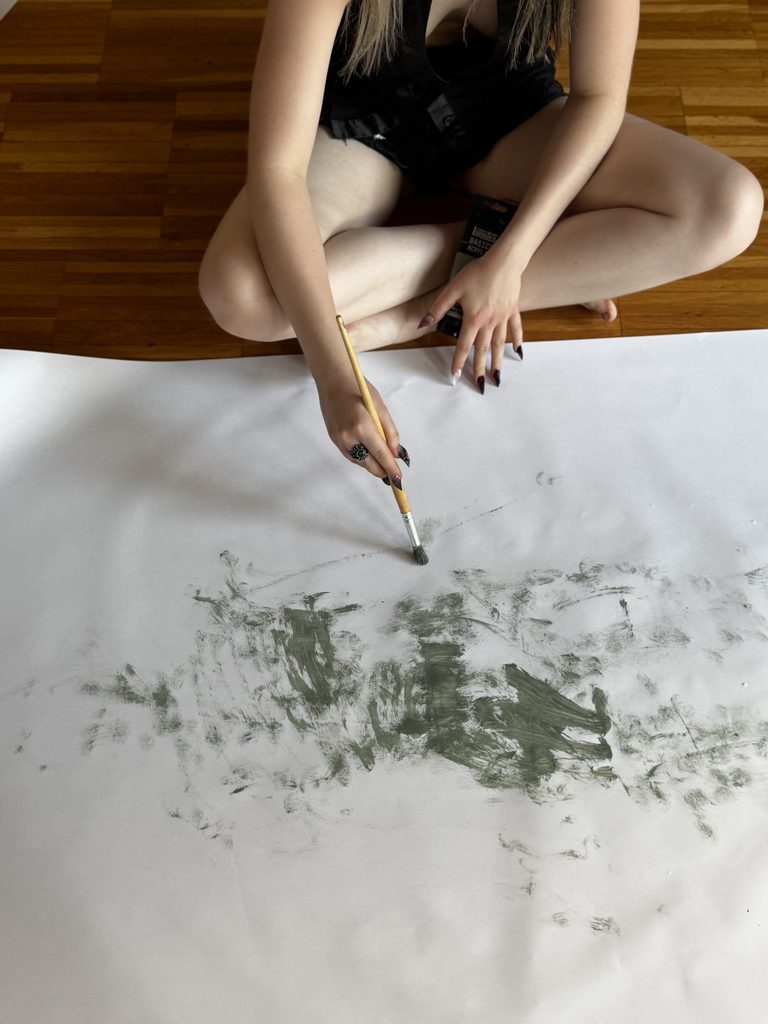
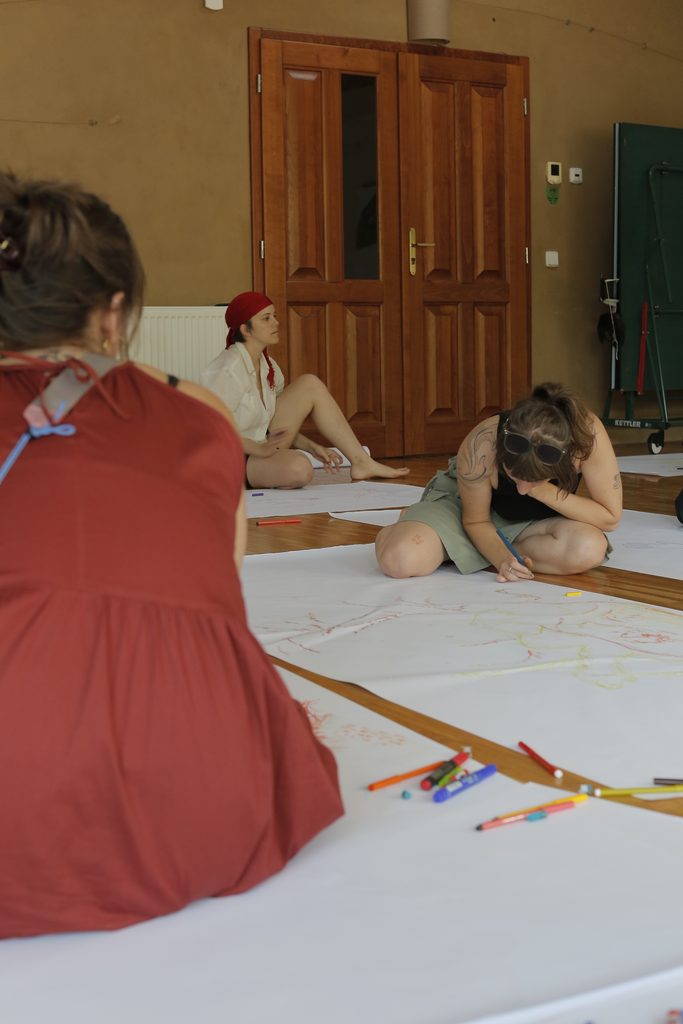
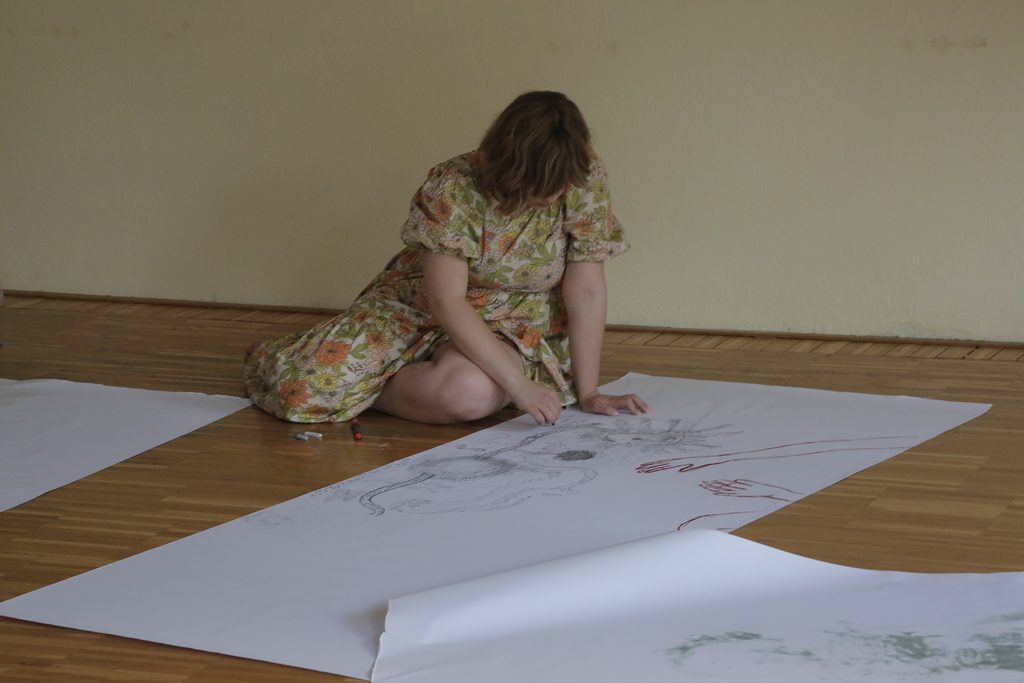
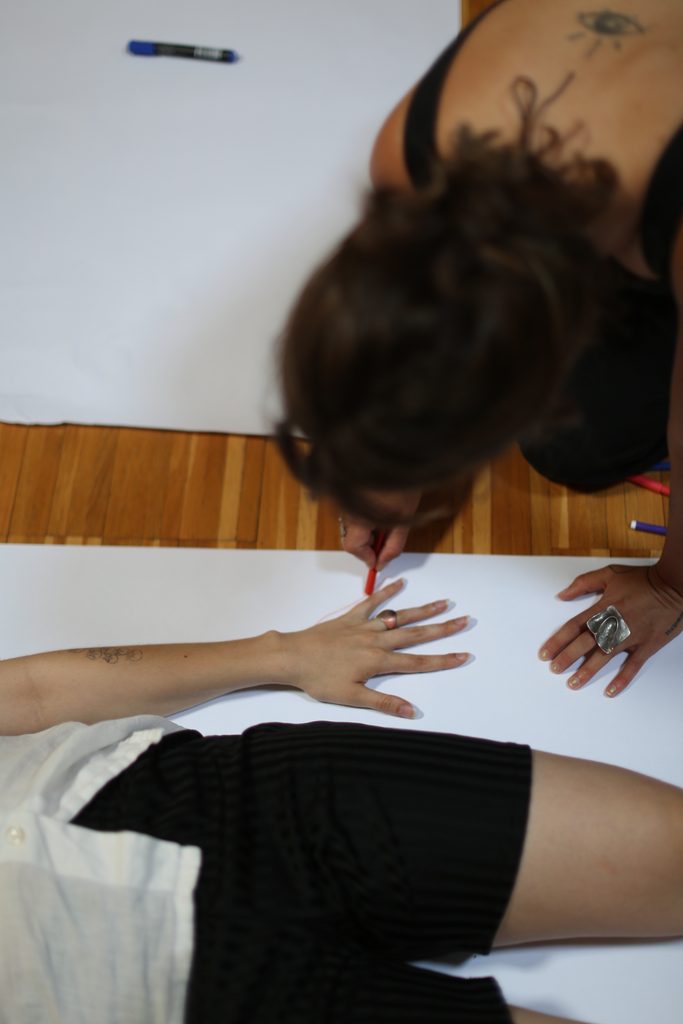
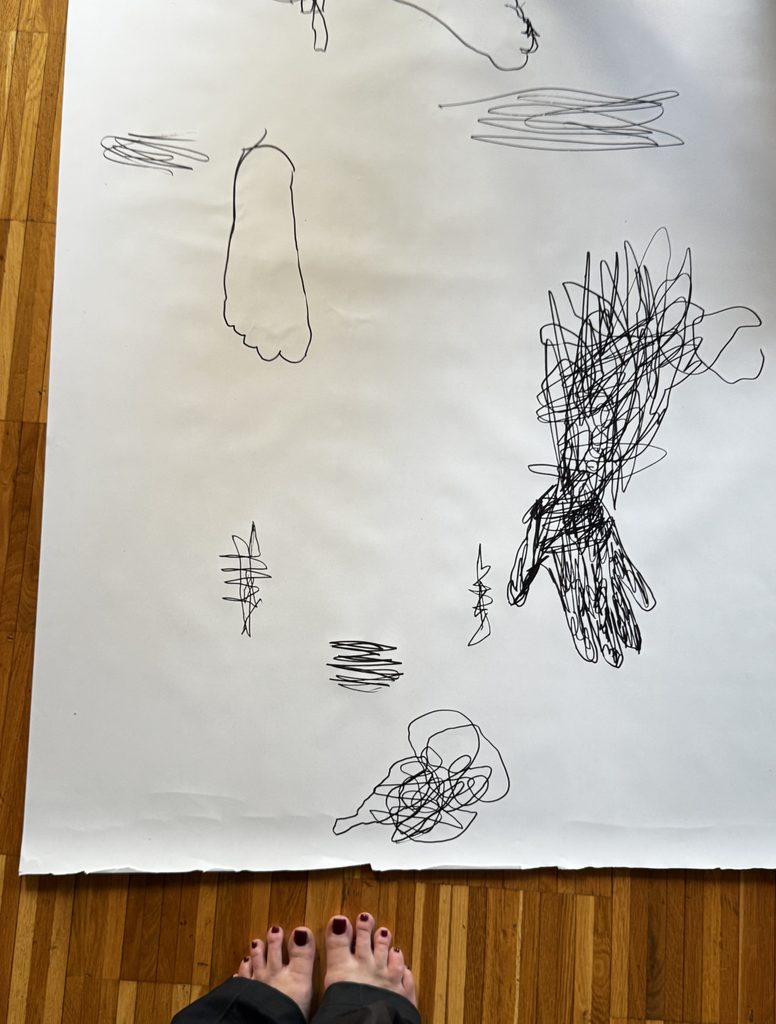
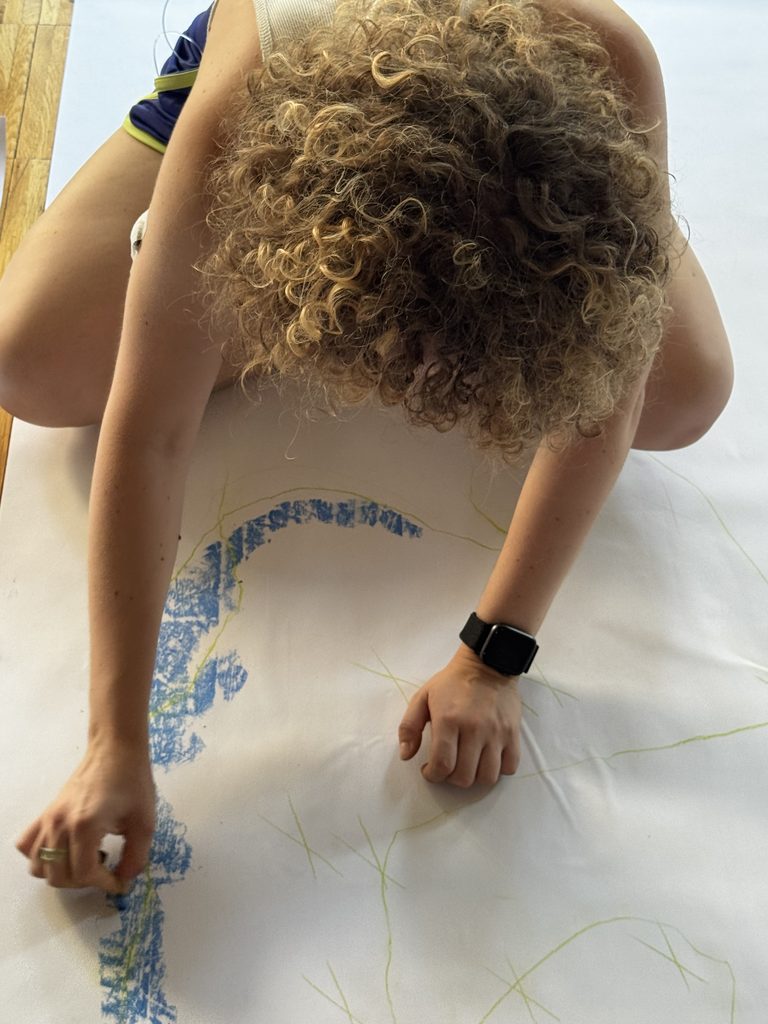
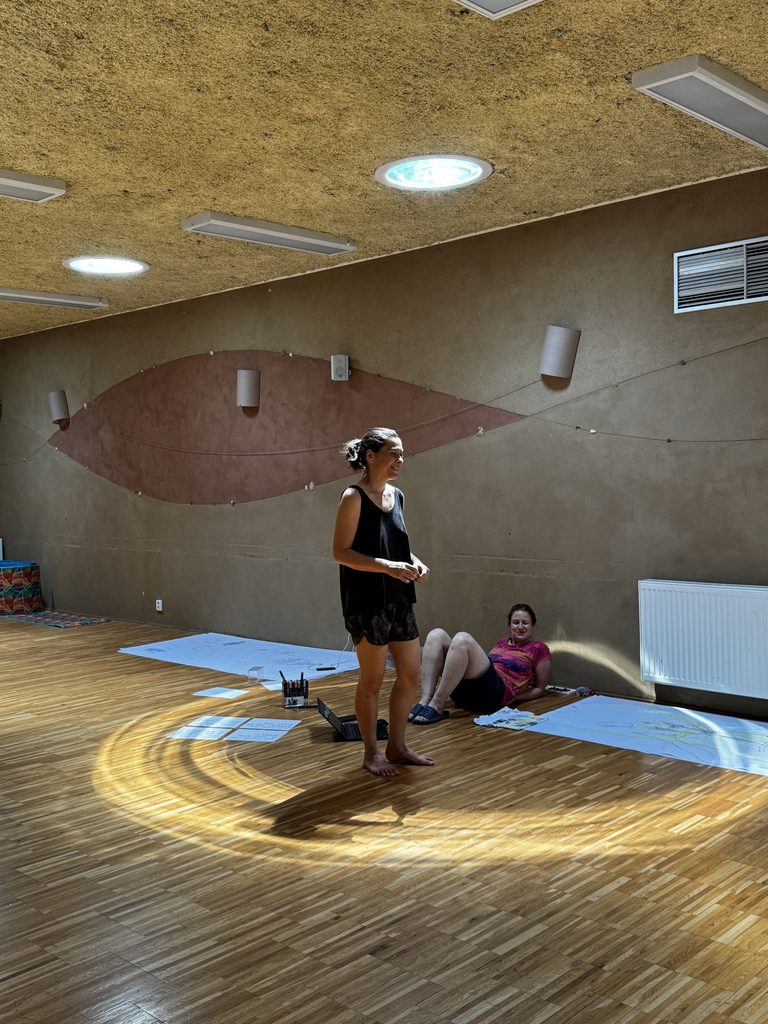
We explored parts of our own bodies that we never see. Places we only know through touch, imagination, or from others' perspectives. Gradually, drawings inspired by the work of Ján Mančuška emerged – portraits made mainly from what usually escapes our attention.
But it wasn’t about the body.
It was about perspective. Just like we don’t see our whole body, we also don’t see our whole story. Each of us creates a map of the world that is necessarily incomplete. Some parts we highlight, others fade into the shadows. We do the same with the people around us.
Polarization often happens when we start believing that our map is the same as the landscape.
The first 'completely inaccurate map' wasn’t an exercise about the body.
It was an exercise in humility towards our own perspective.
And in the evening, we met again through breath and voice.
Not to learn how to sing better.
But because the voice is not just a tool for communication. It's a way to enter a space together. To start finding a rhythm that doesn't come from one person, but from the whole group. On the first day, we still didn't know where it would lead us. We just started tuning into it together.
Day 2 — When the landscape starts to respond
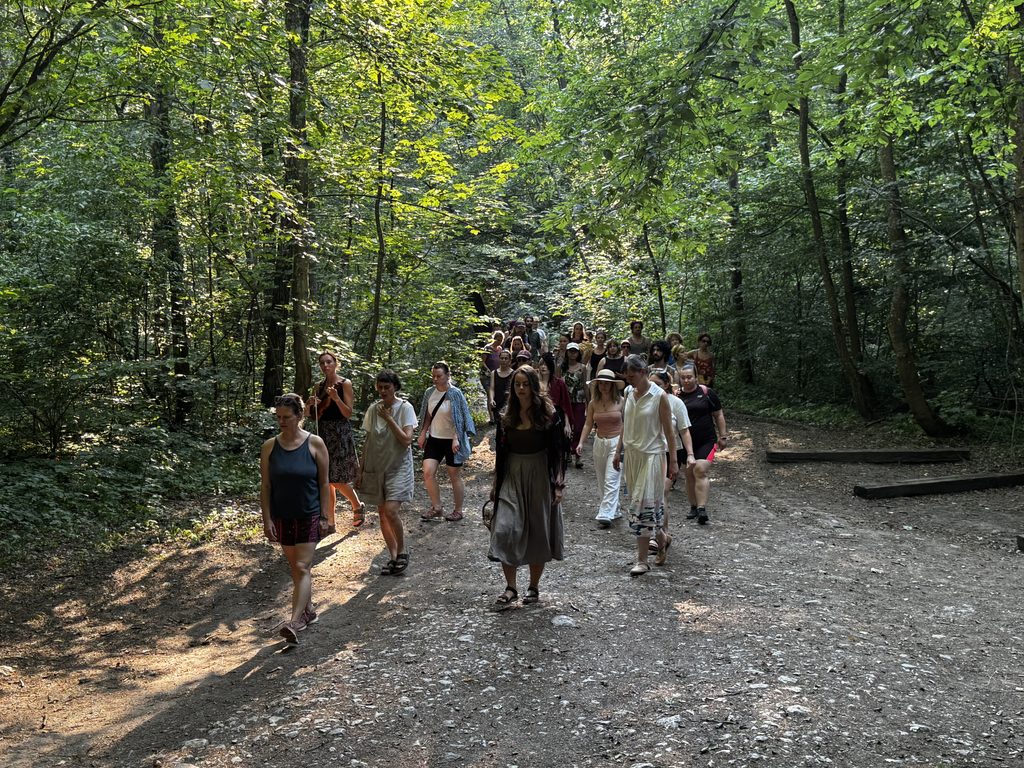
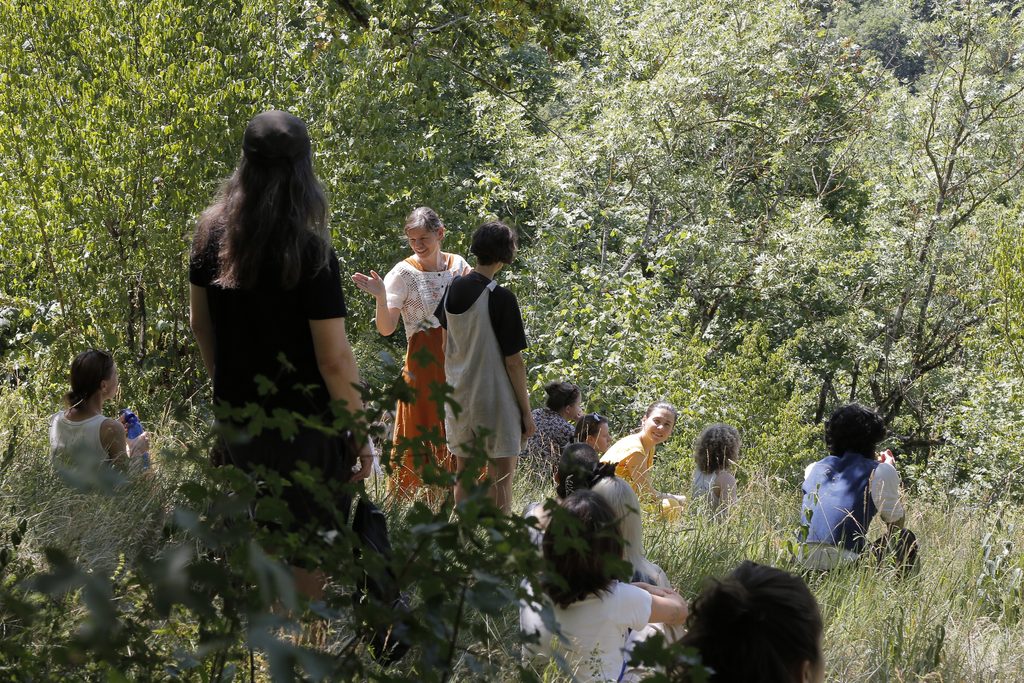
The next day we started in the forest.
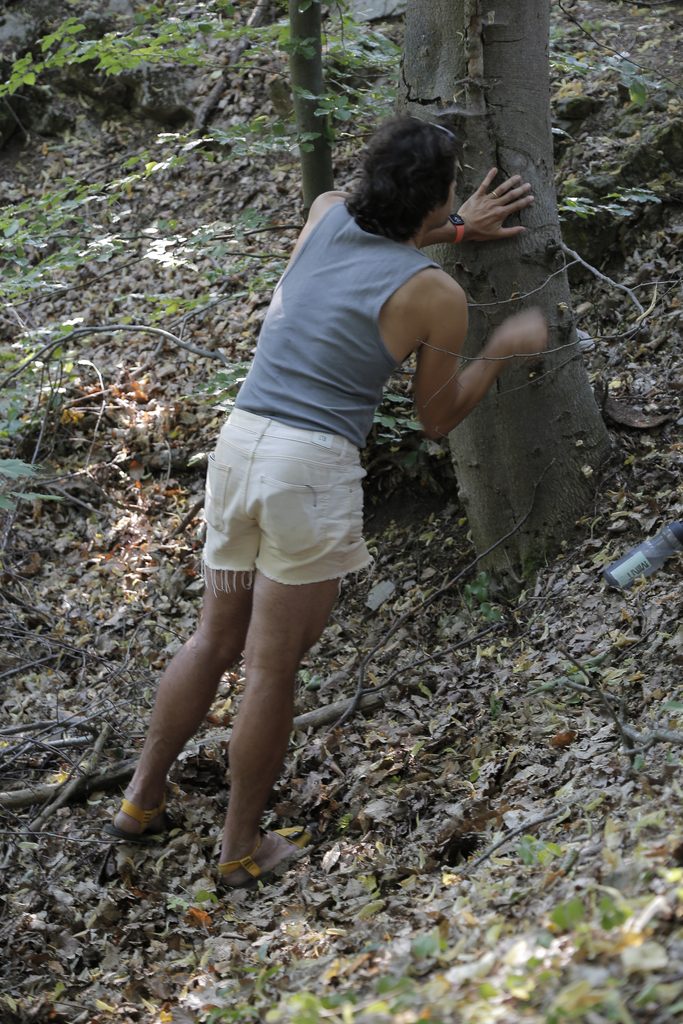
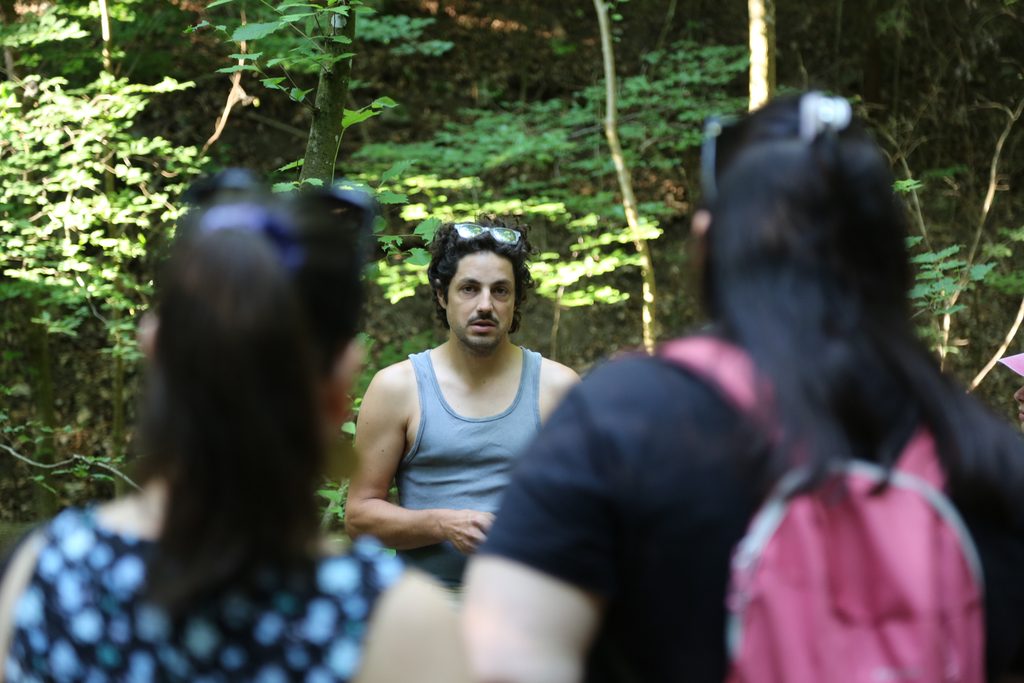
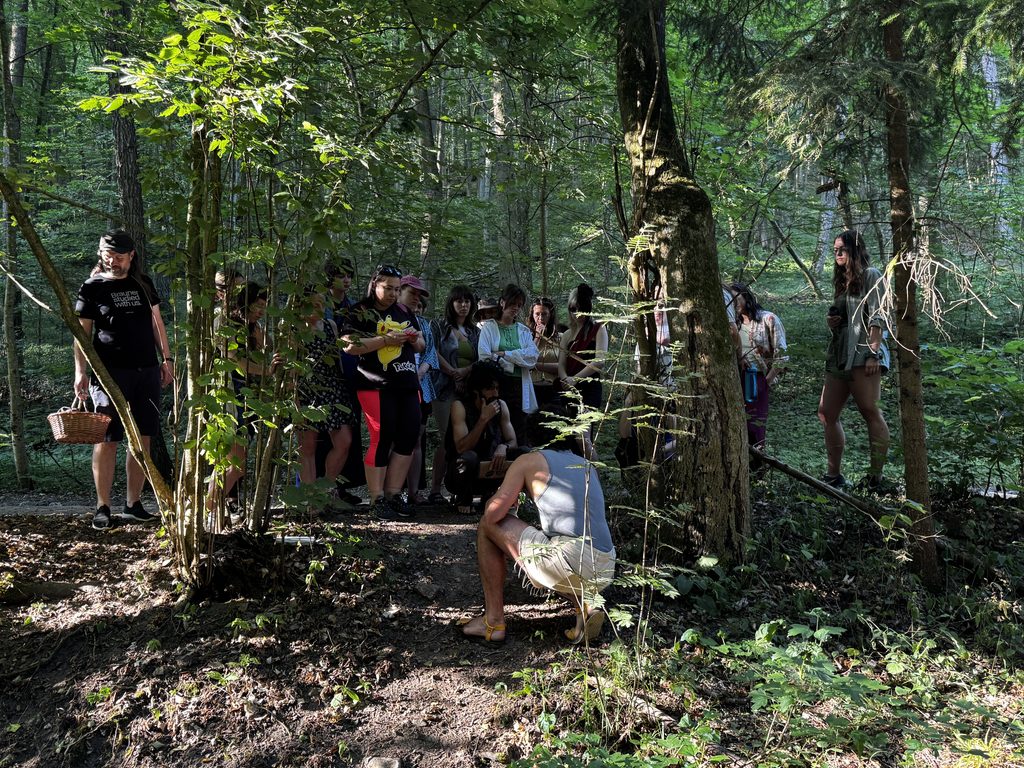
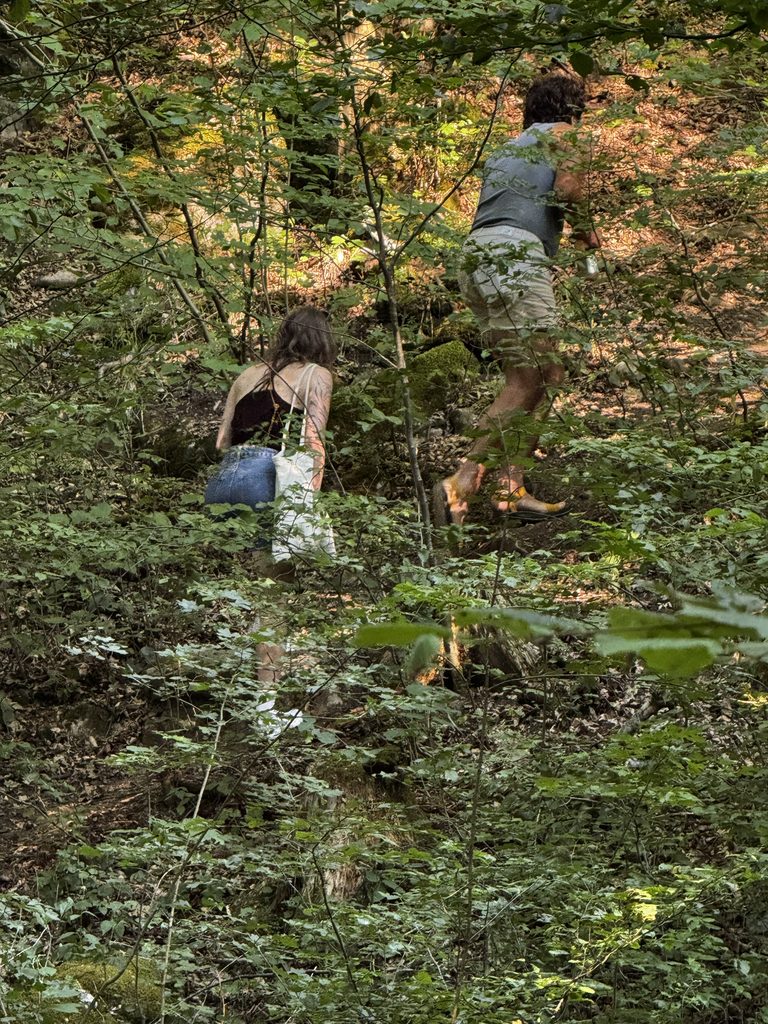
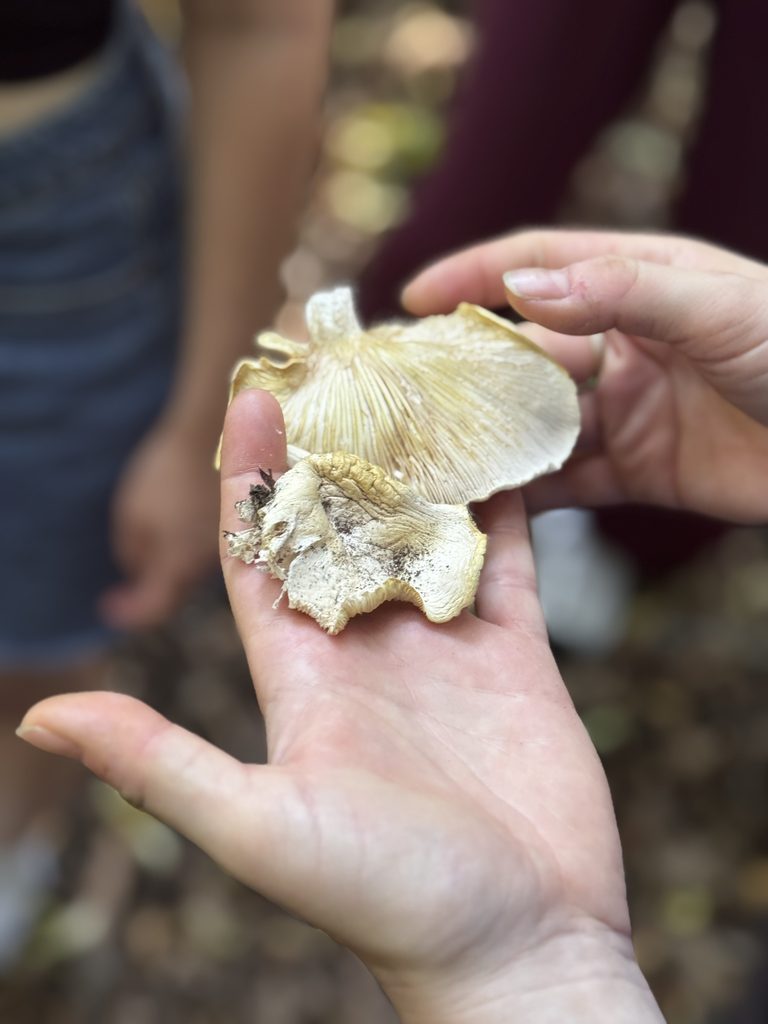
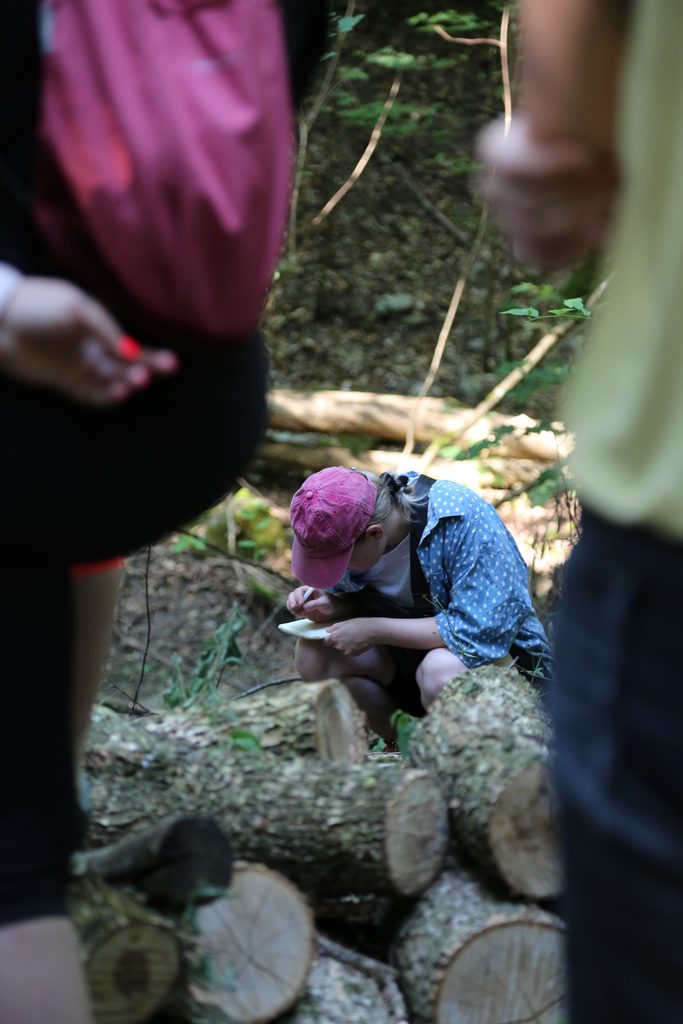
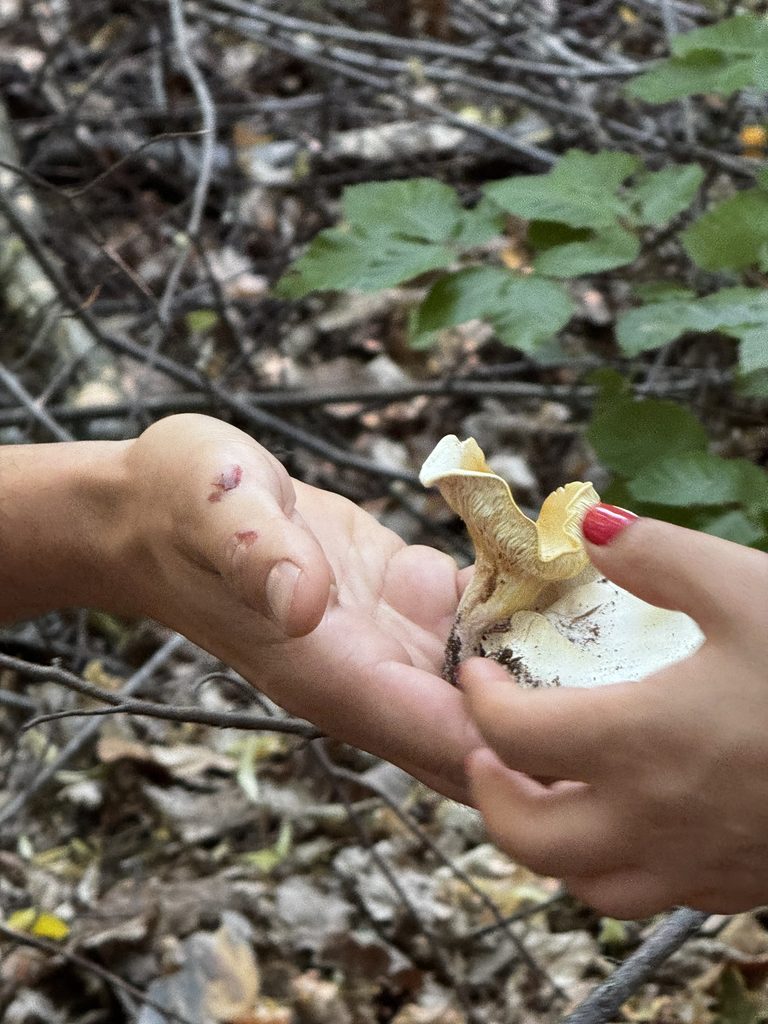
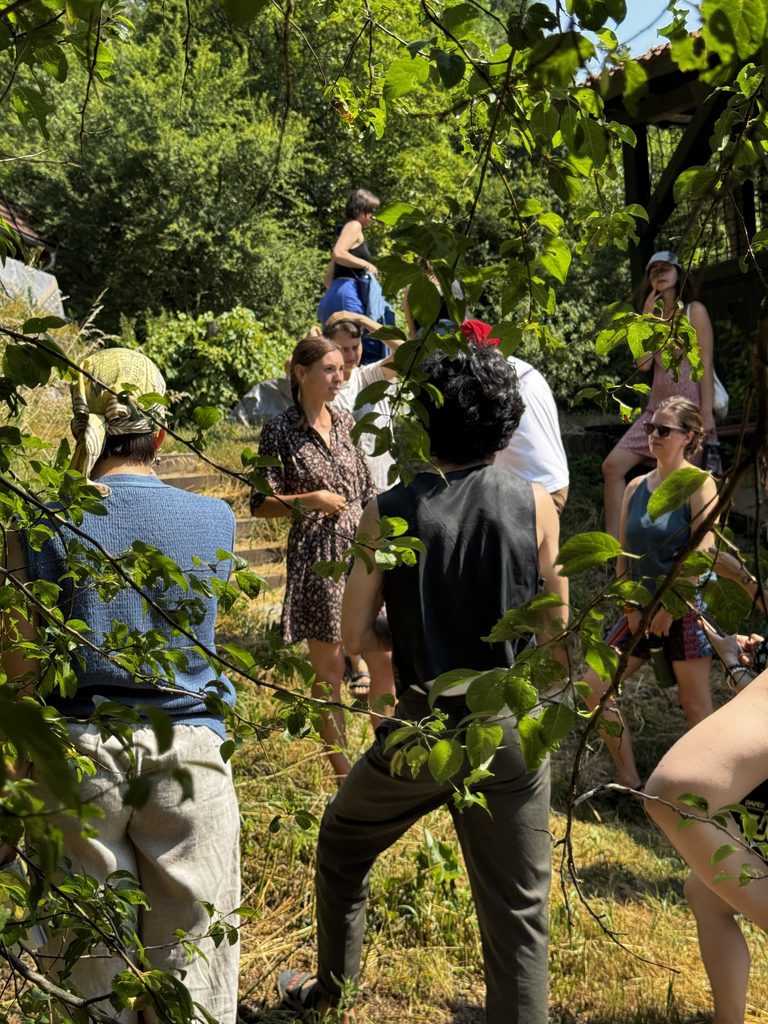
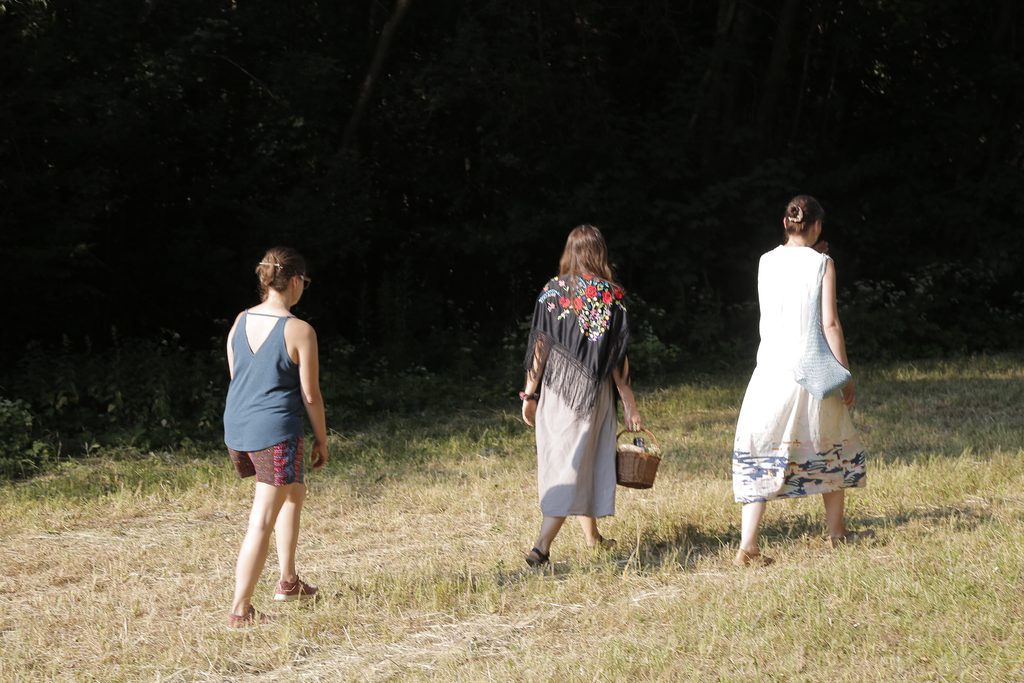
With Piotr Sykora, we went off to look for mushrooms – slowly, with our eyes open for things that don't reveal themselves to everyone. The searching soon became more of an exercise in attention than actual collecting. Mushroom hunting isn't just about finding something. It's a way to be in the landscape without claiming it. Most of what matters happens beneath the surface – just like the mycelium that connects the whole forest, the first invisible ties began to form between us as well.
The scent arrives before the decision. It doesn’t say anything. It just shifts your attention. And the body follows it. Something happens under every step. A web you can’t see, but that holds the space together. Trees, soil, mushrooms. Relationships that don’t need explaining. They just work.
What all stays beneath the surface?
In public spaces, we often only encounter what’s visible – statements, attitudes, or conflicts. Just like when foraging for mushrooms, we tend to focus on what rises to the surface.
But the forest doesn’t live because of the mushrooms.
It lives because of the mycelium. In the same way, society isn’t made up just of the opinions that are spoken out loud.
Beneath every belief lies a network of experiences, relationships, fears, hopes, and needs that remain hidden.
Polarization often happens when we only respond to the visible part of another person.
For us, mushroom picking has become an exercise in attention—not to what is loudest, but to what all stays beneath the surface.
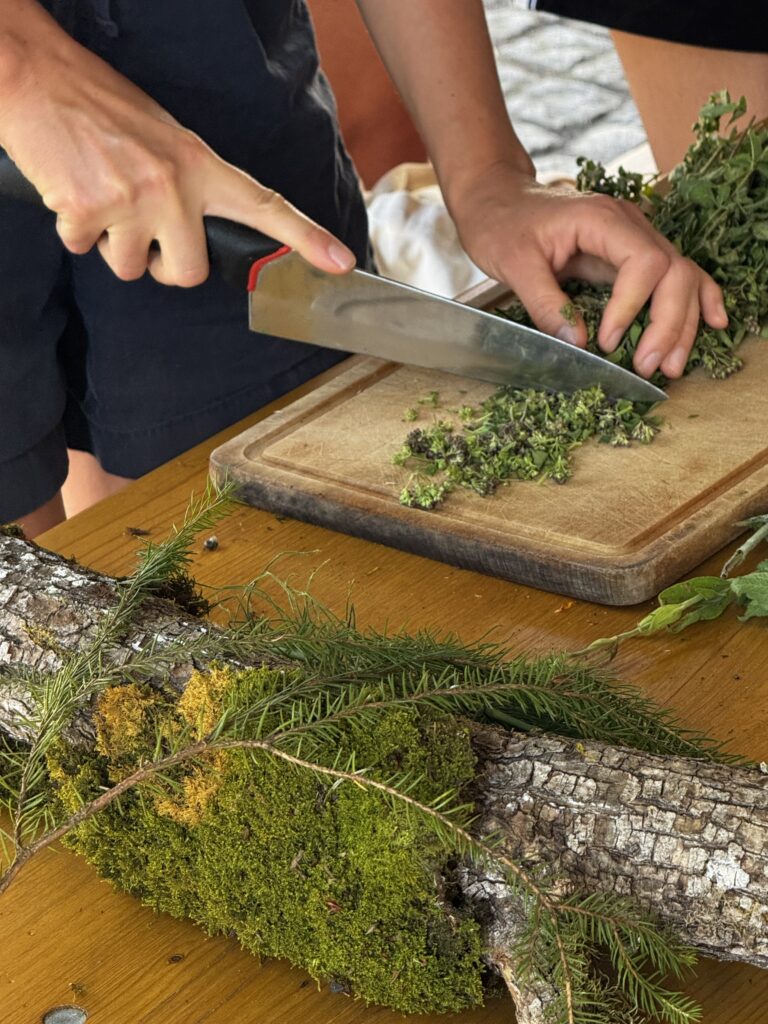
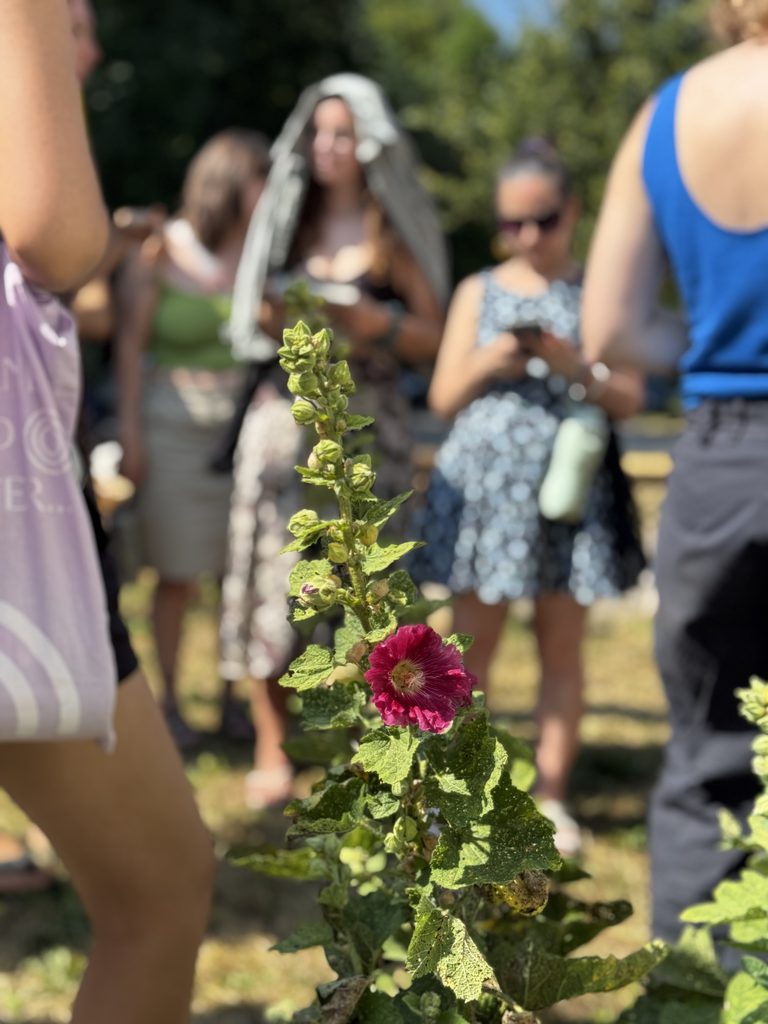
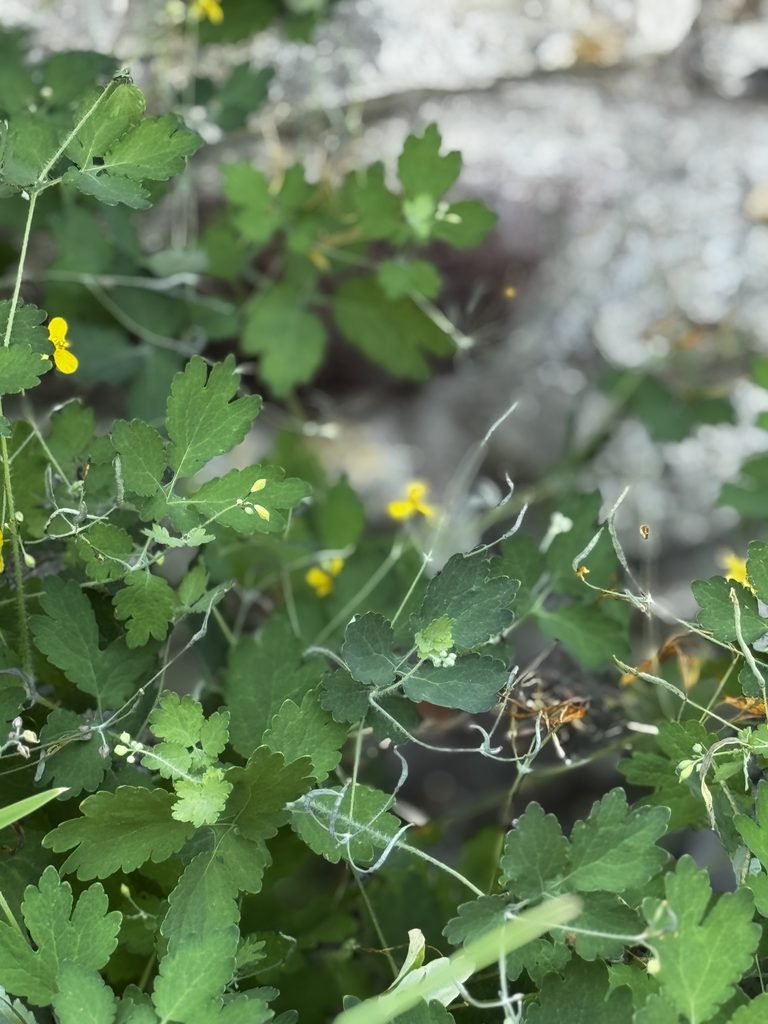
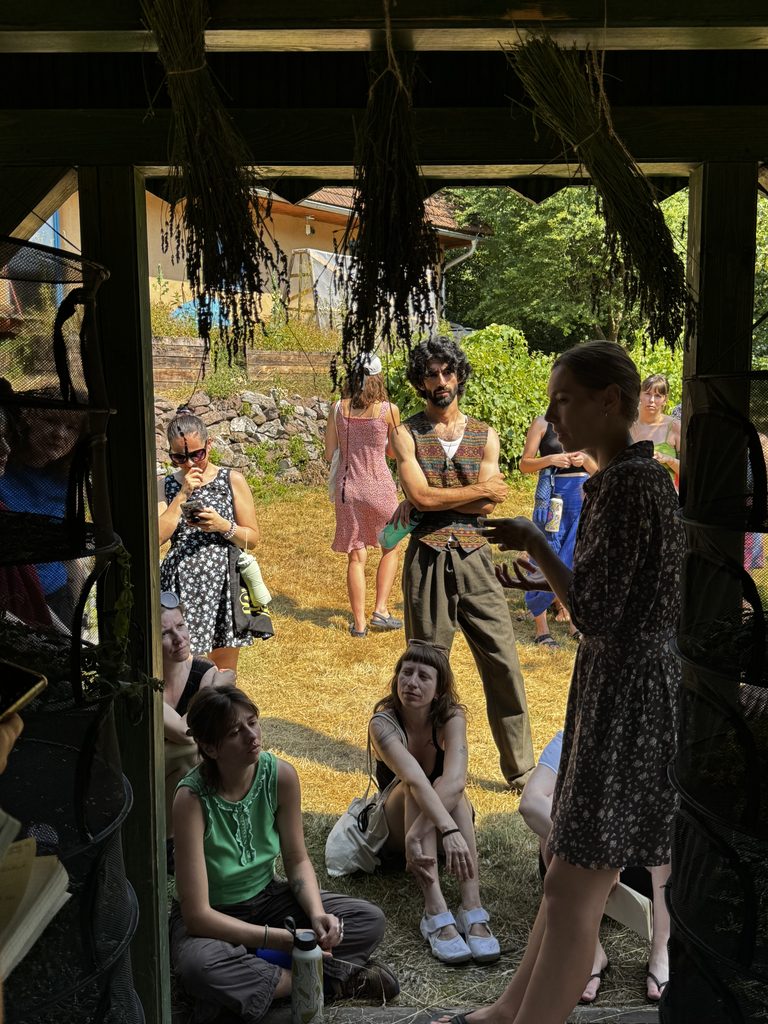
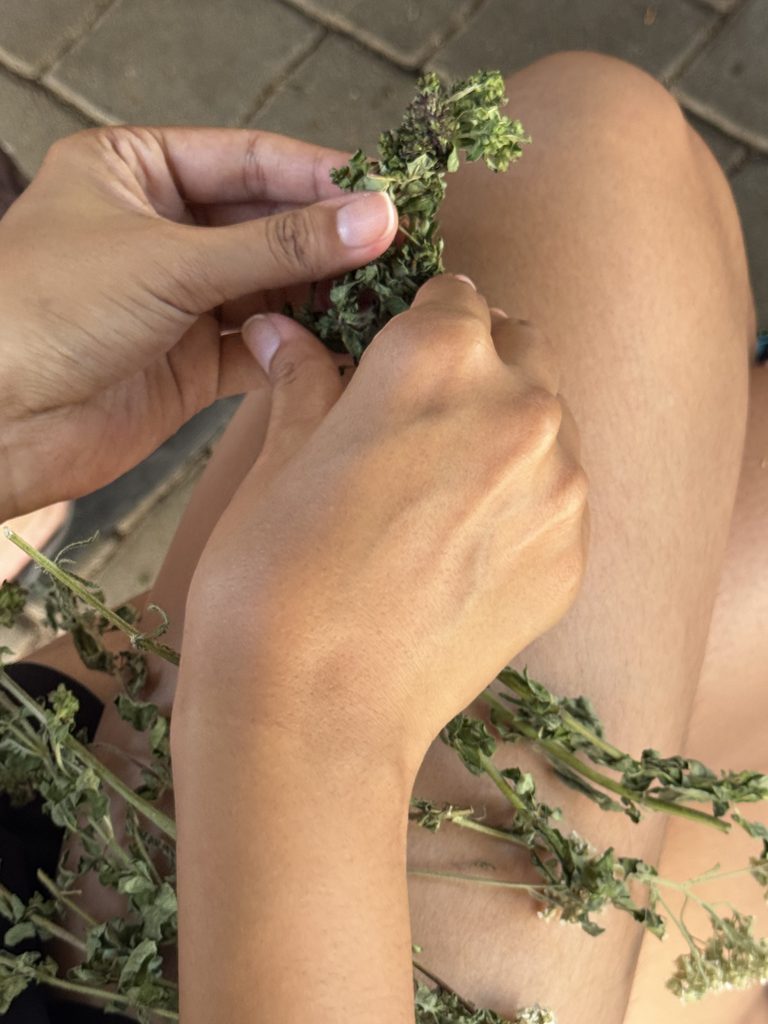
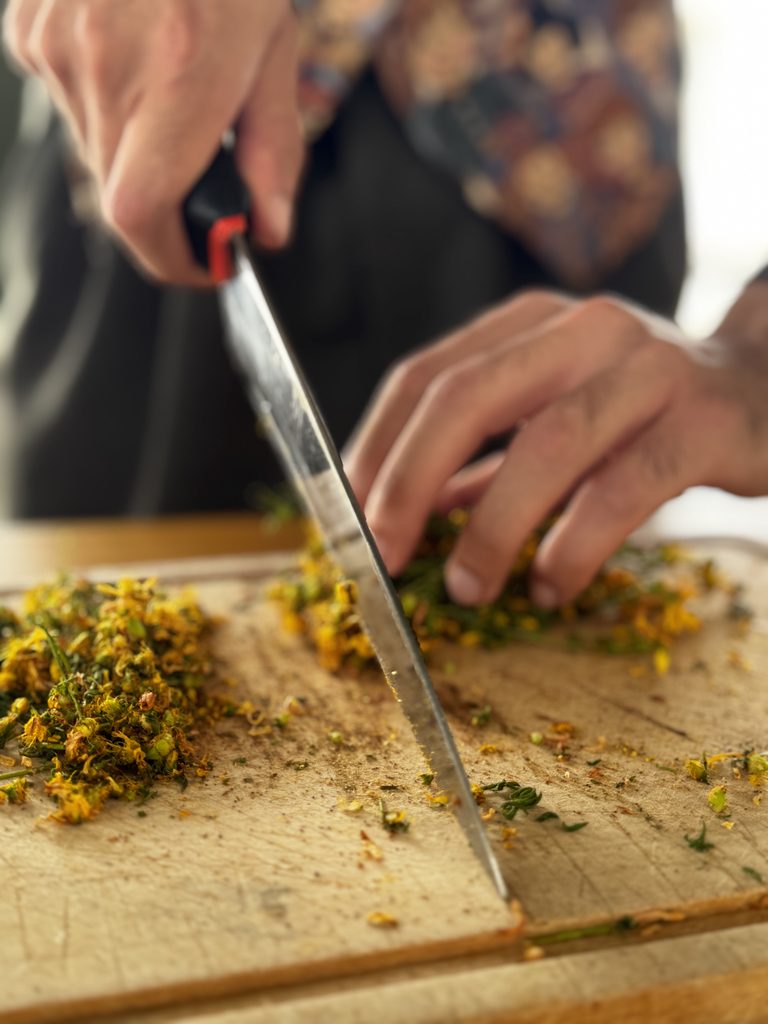
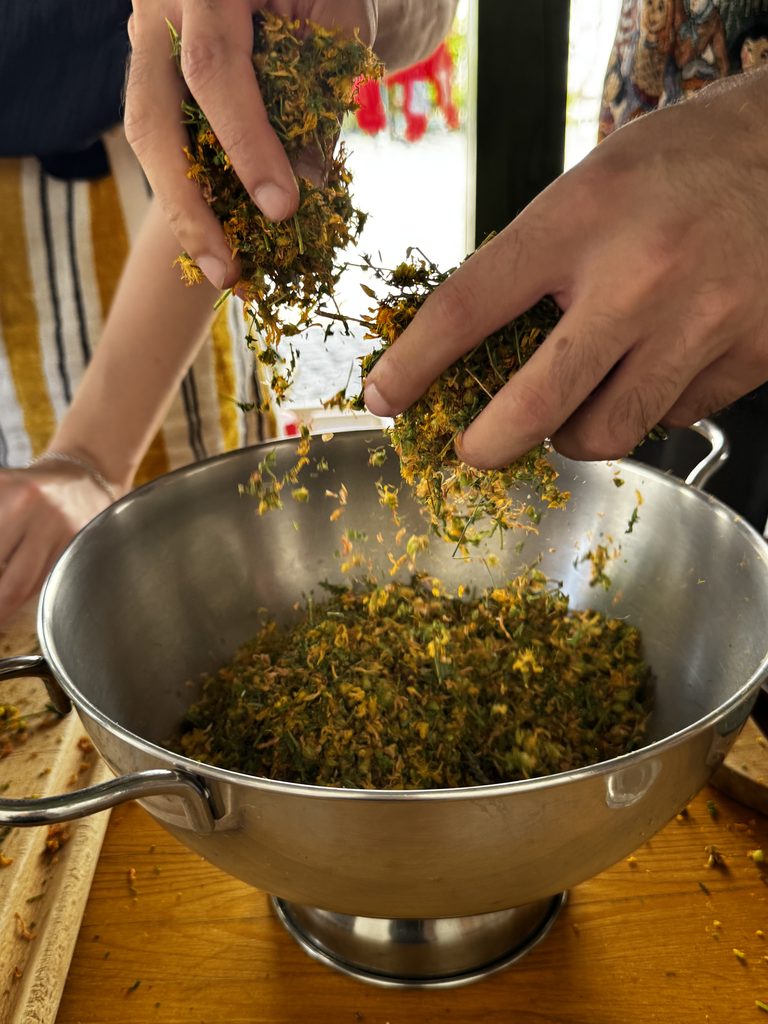
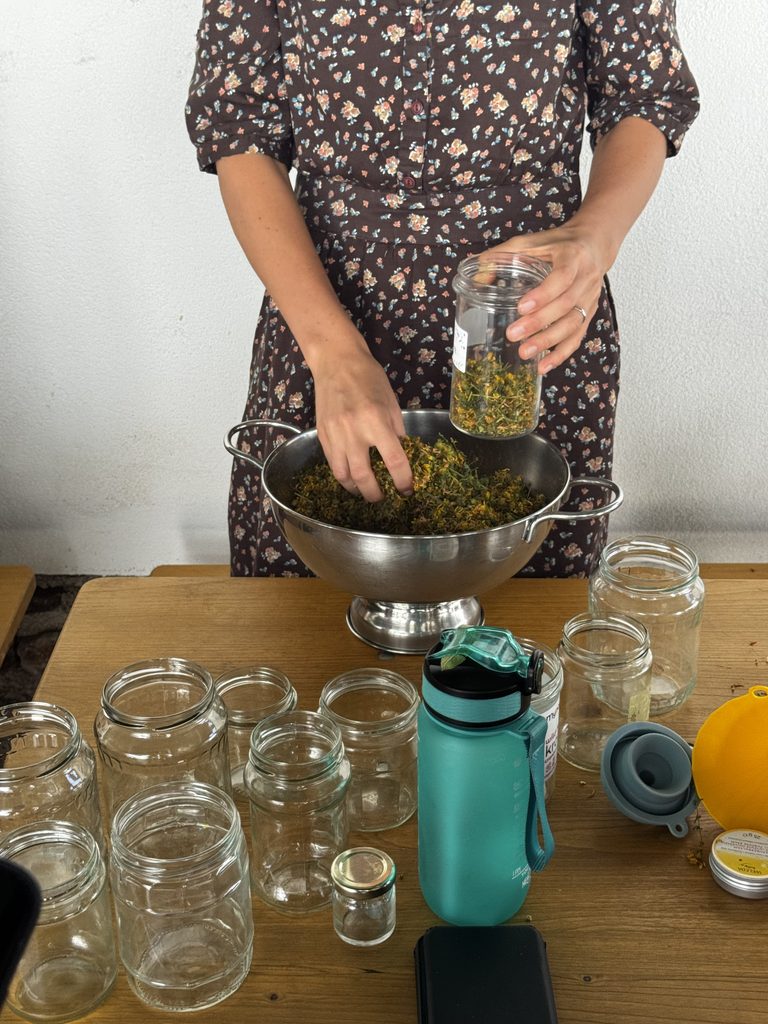
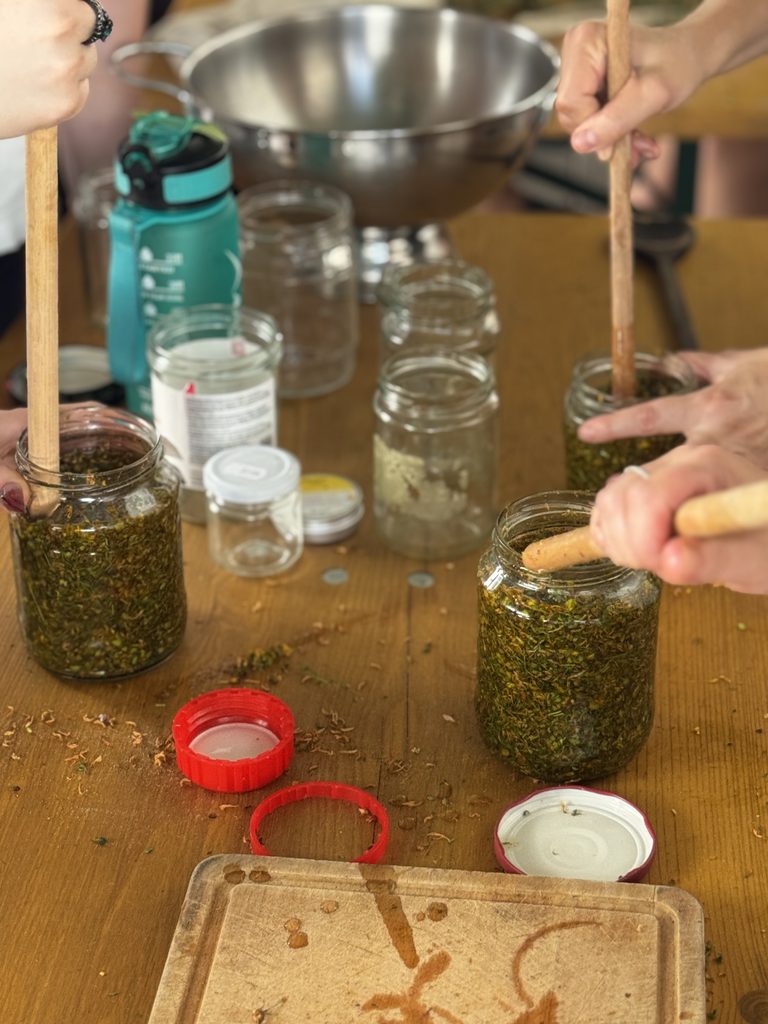
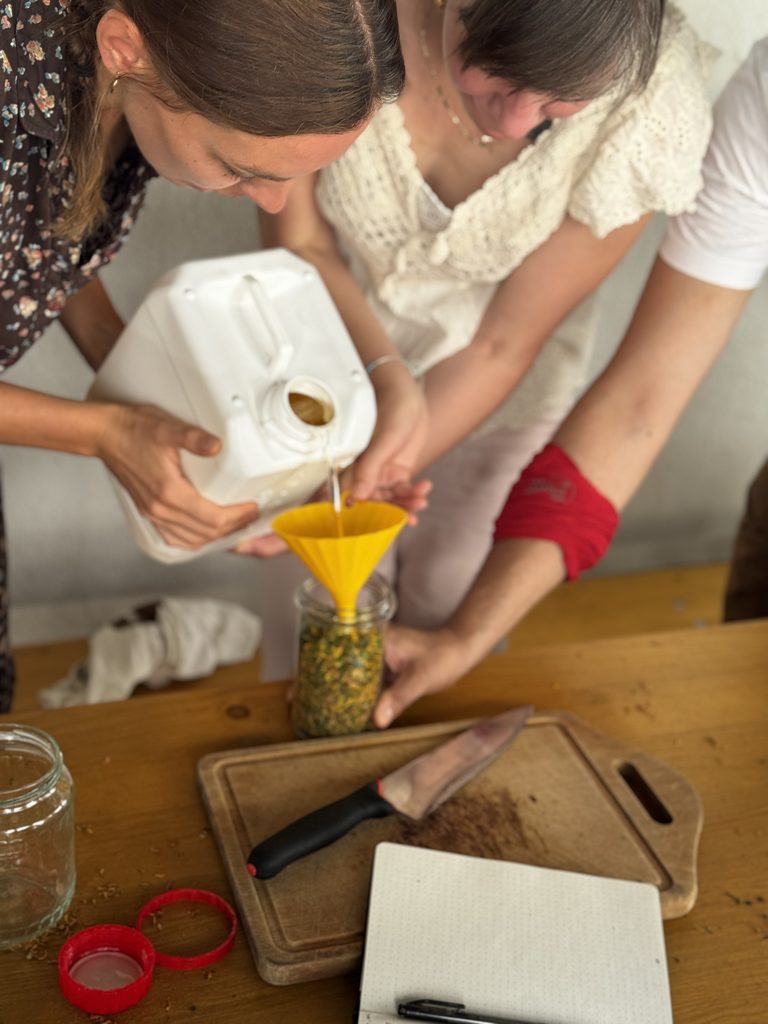
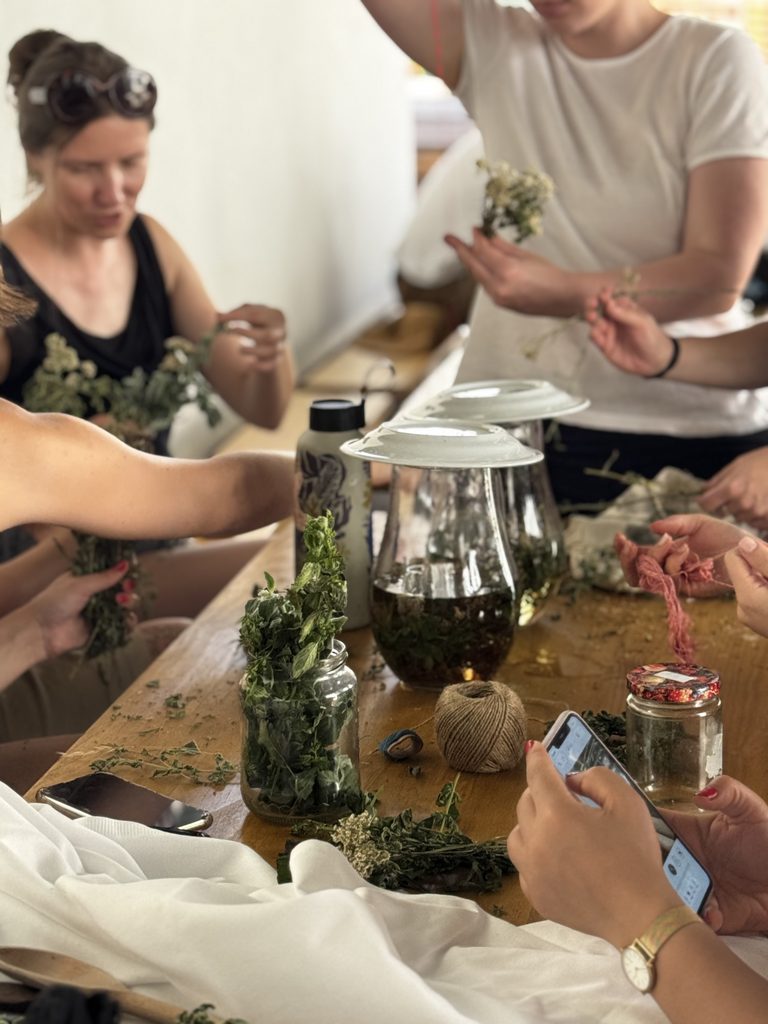
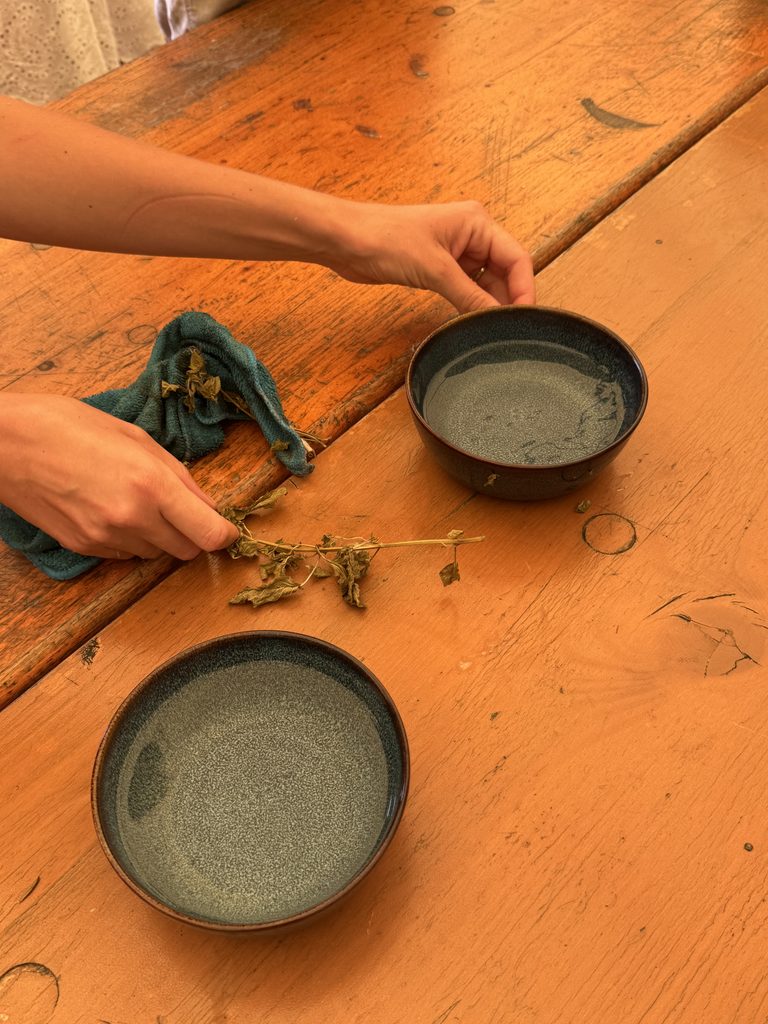
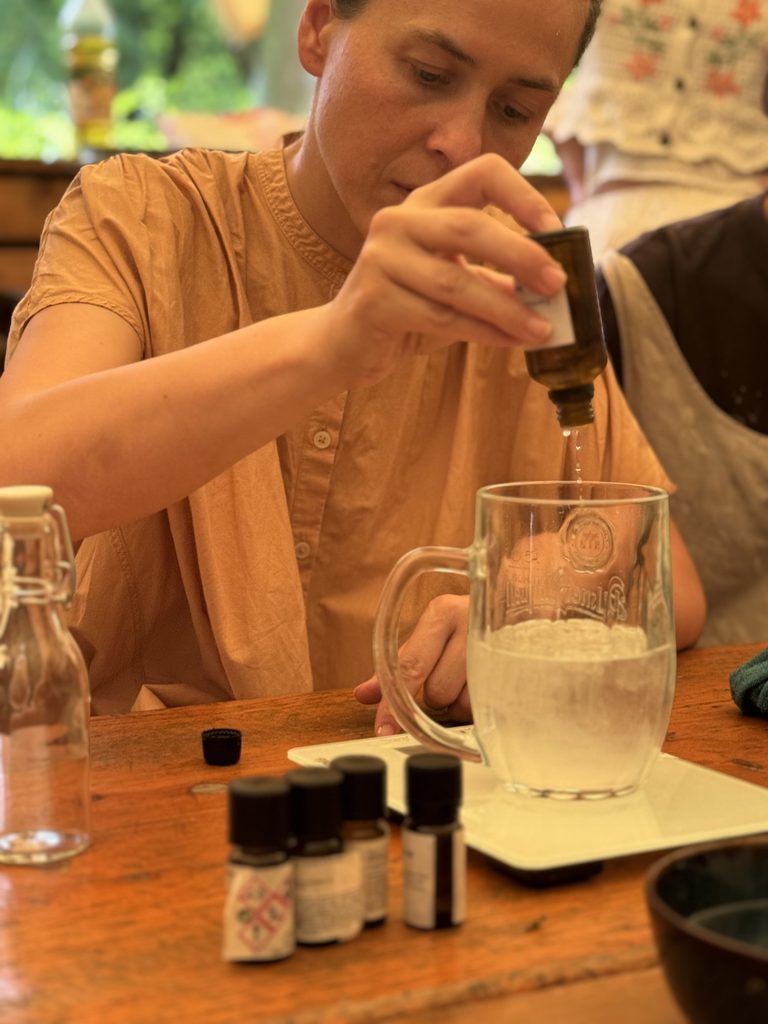
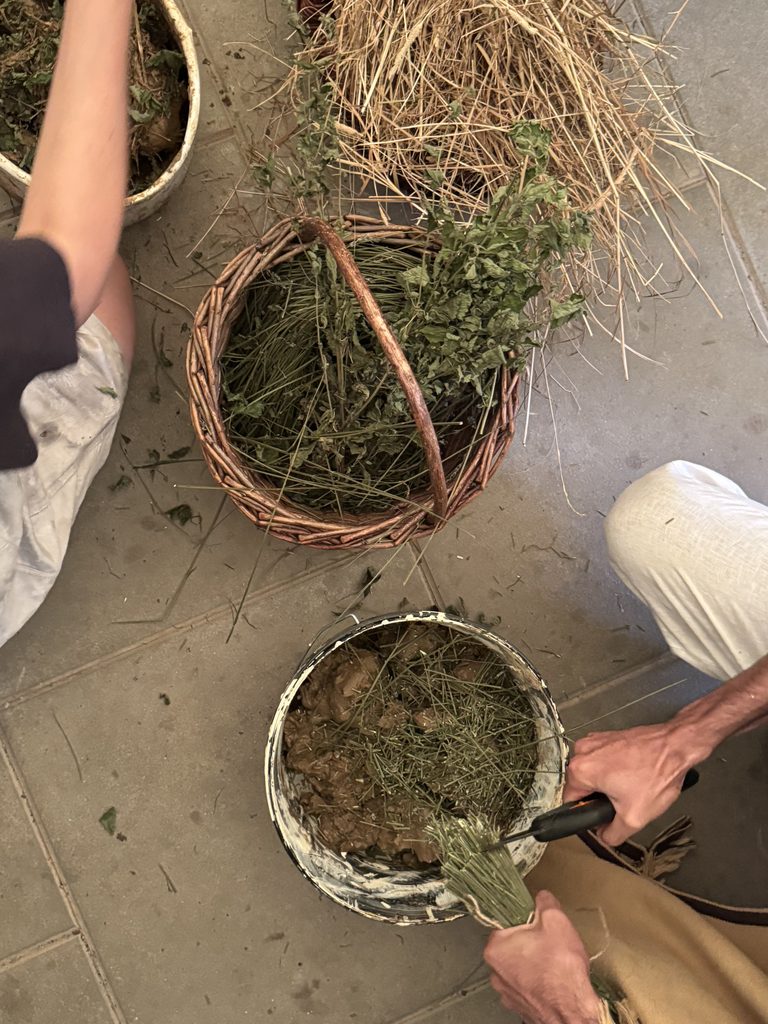
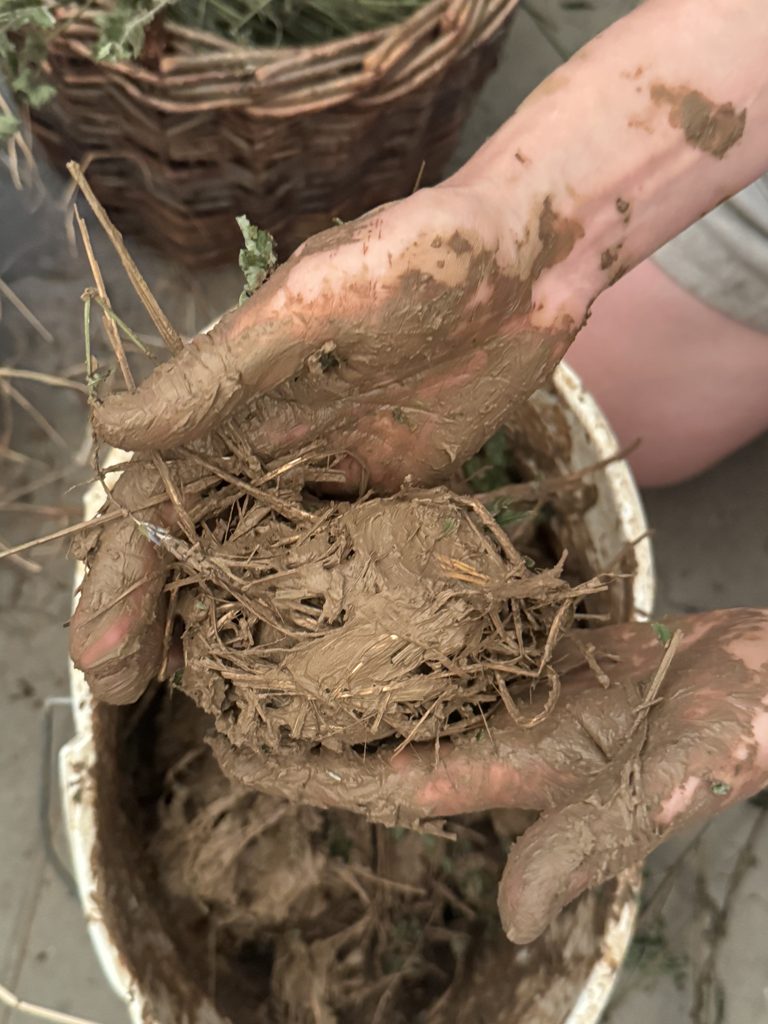
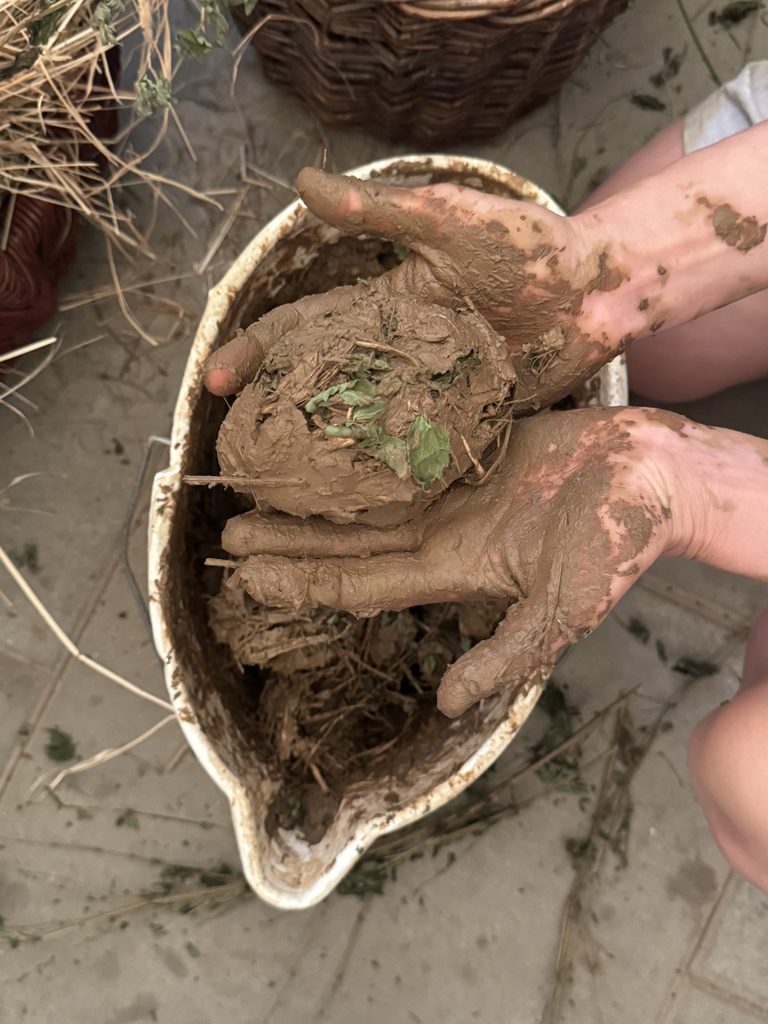
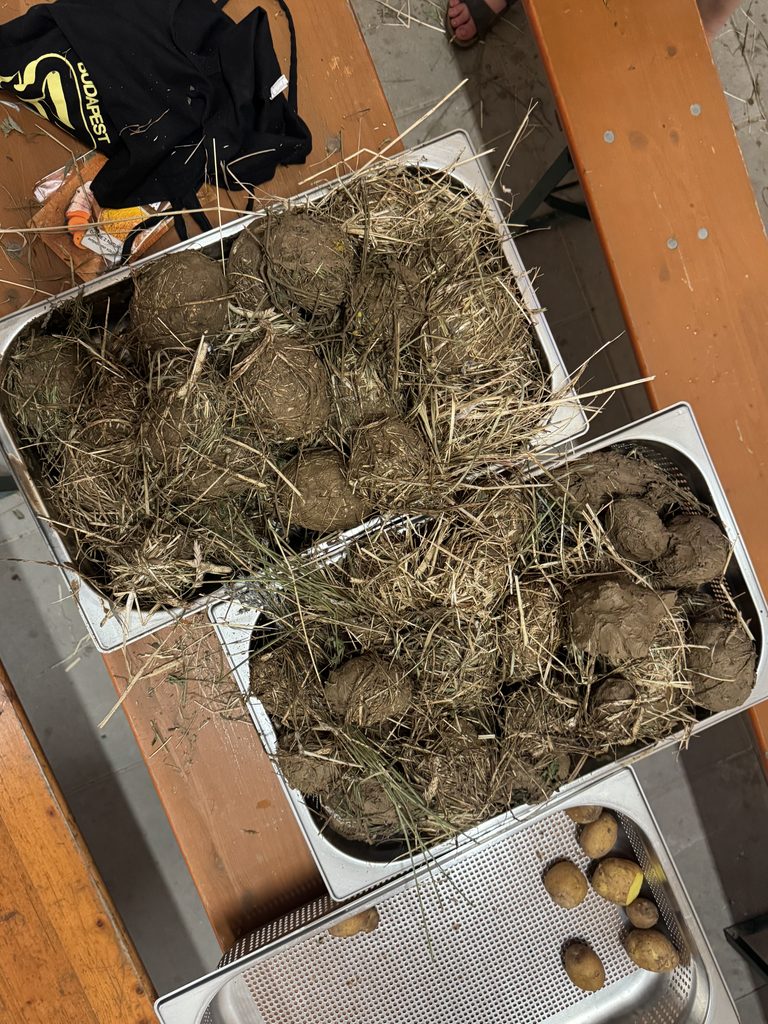
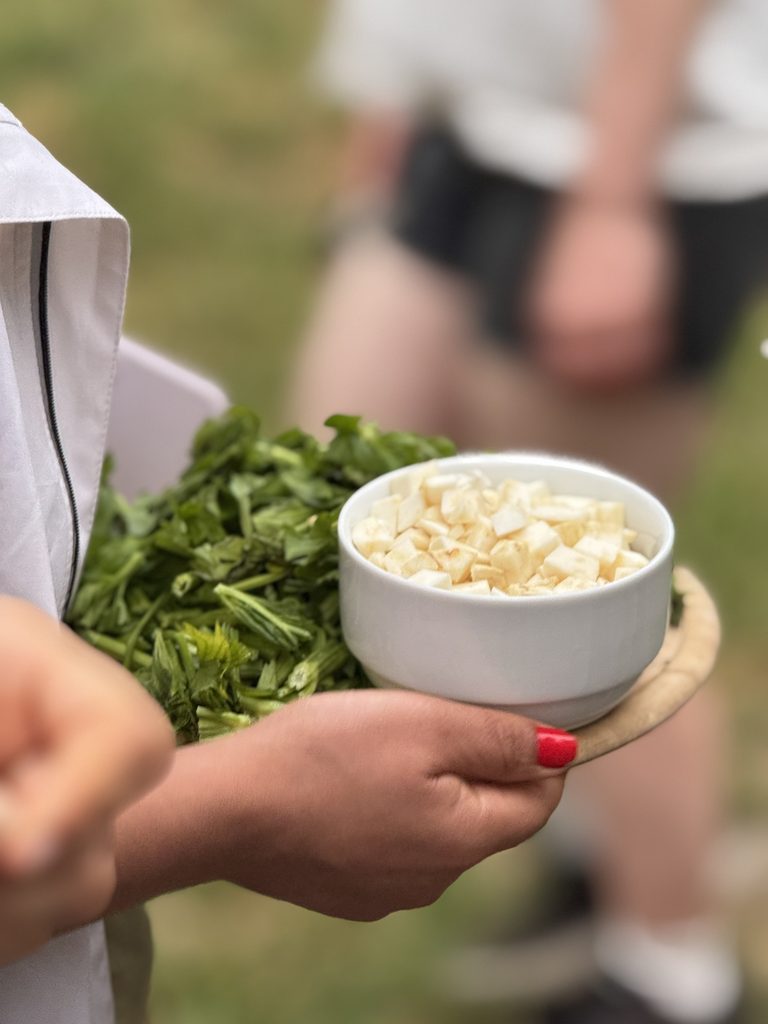
After mushroom hunting, Barbora Ciprová moved on to discovering herbs together. We didn’t just recognize them by name or smell. We tried to understand their place in the landscape and the relationships they create. Together, we made oil from St. John's wort – a way to preserve the power of the summer sun for later.
Not everything needed explaining. Some things were enough to just show. The scent of dried chamomile. St. John's wort hanging under the roof. Hands that know when to pick. And when to leave it be.
Relationships instead of categories
We didn’t get to know herbs as individual objects. We learned to read them as part of the landscape.
Every plant grows within a certain network of relationships – with soil, water, light, and other organisms. We tried to look at human identities the same way.
Not as fixed categories. But as something that grows from specific experiences, places, and relationships.
Maybe that’s when it stops being a question of who’s right. And starts being interesting to see what kind of landscape each story grows from.
Which voices are speaking inside me?
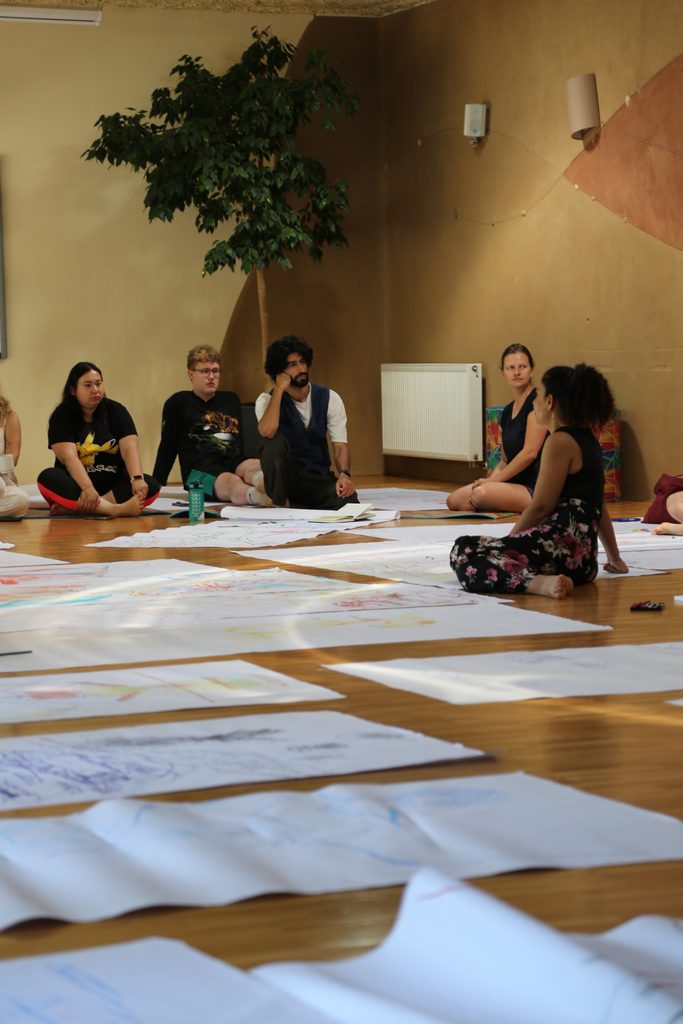
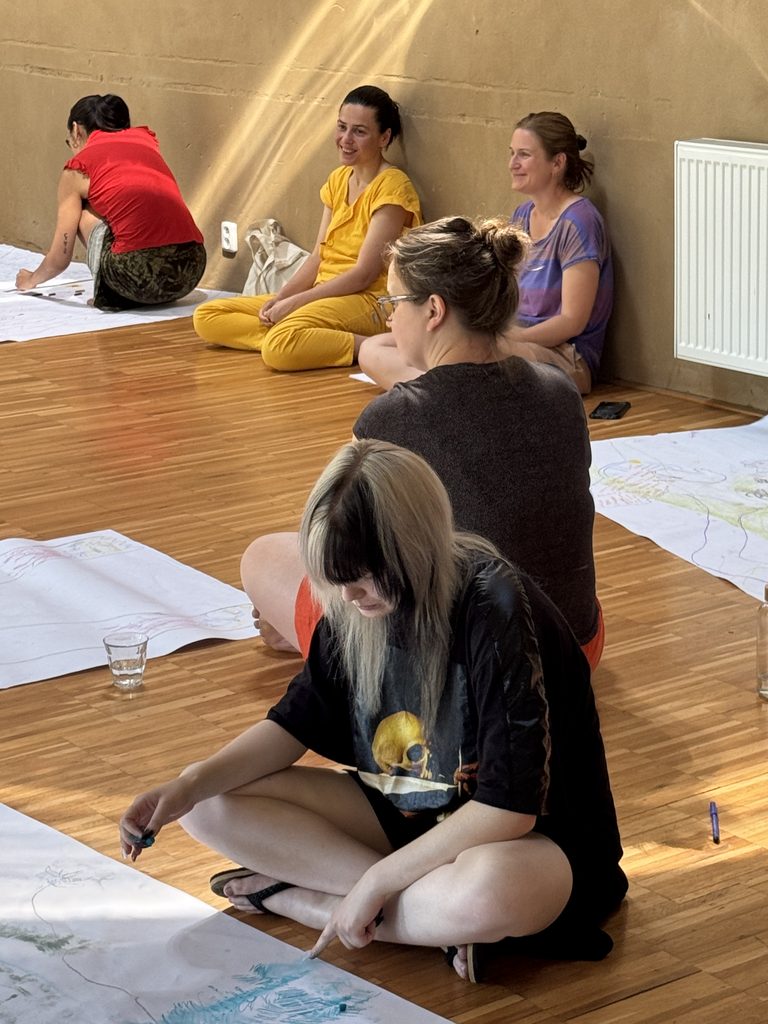
The afternoon continued with group mapping.
This time we weren't looking for body parts, but voices. Who has spoken to us throughout our lives? Which sentences have we taken to heart? Which ones stay with us, even though we might want to let them go? The individual maps slowly started connecting with the maps of others.
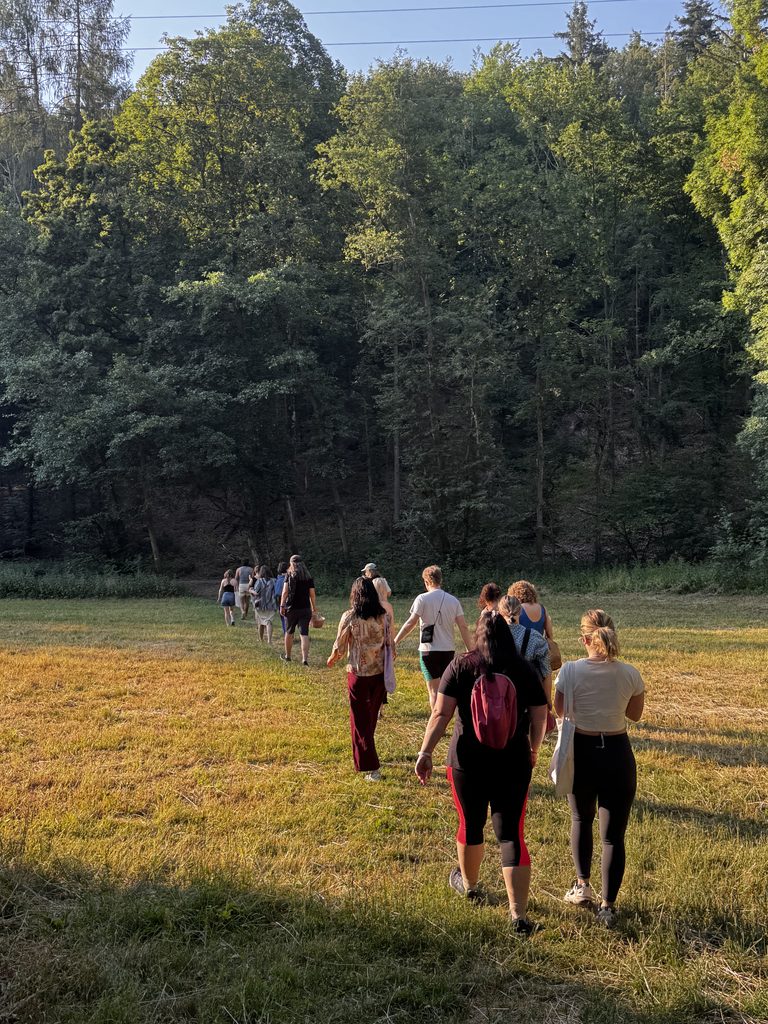
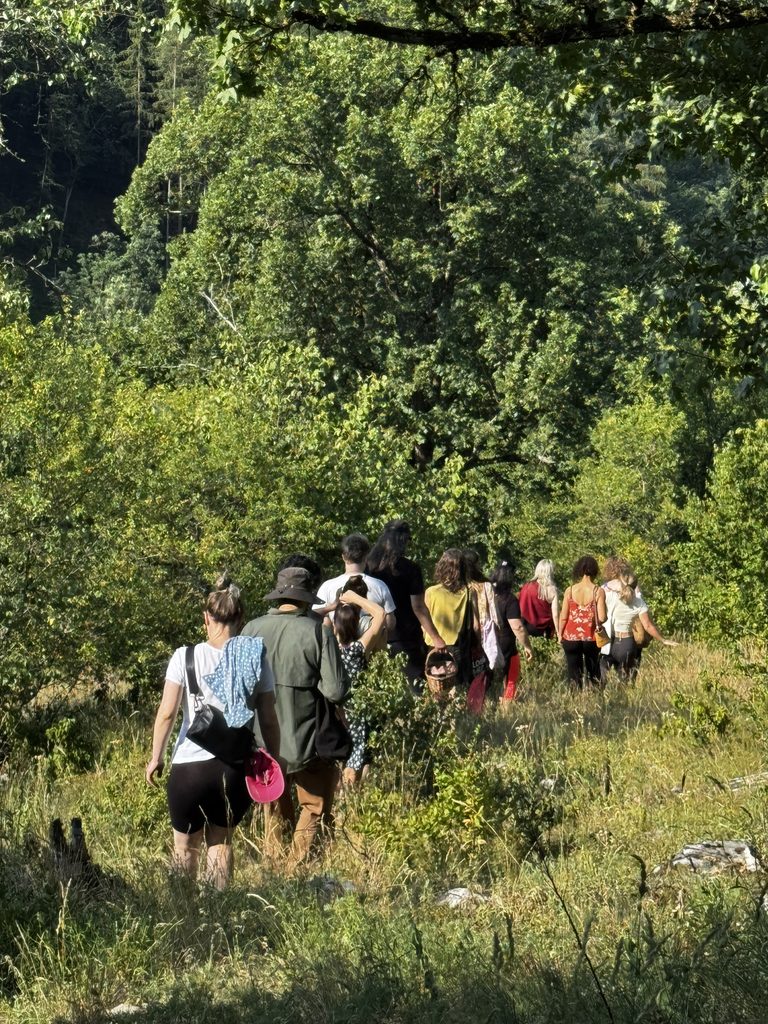
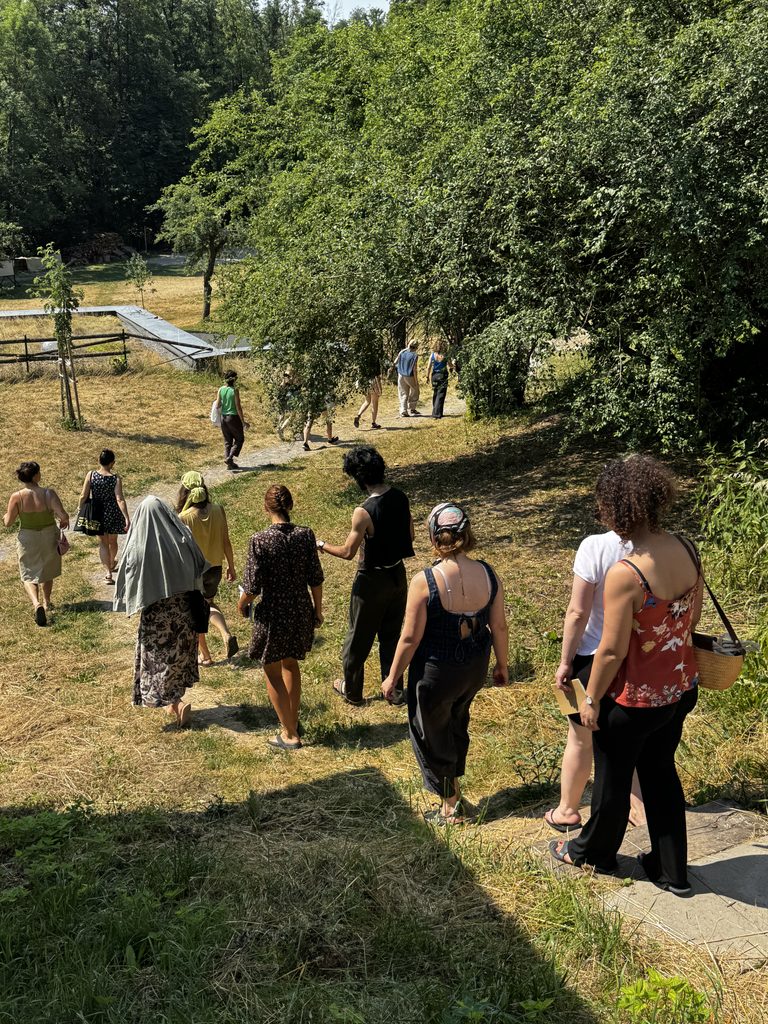
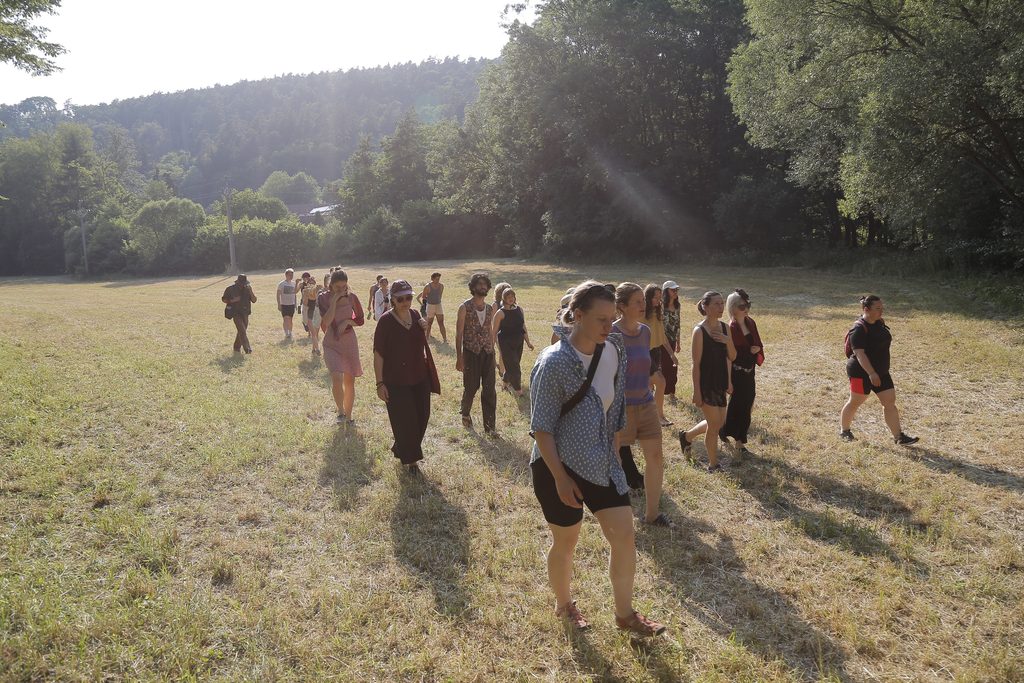
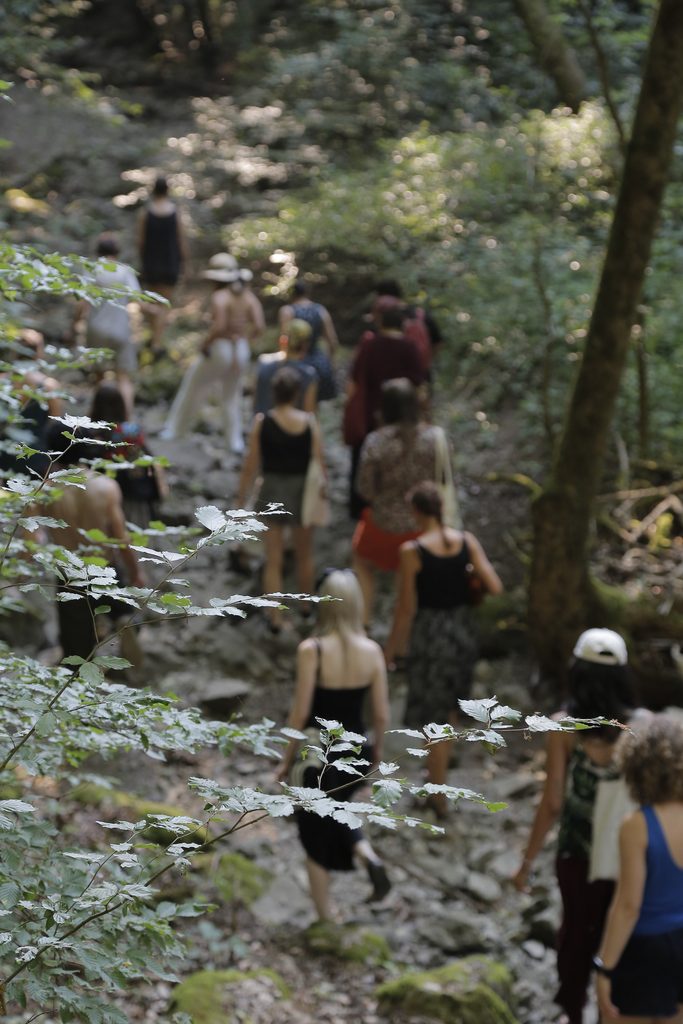
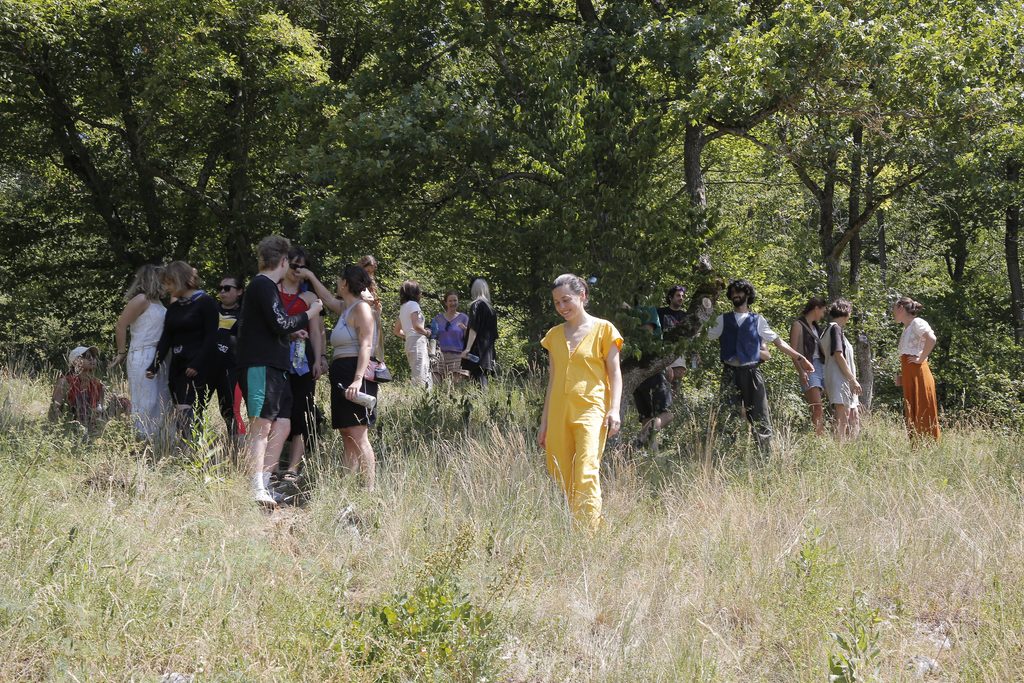
In the evening, we set out across the countryside again.
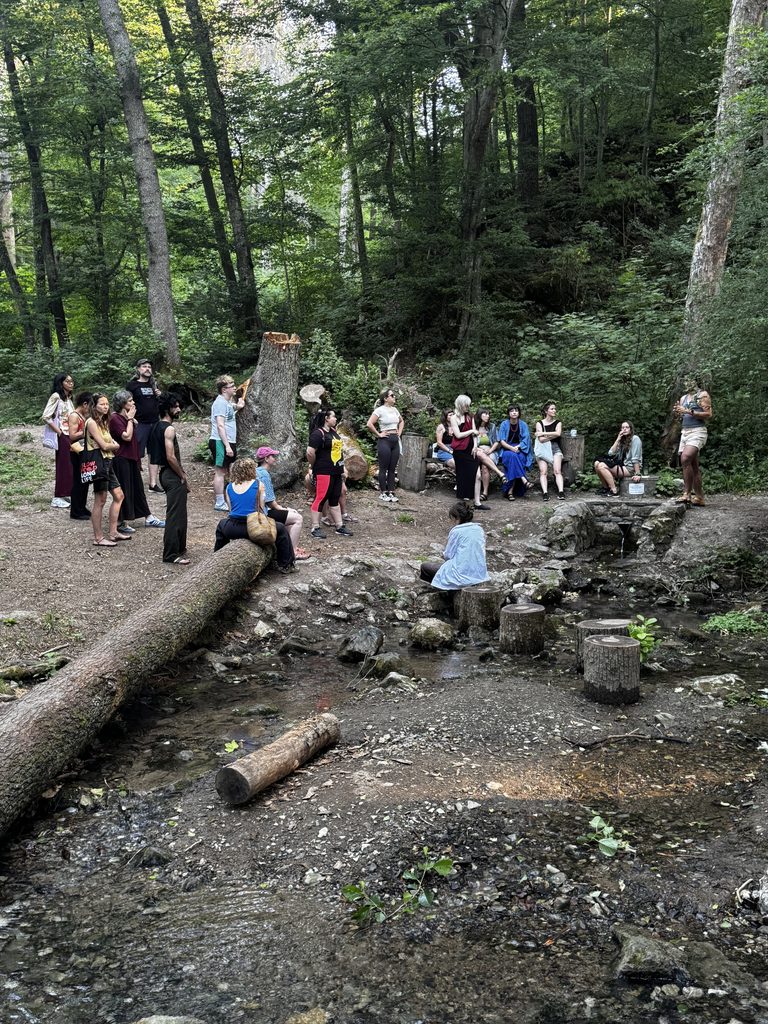
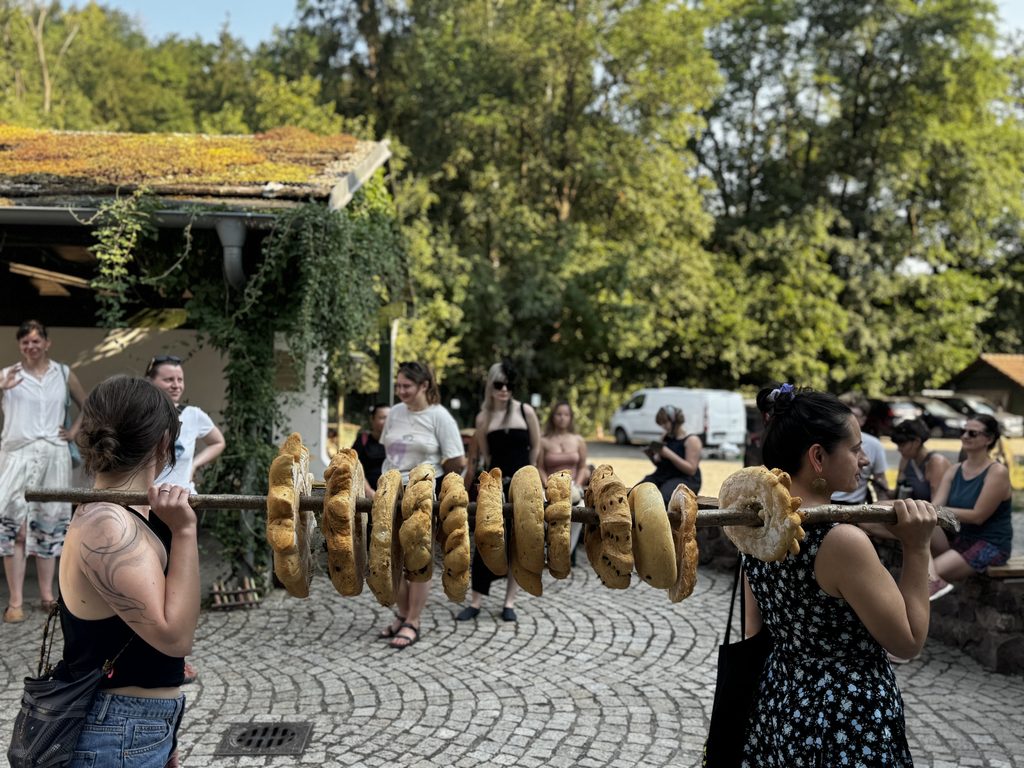
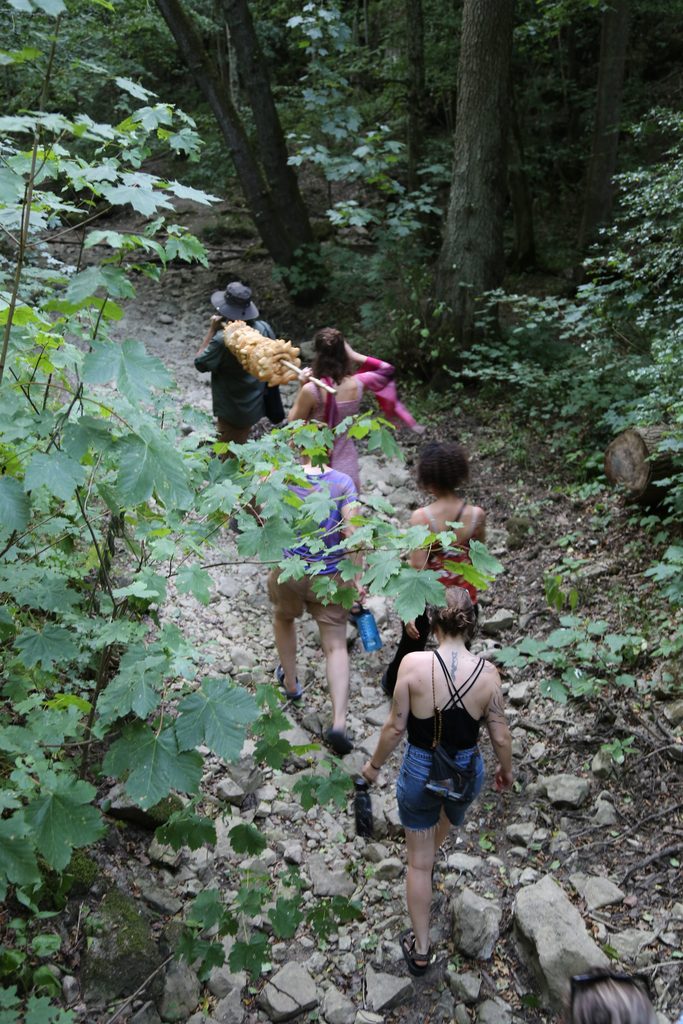
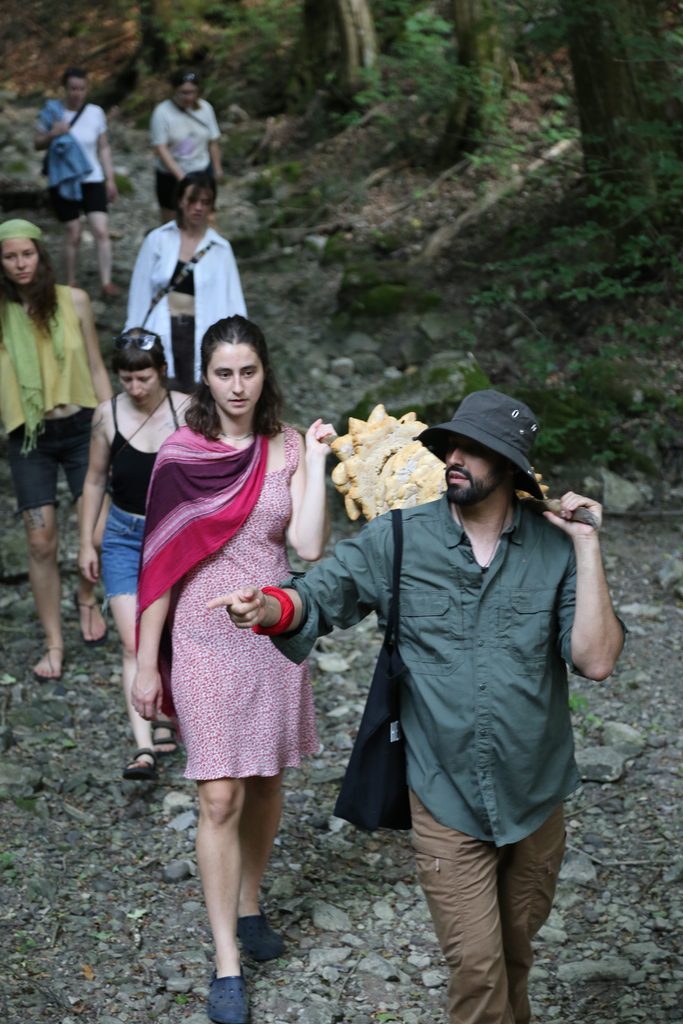
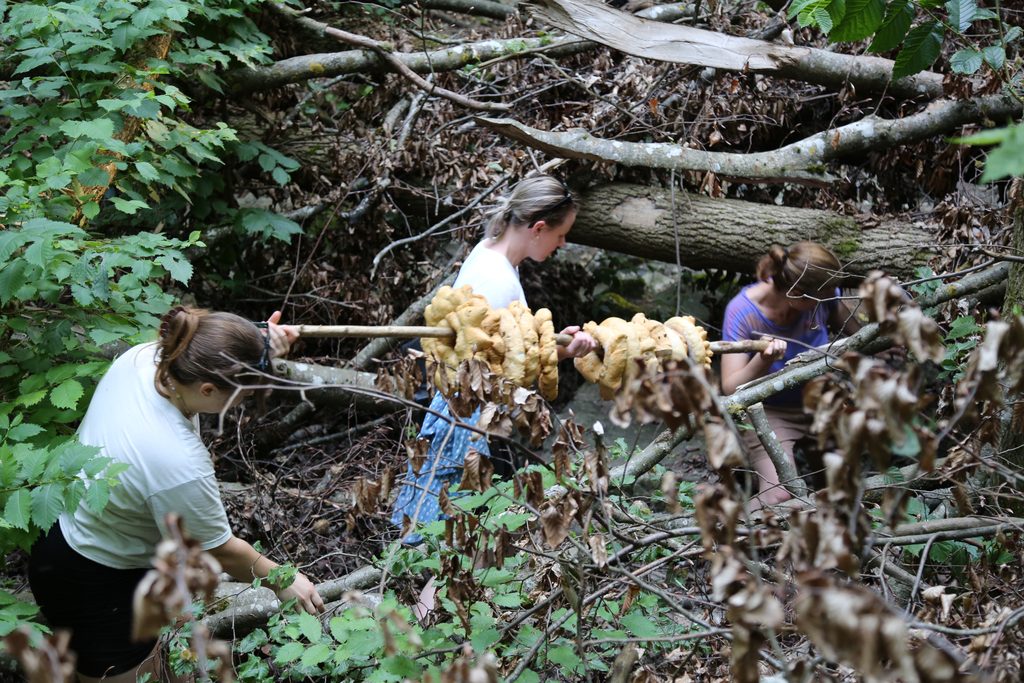
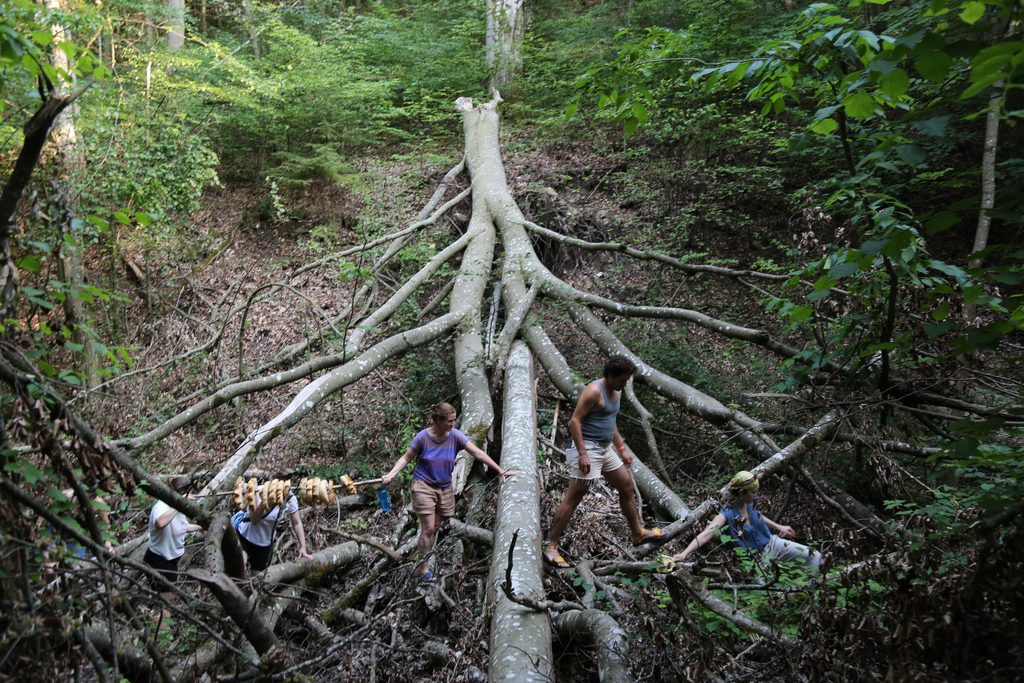
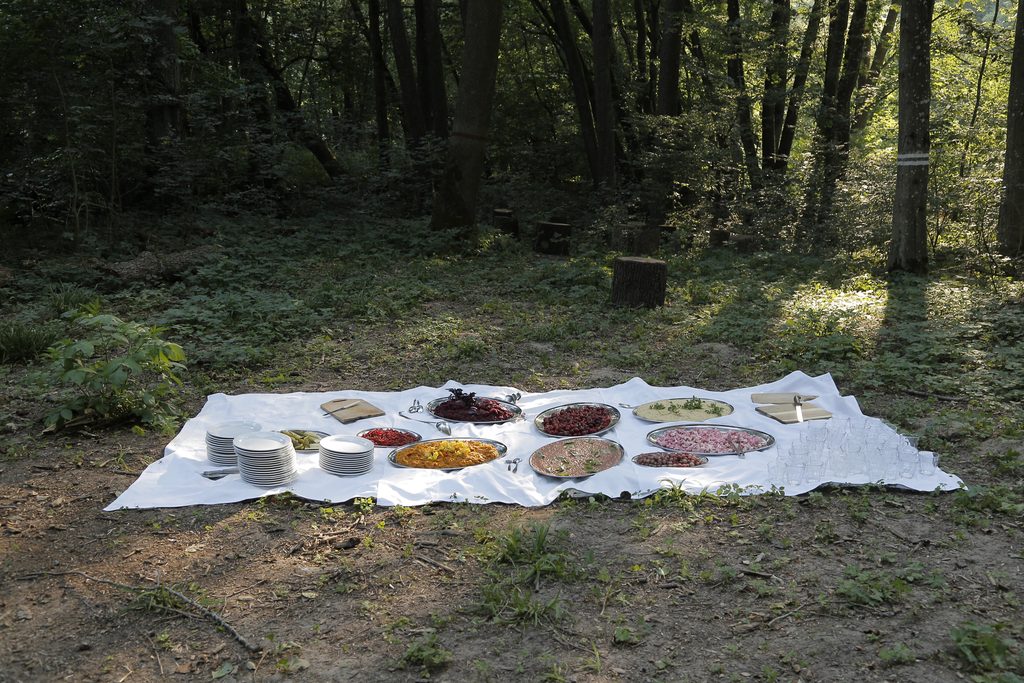
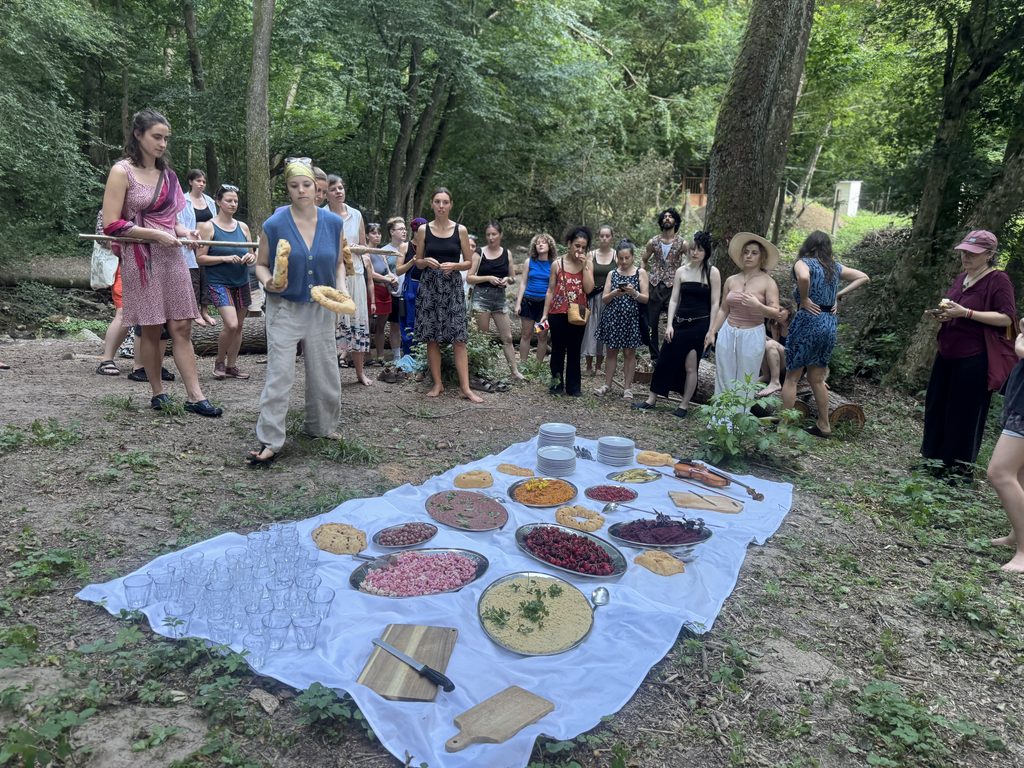
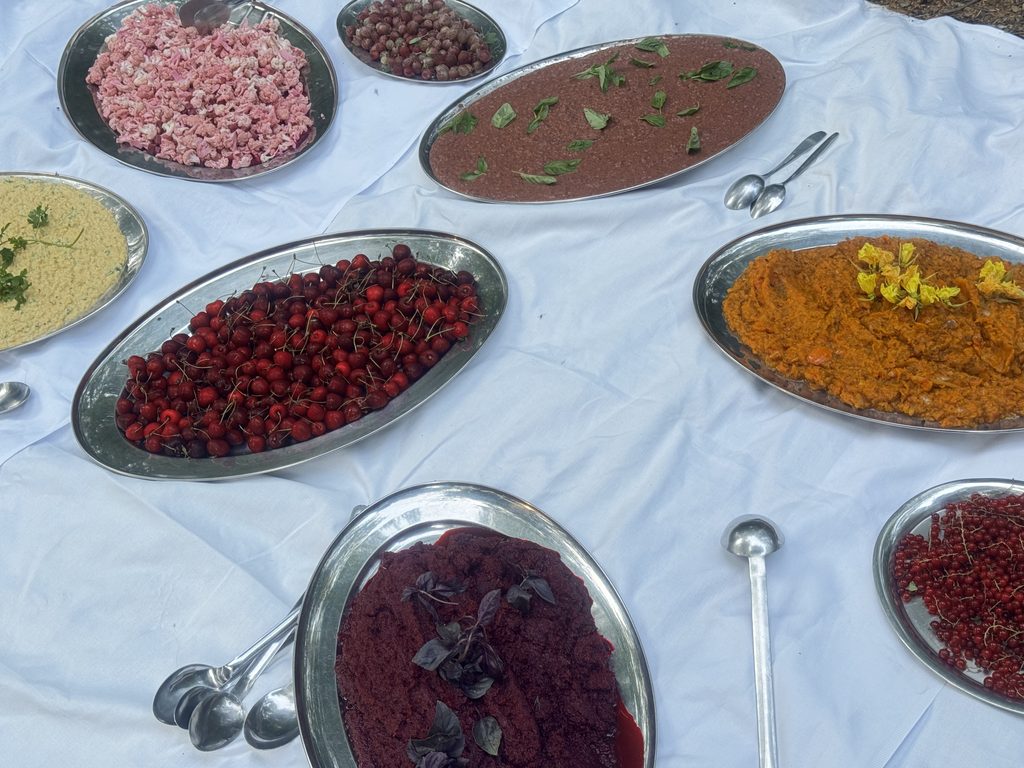
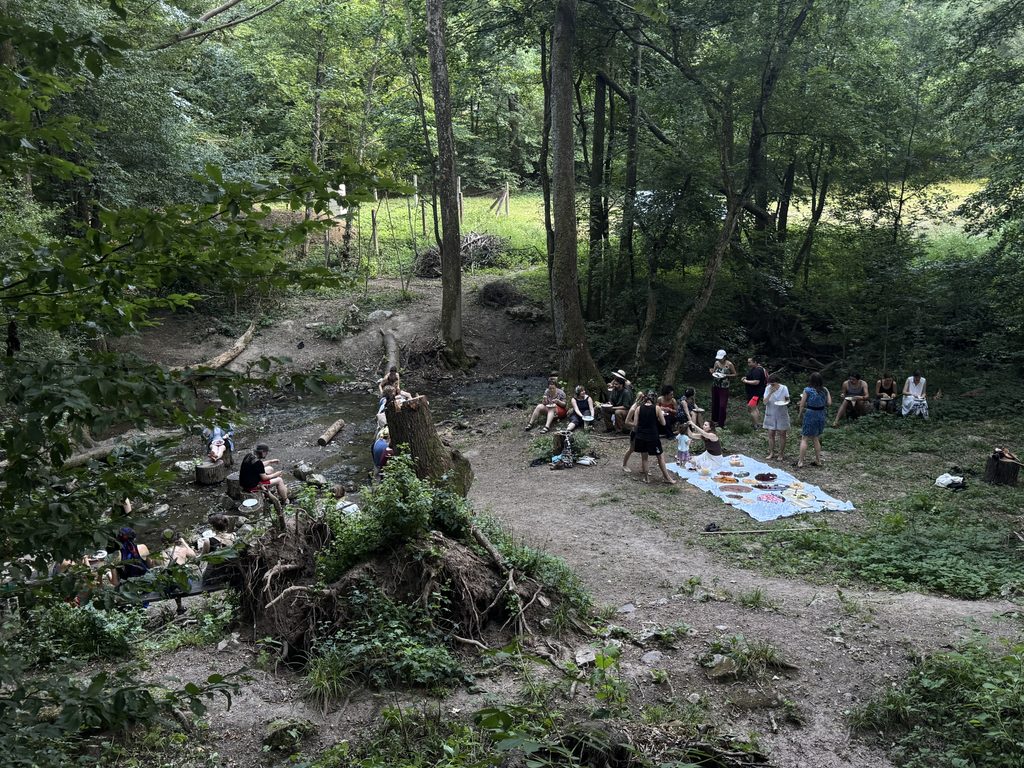
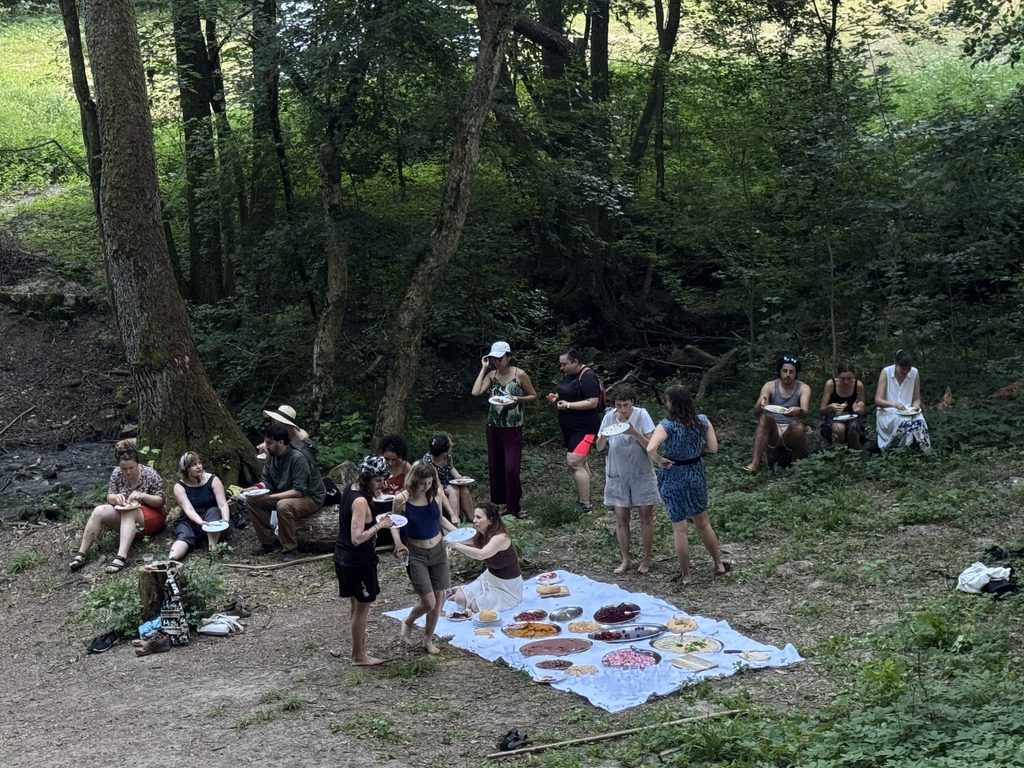
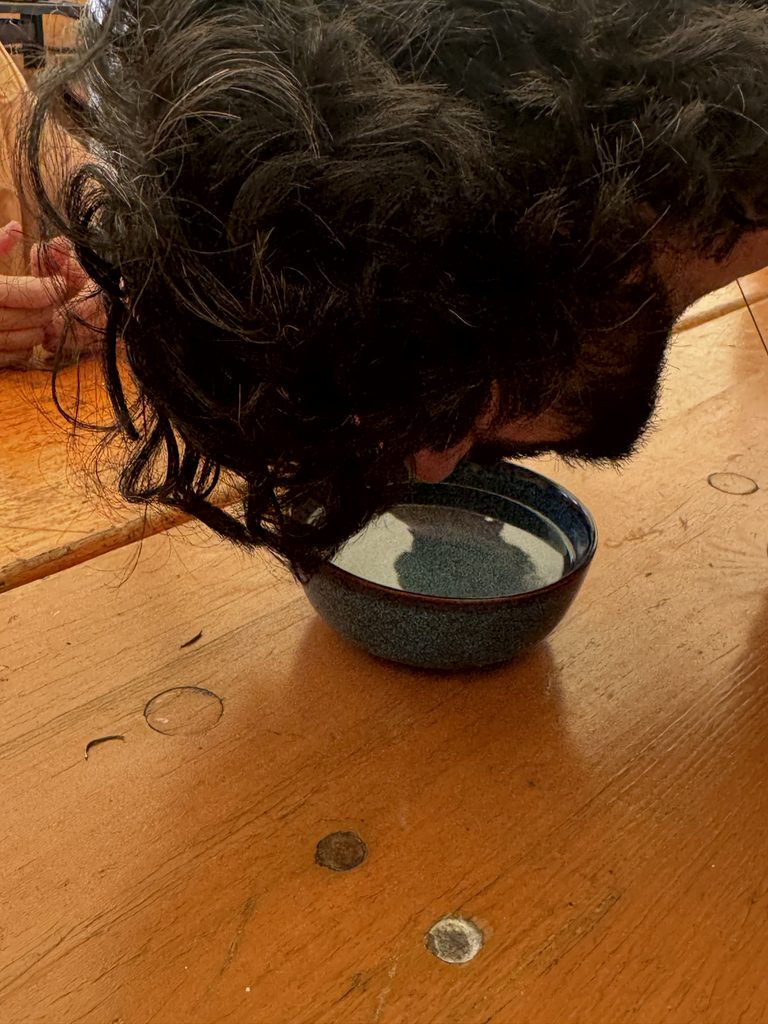
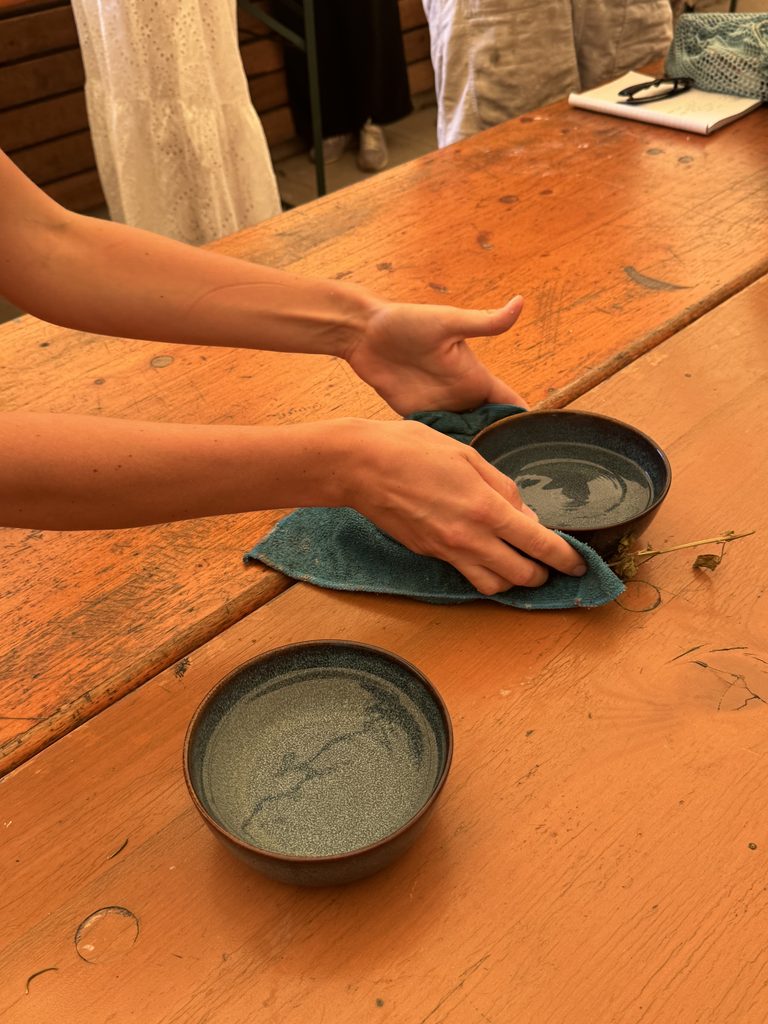
We carried bread we had baked the day before in our hands. With a song that we had prepared together with Ivana Mér, the journey turned into a thank you to the landscape and a quiet plea for rain. At the end, a communal table awaited us. The bread was placed back in the center of the circle. We refreshed ourselves with water from a spring fed by the underground waters of local caves.
The most important things often flow beneath the surface.
Day 3 — What the stone remembers
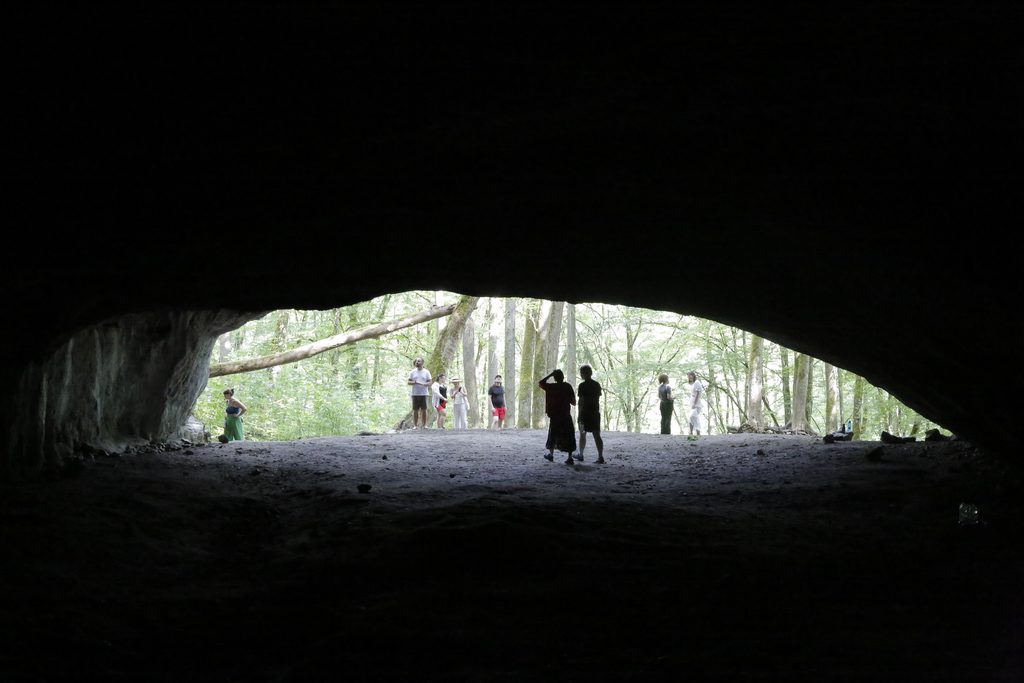
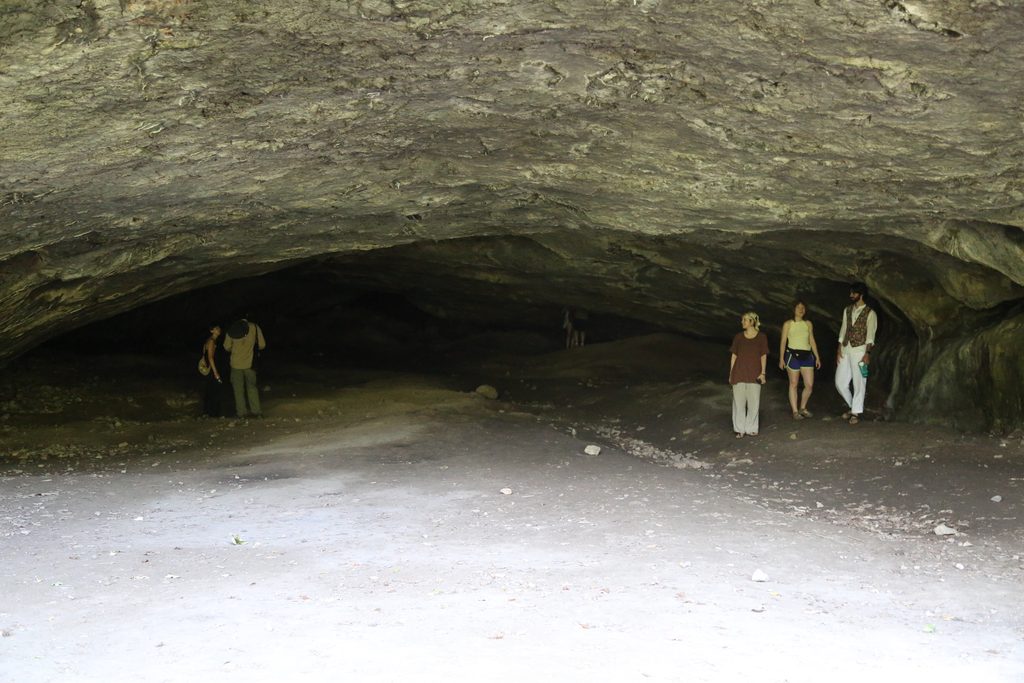
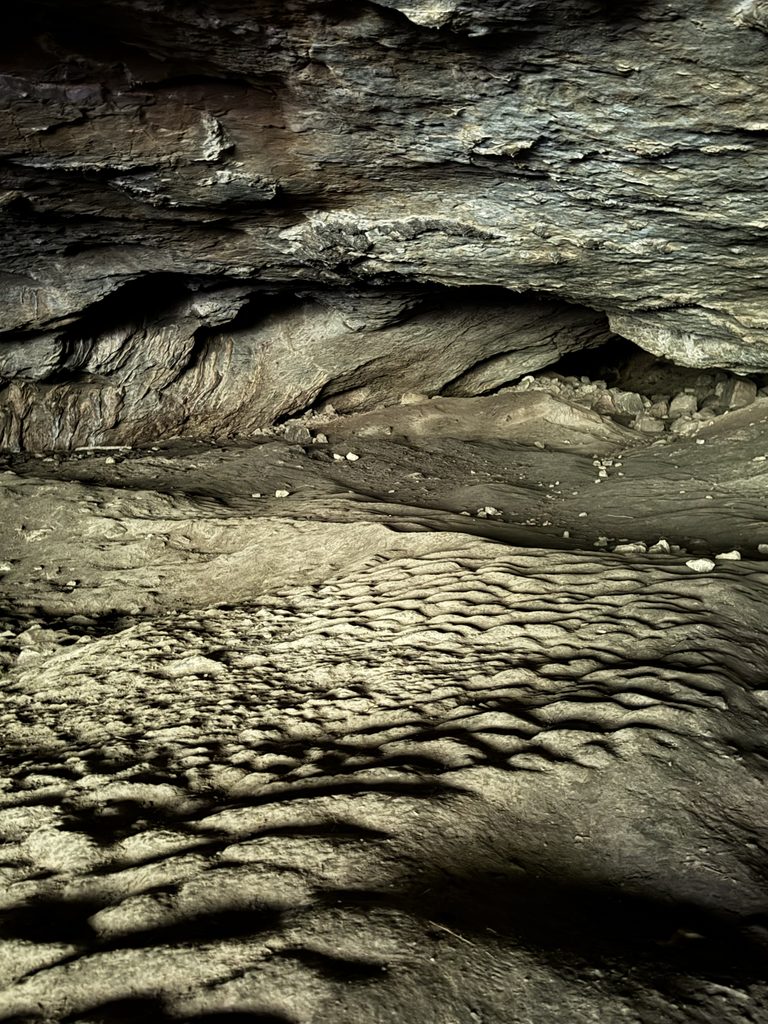
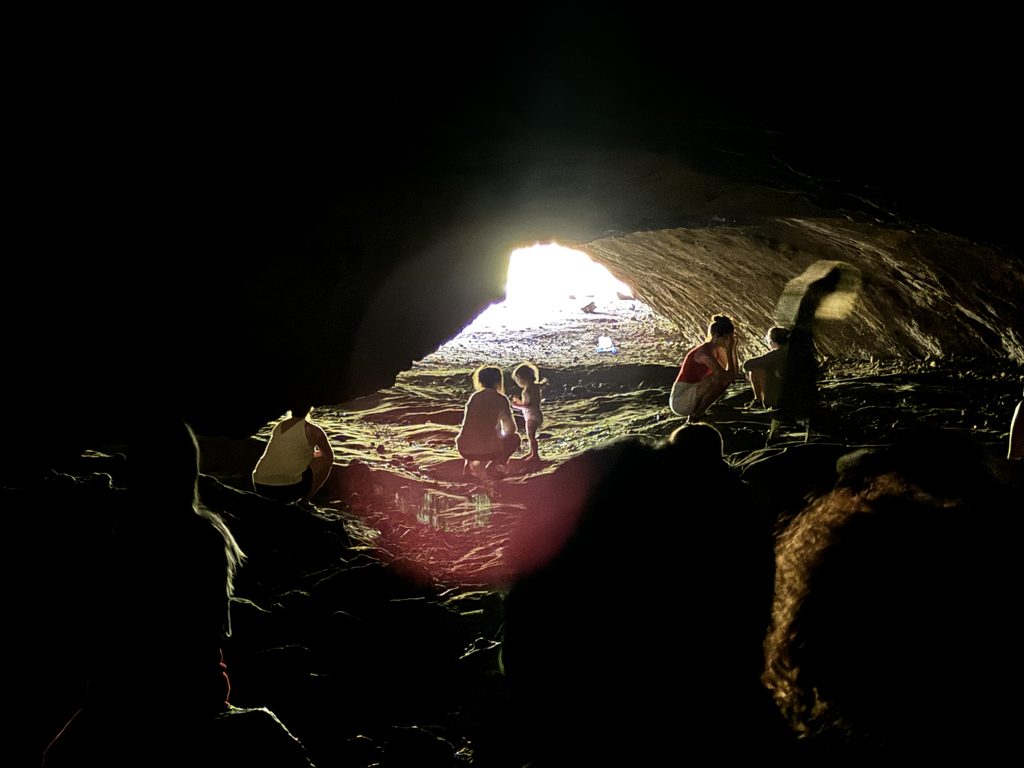
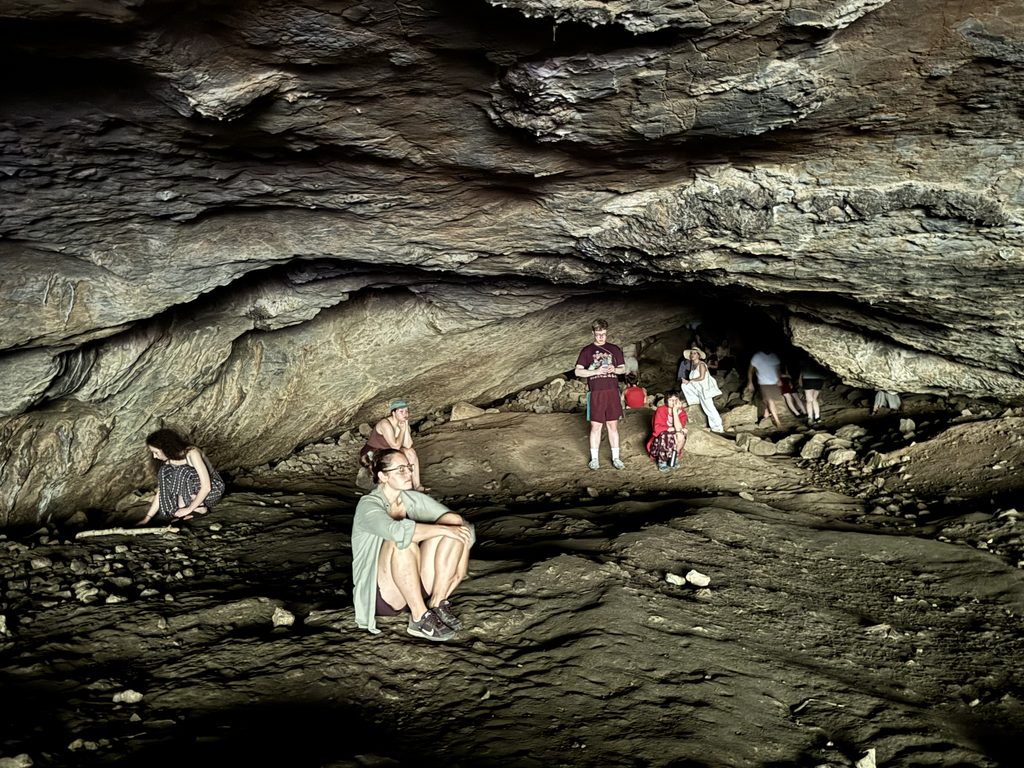
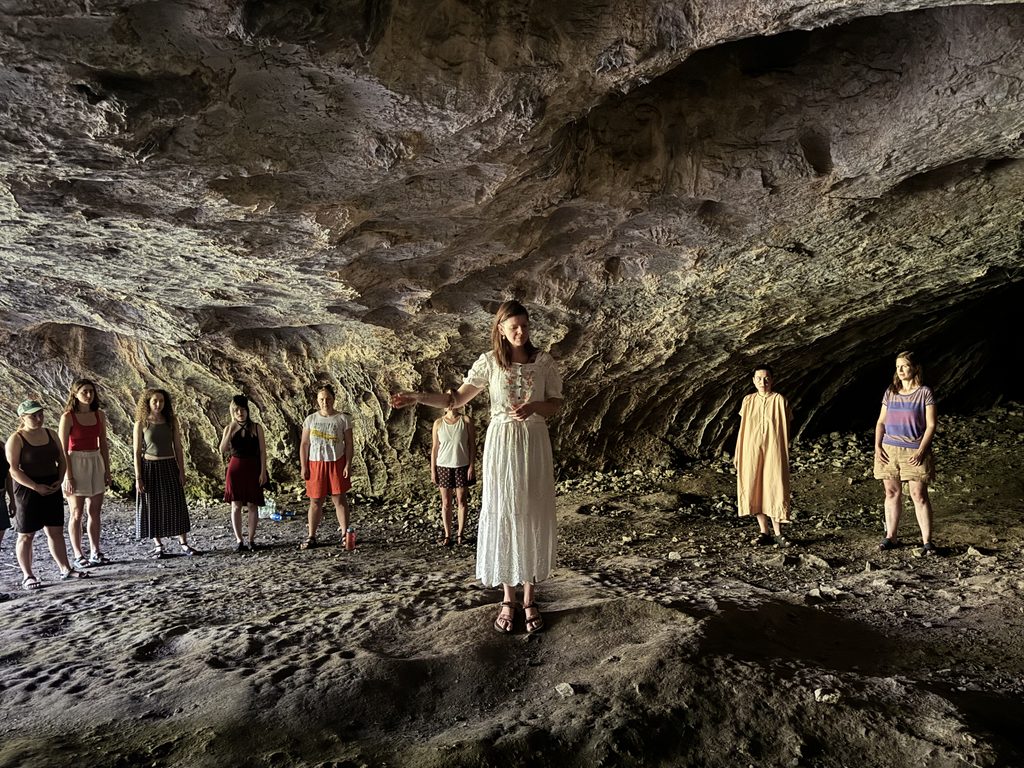
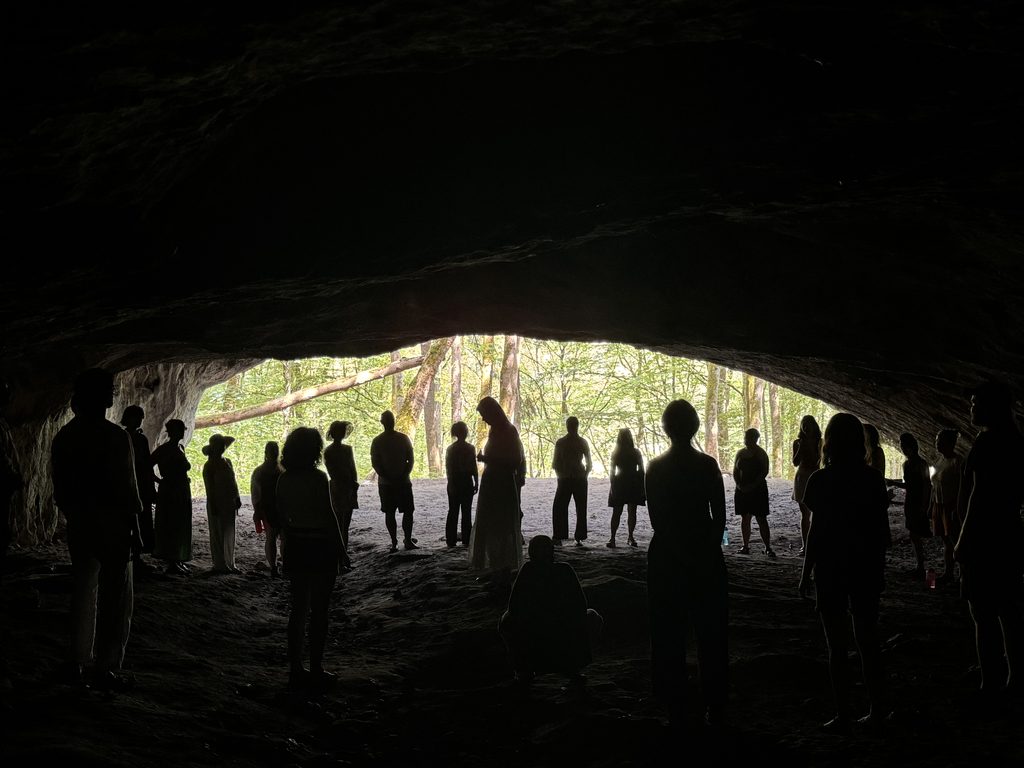
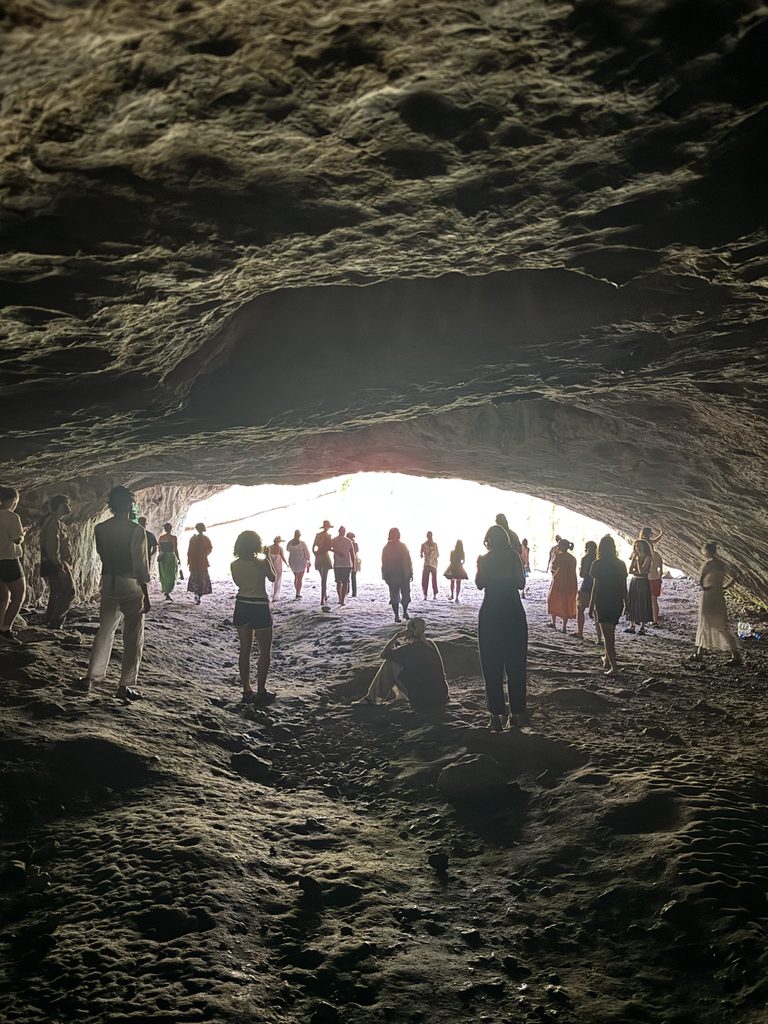
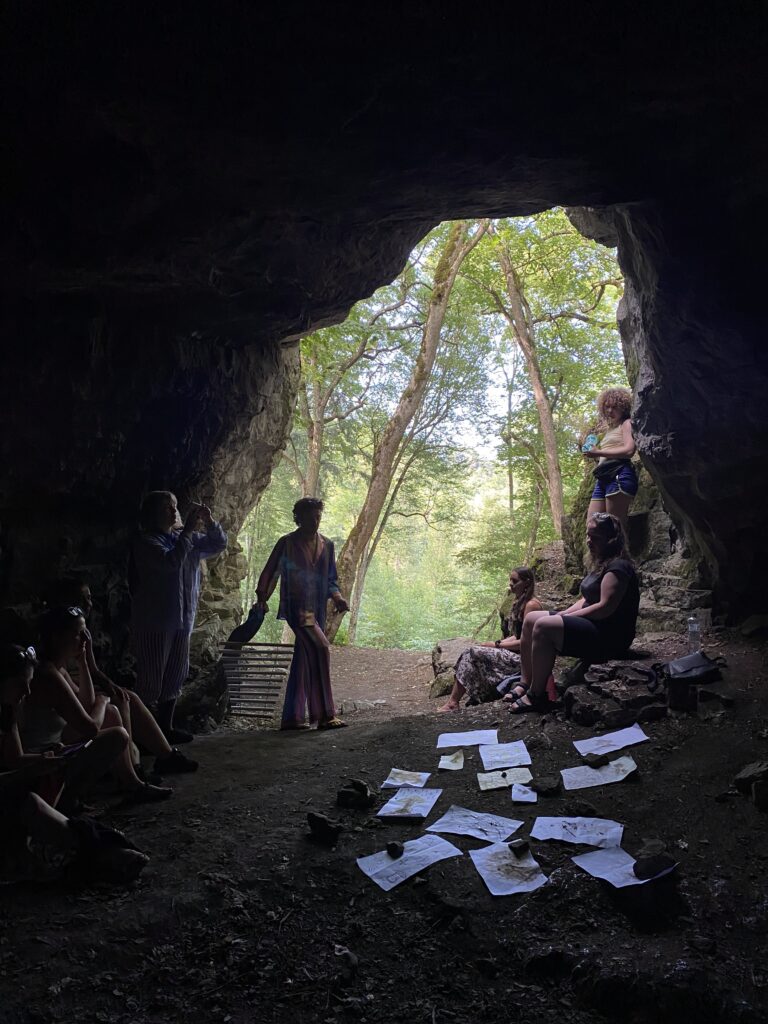
The third day led us deeper. Into the landscape. Beneath its surface. And into ourselves. In the morning, we entered the Pekárna cave. At first in silence. No need to name everything. No rush to discover anything. Just being present in the space that had been forming for thousands of years before us.
Silence isn't empty.
It just hasn't found words yet.
A stone isn't in a hurry.
It remembers longer than a person.
You just need to listen for a moment.
Then the silence turned into singing. Voices bounced off the stone walls, merging with the echo, and for a moment it was hard to tell what was coming from us and what from the space itself.
Voice as a Shared Space
In public spaces, we often use our voice to assert our own opinions.
This time, we tried using it differently.
Not as a tool of persuasion, but as a way of tuning together.
In communal singing, individual voices don’t disappear.
On the contrary.
Each one stays distinct.
But it’s precisely because of these differences that something is created which no single voice could make on its own.
Maybe this is what dialogue looks like.
Not the elimination of differences, but their shared resonance.
In the afternoon, the group split up.
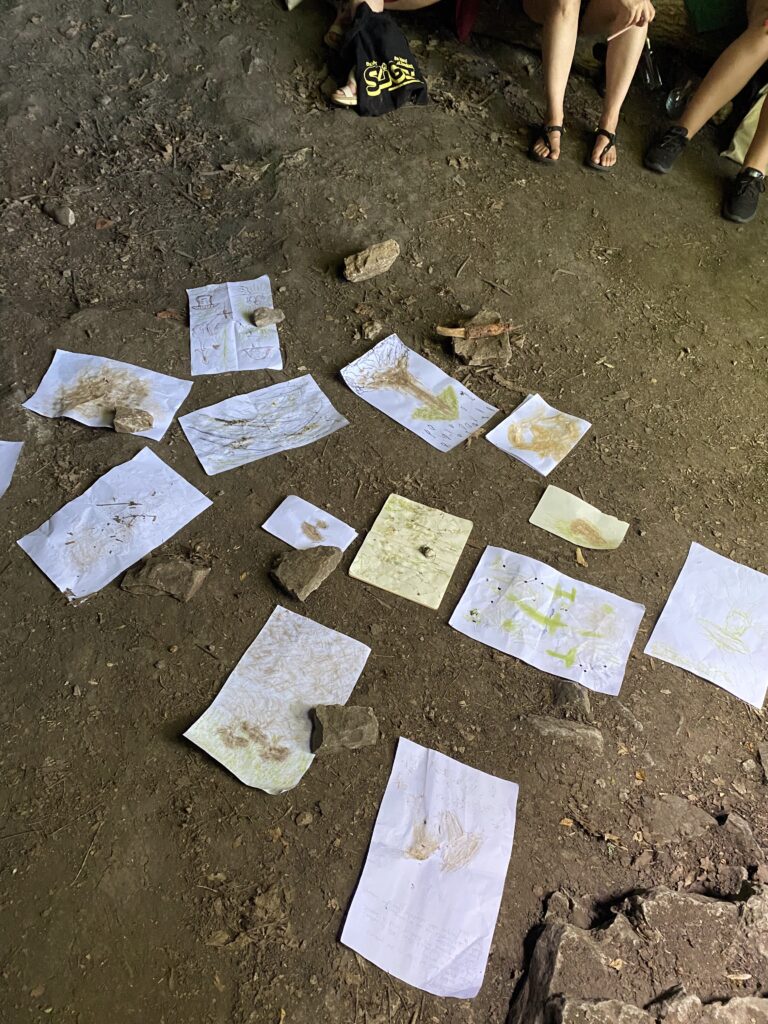
Some continued looking for mushrooms and created ephemeral installations from natural materials right in the cave.
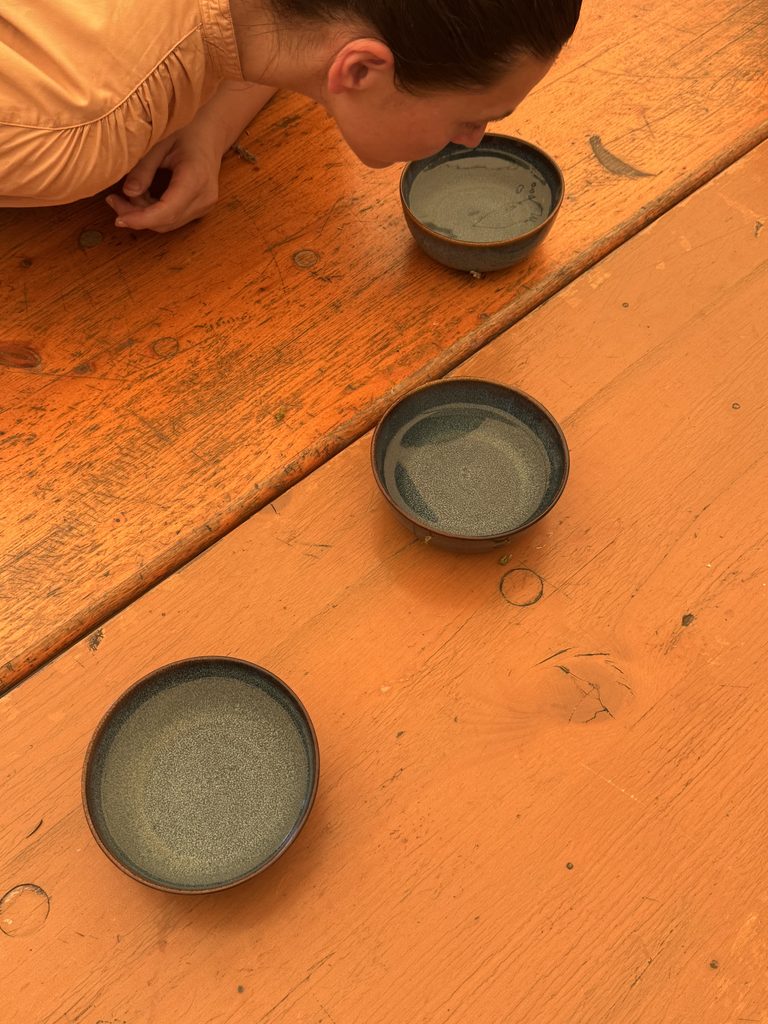
Others explored herbs by making hydrosols and natural repellents.
Getting to know the landscape turned again into care. Care for ourselves. For others. For the place that welcomed us for a few days.
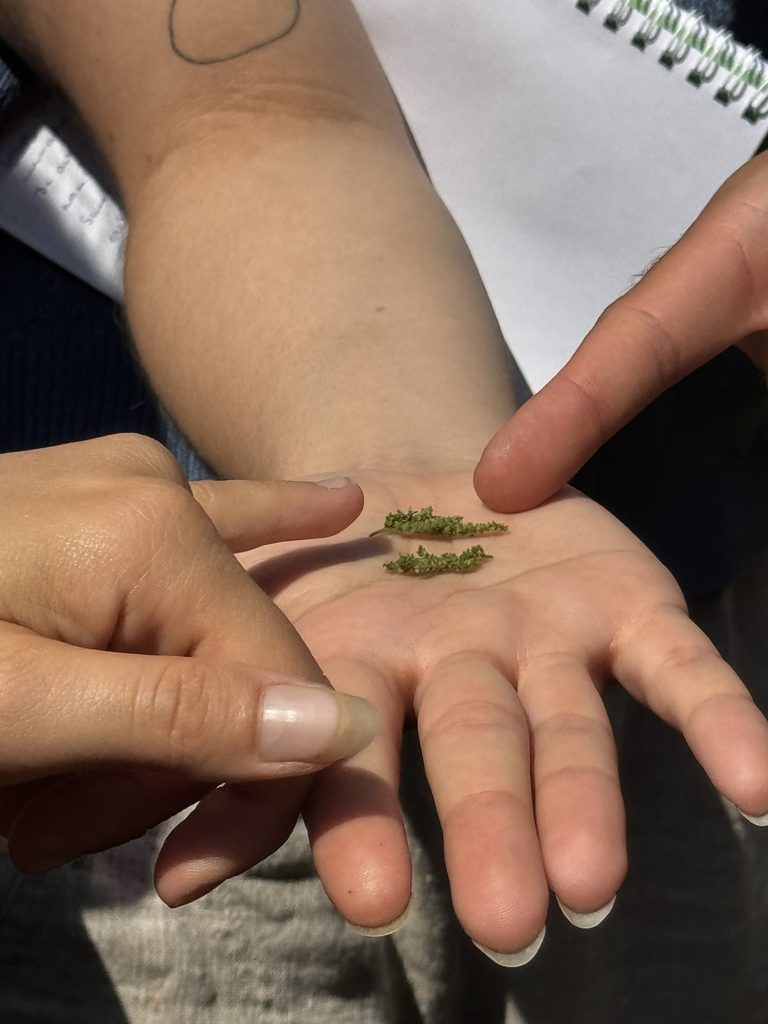
The seeds touch each other. Right next to each other. Each different. But without needing to set a boundary. Maybe that's exactly its quiet suggestion. That closeness doesn't have to mean agreement. That things can share space without having to become one.
How can diversity hold together?
A big part of current debates assumes that society holds together when people agree. The landscape offers a different experience.
The forest isn't uniform. The meadow isn't uniform. Even a poppy head isn't made up of just one seed.
The whole doesn't come from eliminating differences. It comes from the relationships that exist between them. Maybe this is exactly one of the most important lessons of this summer school. We don't ask how to eliminate differences. We ask how to create conditions where differences can exist without turning into hostility.
A map that continues beyond the Mill's borders
The last morning was different.
Not because anything major had changed.
More because we had changed.
The places we had just walked through on the first day no longer felt strange. The paths by the stream, the forest, the cave, and the shared table had, over a few days, become part of our own map.
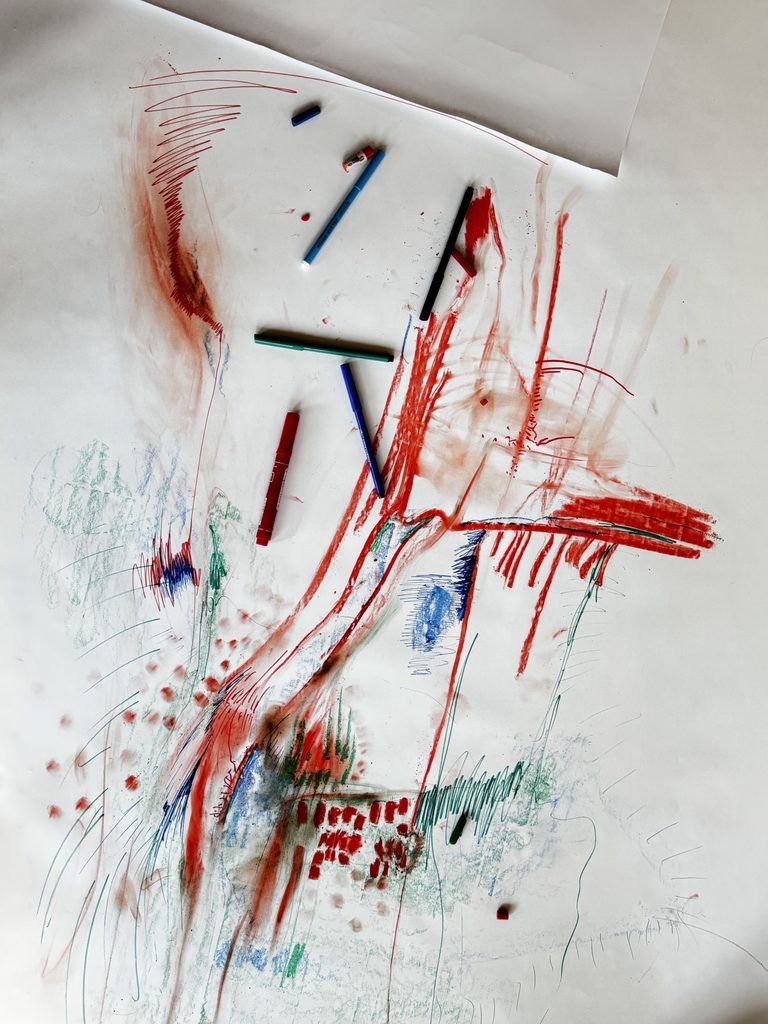
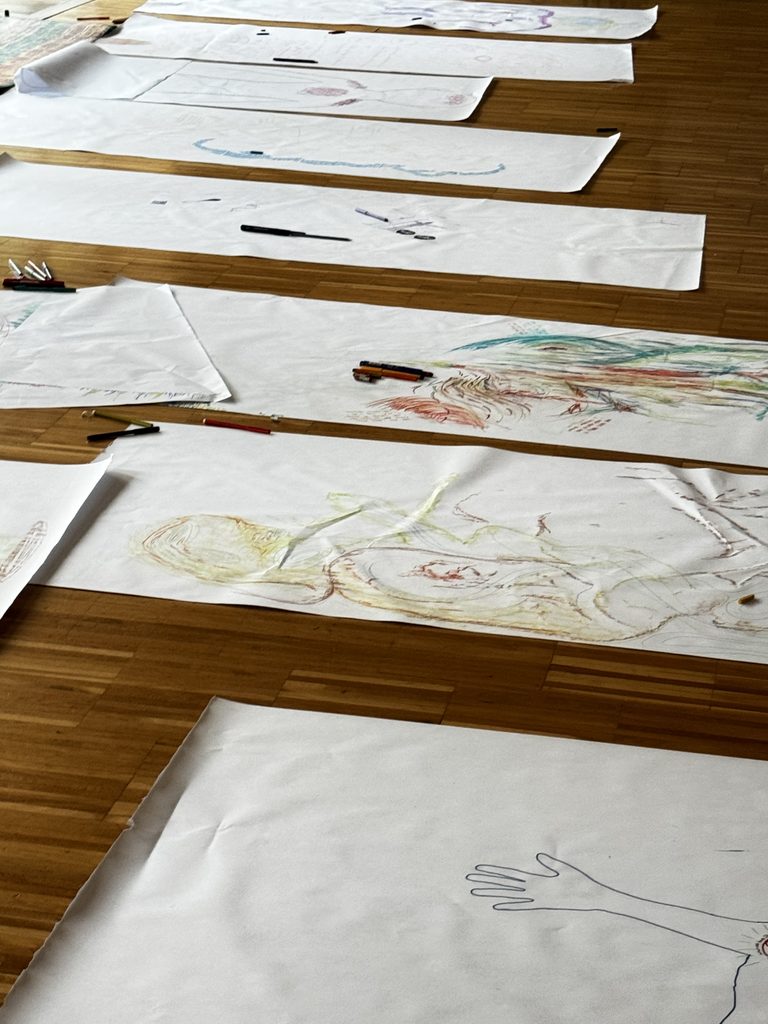
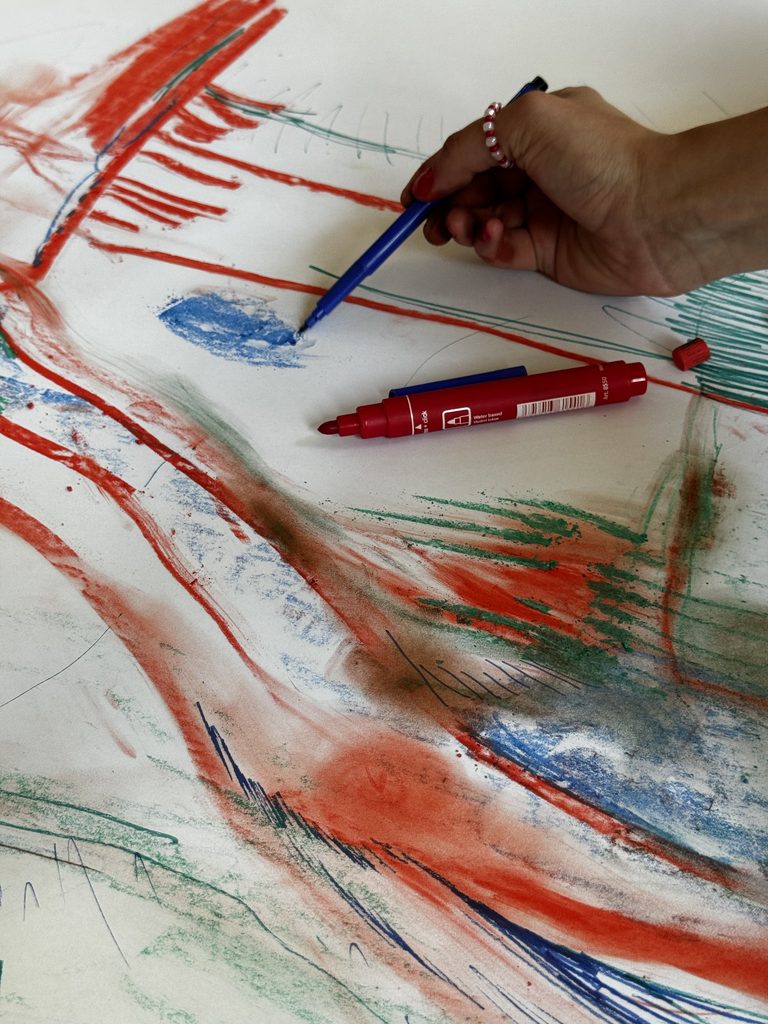
For the last time, we gathered in a circle and returned to the maps we had created during summer school. It was no longer about finishing them. None of them could ever be truly finished. Each was just a capture of a particular moment, a certain perspective, a certain way of seeing. Each remained open to further experiences, more people, and more questions.
A map is never the landscape. Just a trace. The imprint of the path we've just walked. It doesn't show everything. And that's exactly why it can remain open.
Why a 'totally inaccurate map'?
At the beginning, we created a map of the body, which we never see whole.
Then we mapped our own feelings, needs, and voices.
Later, we mapped relationships in the landscape.
And in the end, we realized that all these maps have something in common.
They aren’t accurate. And they never will be. But that’s not their weakness. It’s their greatest strength.
Polarization often grows from the belief that we see the world as it truly is, that our interpretation is reality itself. During the summer school, we tried a different approach. We didn’t see inaccuracy as a mistake in understanding, but as a space for curiosity. It allows for the possibility that besides our perspective, there are other maps capturing another part of the same landscape.
Maybe that’s exactly where dialogue begins.
Then we went to the countryside one last time.
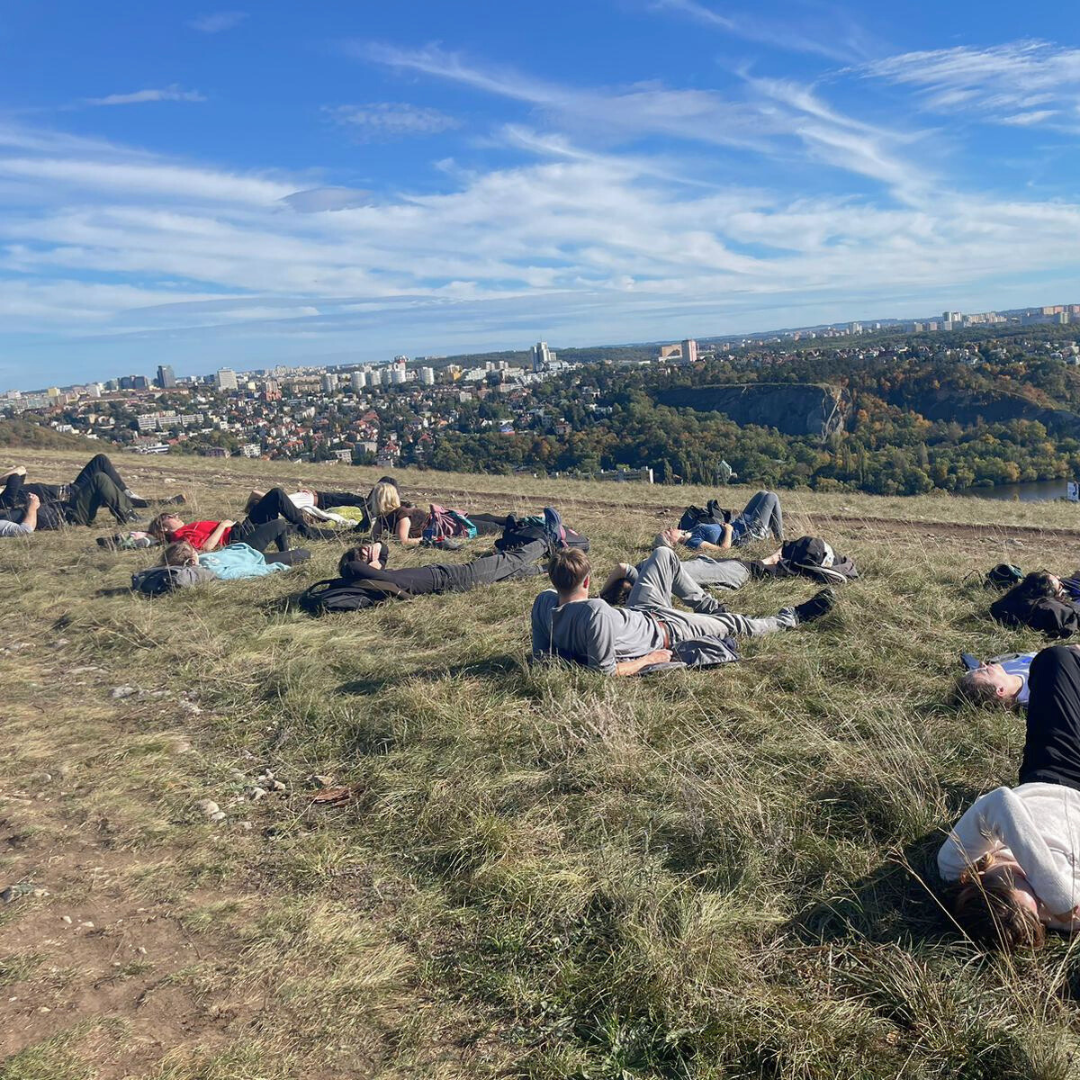
With singing led by Ivana Mér, we climbed a hill above the valley. The voices carried through the landscape and came back as echoes. It wasn’t a concert. More like a thank you to the place that welcomed us for a few days. A trace that won’t be visible in the landscape, but maybe will resonate there for a little while.
The voice is one of the few things a person always carries with them.
It can't be put aside.
It can't be completely hidden.
First, it's breath.
Then it becomes a sound.
And only after that, a word.
What all can be shared without words?
A large part of public debate is based on the belief that understanding comes mainly from exchanging arguments. Our experience over these four days was different. First, we baked together. Then we walked through the countryside.
We picked mushrooms. We got to know herbs. We were silent. We sang. We cooked. We sat at the same table.
Only then did conversations start. It turned out that dialogue doesn’t begin the moment people start talking to each other. It begins much earlier. The moment they can share space.
Rhythm. Attention. Or a shared experience. It’s precisely the experience that can create a sense of safety, where even difficult topics can later emerge.
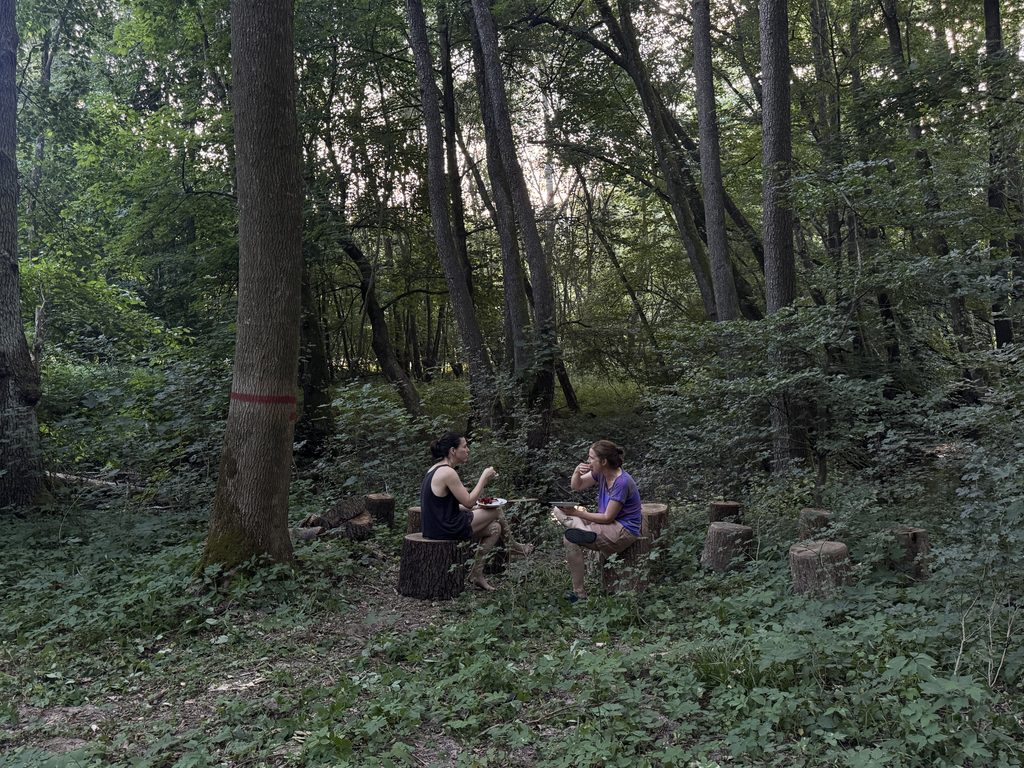
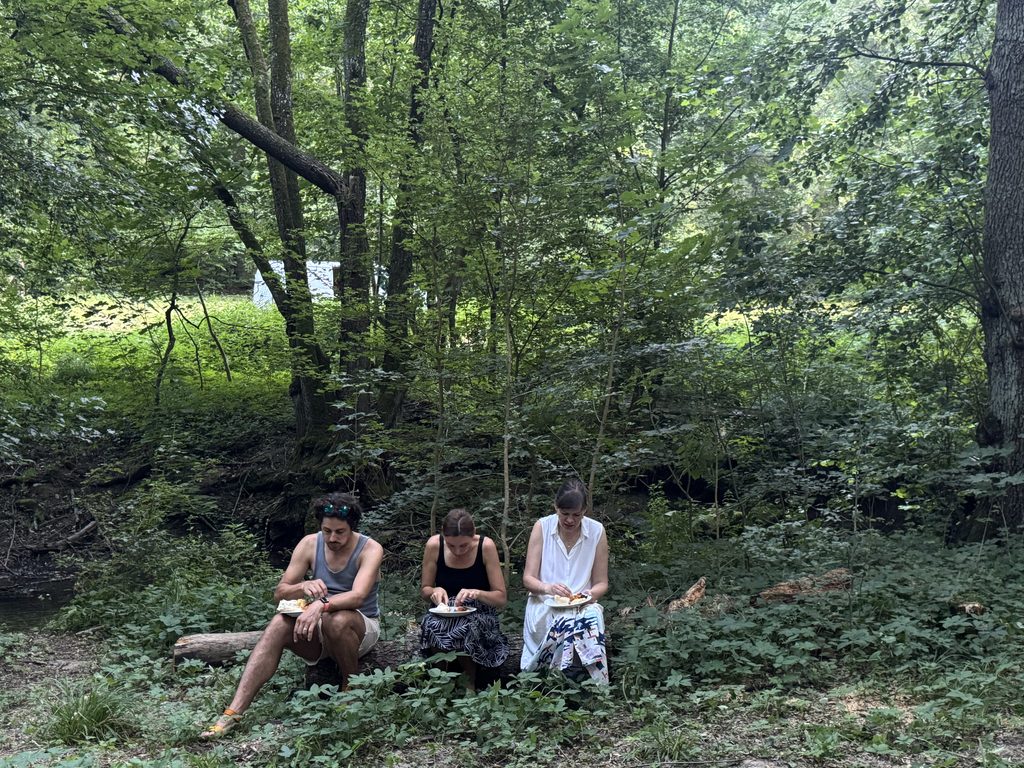
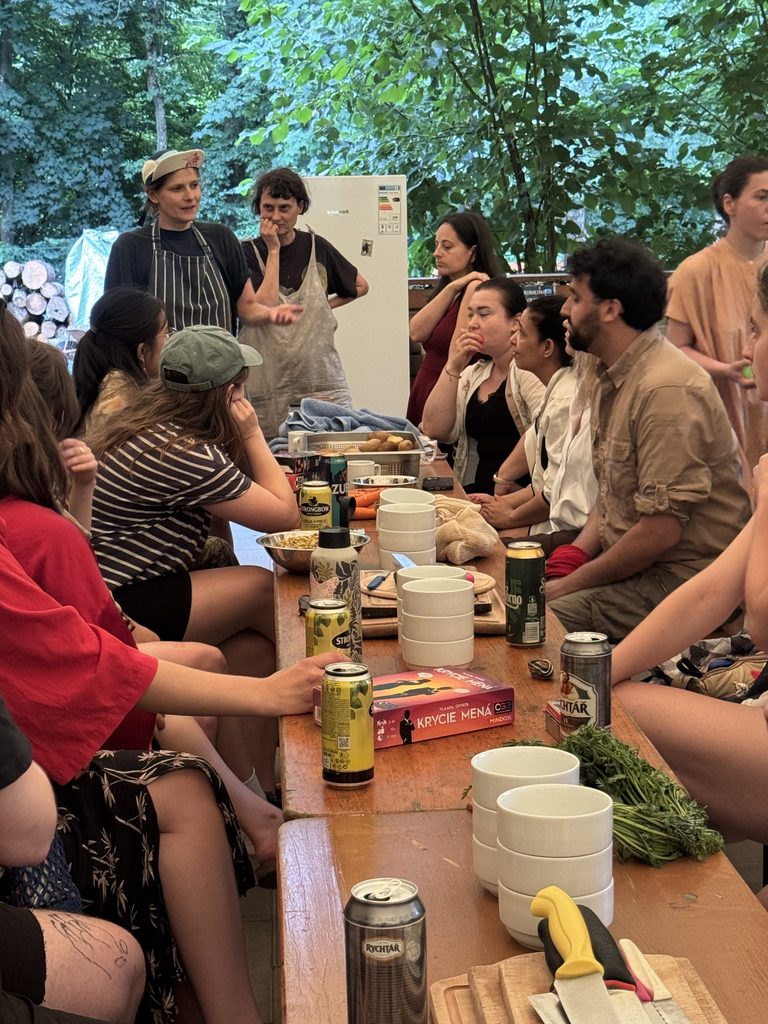
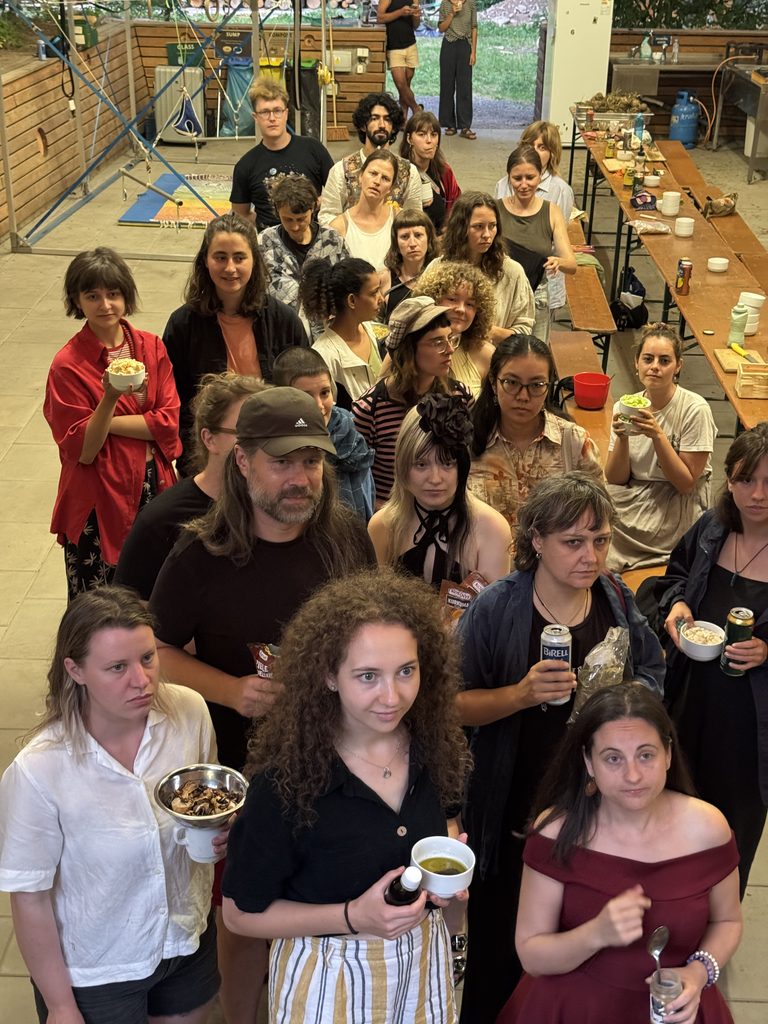
We shared our last lunch at one table.
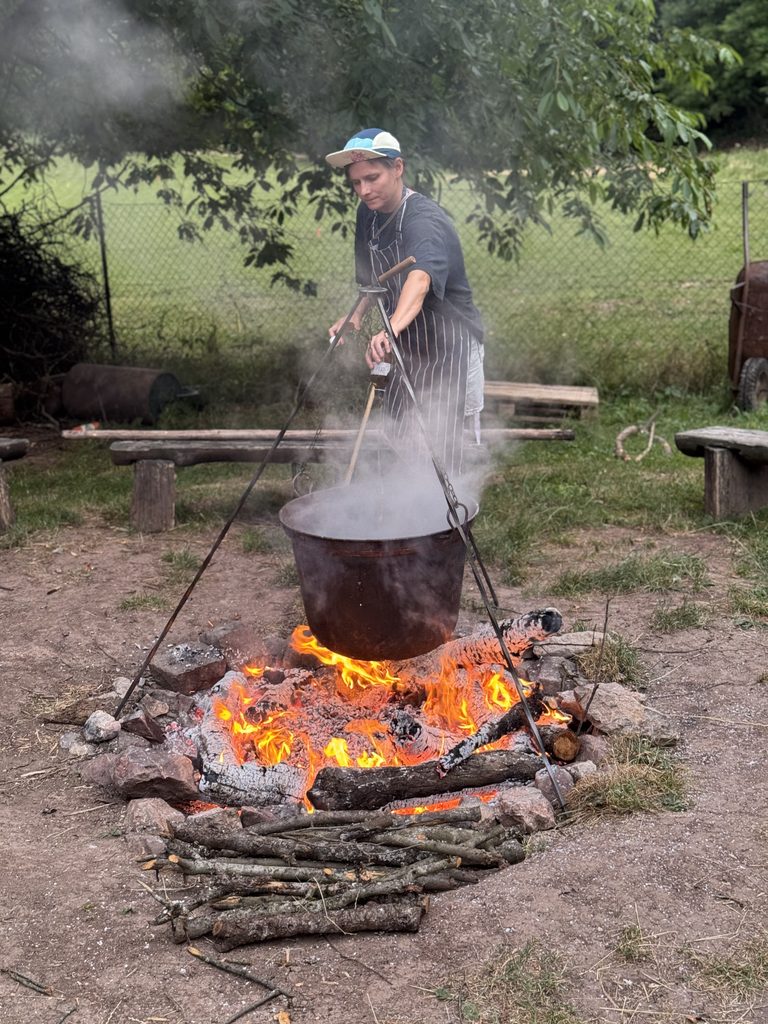
Simple dumplings reminded us of the whole journey we had gone through in just a few days. Just a few basic ingredients. Each comes from somewhere else. Each has a different taste, a different story. But together they create something that none of them could be on their own.
They don't come from precision. They come from feeling. Every bite tastes a little different. Depending on who made it. Depending on where it came from. Depending on who we're sharing it with.
What do we take away?
At the beginning, we arrived as individuals.
With our own experiences. With our own stories. With our own maps of the world.
We’re not leaving with one common map. We’re leaving with the awareness that no map is complete.
That society doesn’t need to be uniform to hold together. That difference is not the opposite of closeness. And that pedagogy can create situations where people rediscover the ability to stay together even where they don’t have to agree. Maybe that’s why the landscape was one of our most important teachers all along.
The forest showed us the roots of relationships. The caves taught us to listen to silence. The herbs reminded us that everything has its own time. Shared bread, that care needs many hands. And a voice, that different tones don’t have to merge into one to create harmony.
When we were heading home after four days, we didn’t carry a ready-made answer to the question of how to overcome polarization. We carried something more valuable. The experience that before we start changing society, we need to rediscover ways of being together.
School of Exploring Central European Imagination
Today, our lives are changing in ways we could not have imagined a few years ago. In a short time we faced the global health crisis, the war in Ukraine, the cascading effects of climate crises, economic austerity and instability, social fragmentation, political polarisation, large-scale human migration, and more. In terms of polarisation and fragmentation, the National Intelligence Council (NIC) in their report “Global trends 2040. A more contested world” already in 2021 suggested that rise in populism can be expected as a consequence of narratives emphasizing the division between the elites and the masses. The NIC (2021) foresees people gravitating to “information silos” with others who share similar perspectives, bolstering their beliefs and understanding of the truth. This may result in increasingly fragmented communities as “people will seek security with like-minded groups based on established and newly prominent identities.” (NIC 2021: p.1). The fragmentation into different opinion groups, social bubbles, echo-chambers, and the associated exacerbation of positions creates a social context in which educators do not dare to raise complex topics related to divisive issues due to lack of experience in creatively working pedagogically with the problems. The annual reports of the Czech School Inspection points out that teachers are often afraid to bring up certain controversial or political topics with children, either because they divide society, or because they do not have one codified interpretation, or because they do not have the appropriate tools to do so.
Experiential formats of learning that are not primarily and only based on cognitive analysis allow us to create a pedagogical space where reflection on the above-mentioned problems can happen in more innovative ways. A pedagogical process based on a complex interconnection of the emotional, social, ethical, and physical dimensions of the topics explored can develop new cognitive and affective skills, especially if it is implemented with a focus on the development of systemic and critical thinking. This project contributes to the development of such a methodological approach by combining the long-term expertise of the participating organisations into a joint approach that will be applied across a series of seminars and one summer school and will be reflected on an online platform. The following local seminars will take place in the three V4 countries and will aim at: 1) reflecting experience with social, ecological, and political crises in the middle-European context 2) discovering sources of support for the development of socio-ecological imagination in the context of the V4 societies 3) developing possibilities for dialogue across differences and polarized societies Through participation in the seminars and the summer school and by using the online platform there will be created a disseminating network of collaborating educators. The long-term consequence of their transformed teaching practice will be reflected in the impact on learners as an increase in the development of their emancipatory and civic capacities.
The project is co-financed by the governments of Czechia, Hungary, Poland and Slovakia through Visegrad Grants from the International Visegrad Fund. The mission of the fund is to advance ideas for sustainable regional cooperation in Central Europe.